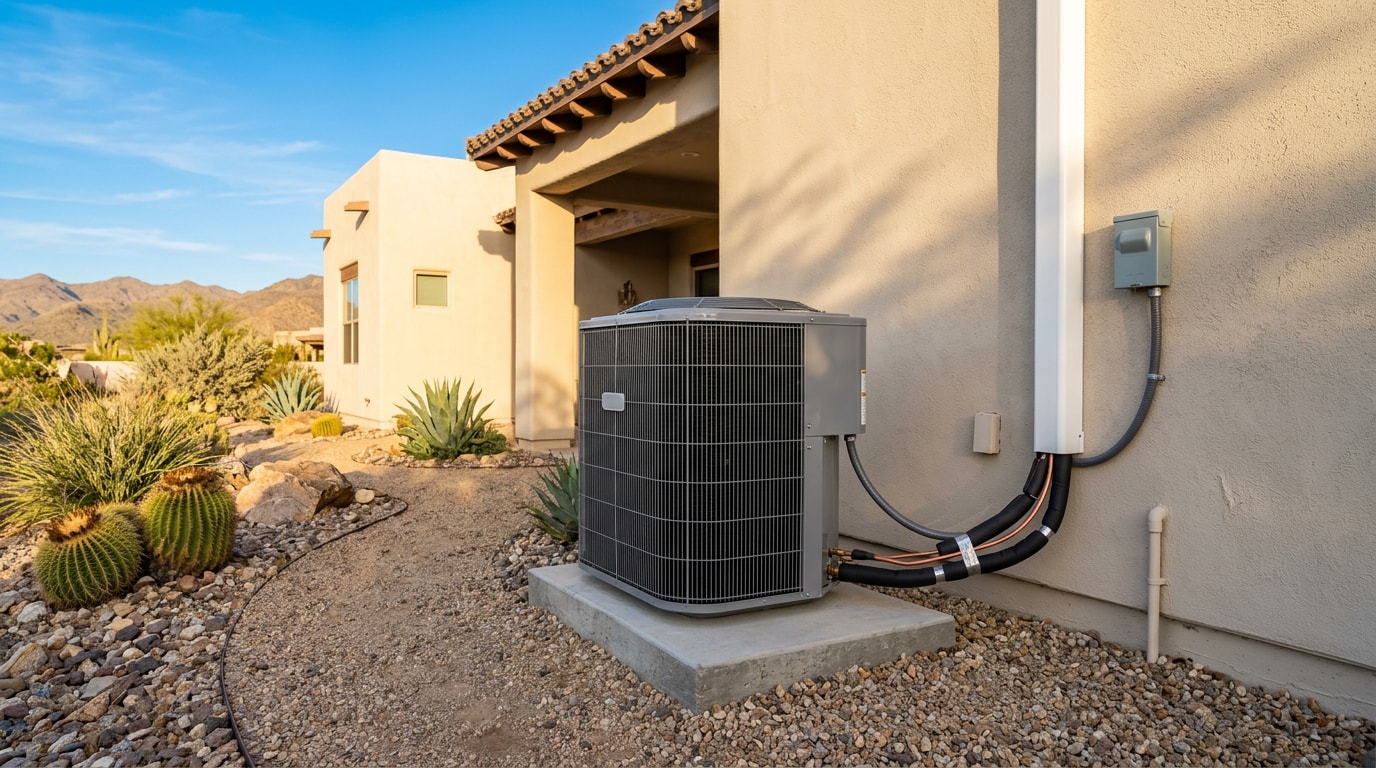
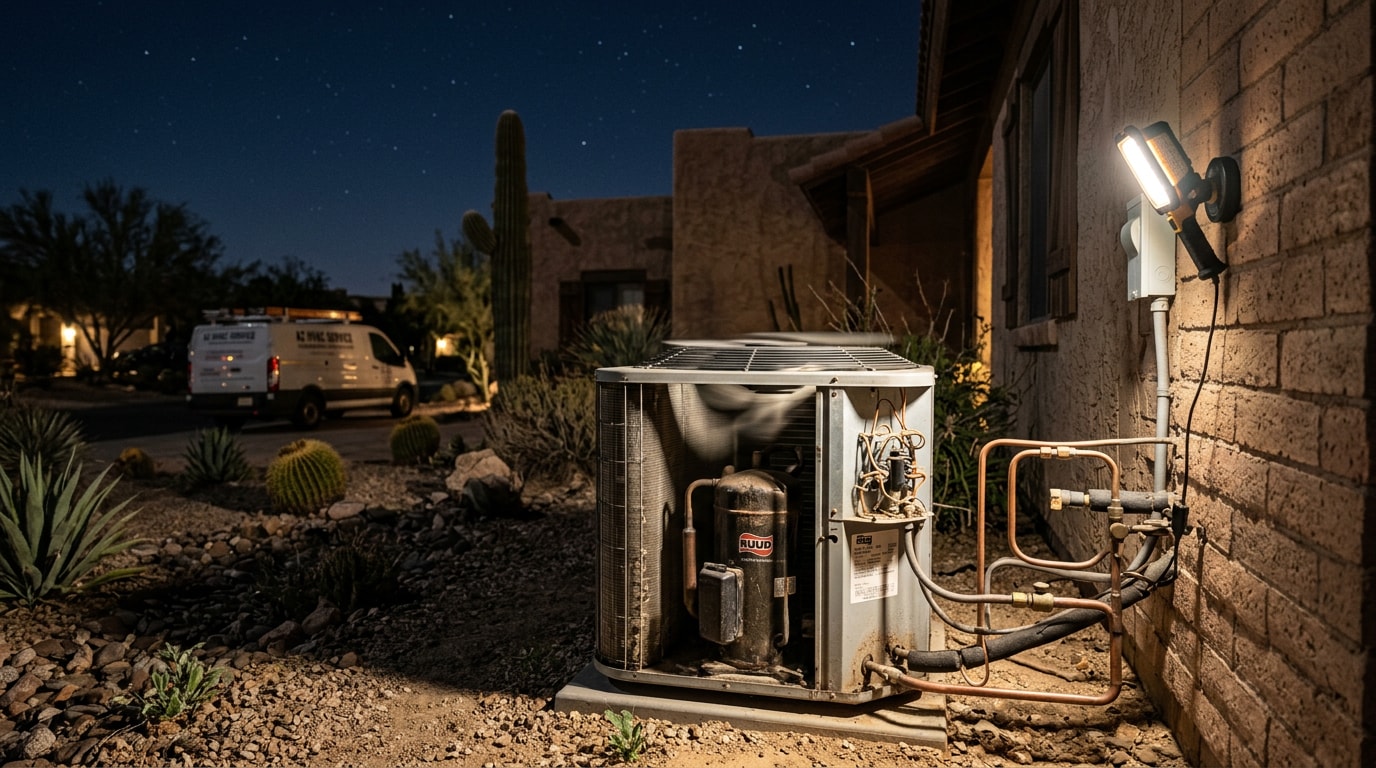
A system that fails at 2 a.m. in triple-digit heat does not wait for business hours, and neither should your repair. 24 hour heating and air conditioning repair in San Tan Valley, AZ means a technician who actually answers at night, shows up with the right parts, and fixes the problem on the first visit. Here is exactly how to tell if your situation is urgent, what happens once you call, and what to expect from a company that's licensed to do this work.
Visit Cobre Valley Air LLC to see our services and request a free estimate.
When It's a True HVAC Emergency in San Tan Valley
San Tan Valley summers regularly push daytime highs past 110°F, and a broken AC stops being an inconvenience fast once the sun comes up. In August 2026, the National Weather Service placed the Phoenix metro area, including the East Valley communities around San Tan Valley, under an Extreme Heat Warning for dangerously hot conditions with afternoon temperatures 108 to 111 degrees. That kind of heat turns a no-cool call into a health risk within a few hours, especially for anyone vulnerable.
The National Weather Service office covering Phoenix uses a HeatRisk model rather than a flat temperature number, and when "Major" or "Extreme" HeatRisk conditions are forecast, an Extreme Heat Watch or Extreme Heat Warning will be issued . Winter nights swing the other direction, and a dead furnace can make a home uncomfortably cold well before sunrise.
Signs Your AC or Furnace Needs Emergency Repair
- Warm air blowing from vents instead of cold
- No airflow at all, or a system that won't power on
- Loud grinding, clicking, or banging from the outdoor unit
- A thermostat that won't respond to any setting
- Burning or electrical odors near the furnace or air handler
- Tripped breakers that won't reset or that trip again immediately
- A gas smell near the furnace or HVAC equipment
If you ever smell gas, leave the house immediately, do not flip any switches, and call 911 before calling us. Everything else on that list is something our emergency AC repair team handles around the clock.
(Note: the link above uses a placeholder format error — corrected below.)
Emergency or Can It Wait Until Morning?
Not every HVAC failure needs a 2 a.m. truck roll. Here's a quick way to decide:
| Situation | Treat as emergency | Can often wait for a scheduled visit |
|---|---|---|
| Indoor temp climbing past 85-90°F | Yes | No |
| Infant, elderly resident, or someone with a heart/respiratory condition in the home | Yes | No |
| Gas smell or burning odor | Yes, call 911 first | No |
| System blowing warm air but home still under ~85°F | Monitor closely | Often, with fans overnight |
| Thermostat unresponsive, no safety concern | Call us | Depends on temperature trend |
| Furnace out on a mild Pinal County night | Usually | Usually |
When indoor temperatures rise, people can suffer from potentially deadly illnesses, including heat exhaustion and heat stroke, and it's worth being prepared even if you have air conditioning, since a breakdown can remove cooling at the worst possible time.
Older adults, infants and children, people with chronic conditions, and people without air conditioning are at greater risk , so treat their situations as urgent even if the thermostat reading looks borderline.
Common Emergency HVAC Problems We Fix
We diagnose before we repair, every time, so the fix addresses the actual cause instead of just the symptom. Calls we respond to most often include:
- No-cool or no-heat failures
- Burning or electrical smells coming from the system
- Tripped breakers tied to the HVAC circuit
- Strange grinding, clicking, or rattling noises
- Thermostats that won't communicate with the system
- Water pooling around the indoor unit
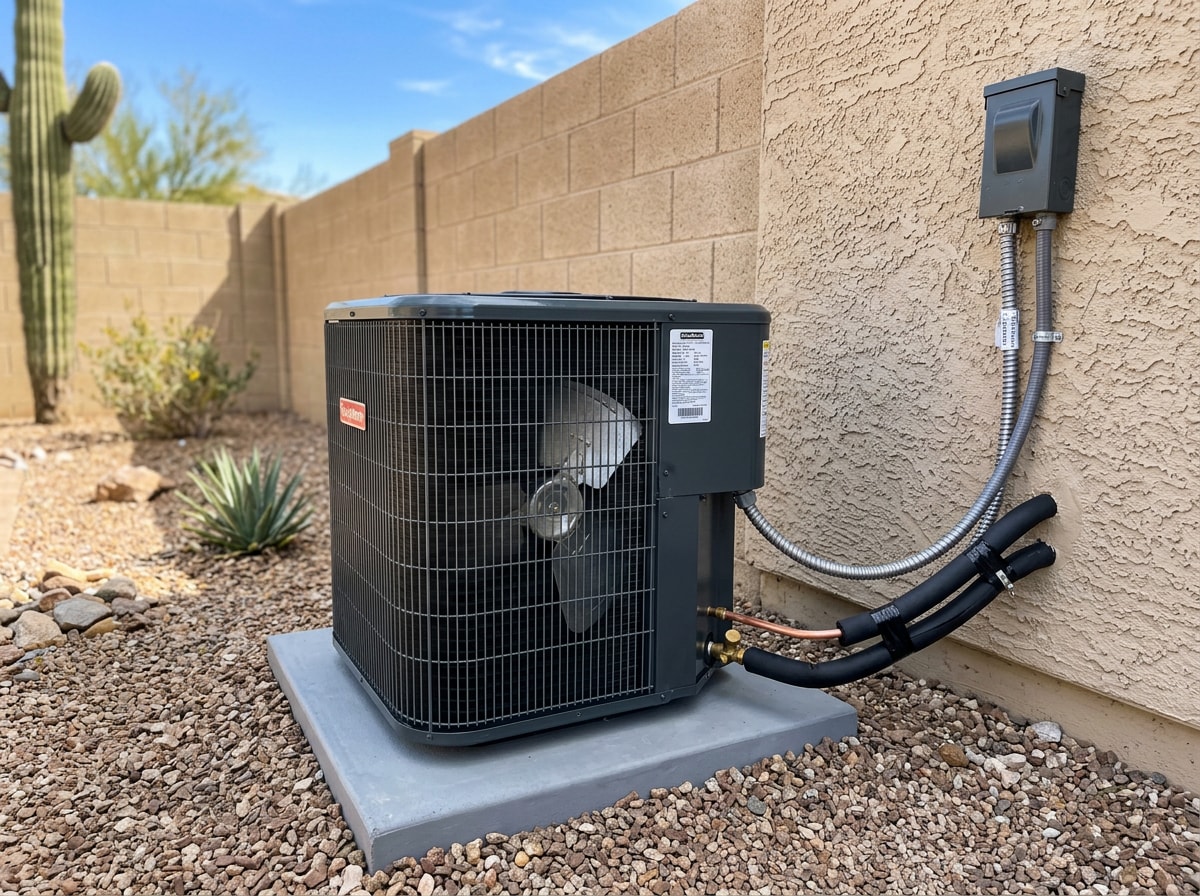
One of the most common root causes we find on emergency AC calls is a failed run or start capacitor. The AC capacitor is a small but important part that sends an electrical jolt to start the unit's compressor motor when the thermostat calls for cooling , and constant heat cycling through an Arizona summer puts real strain on that part. Refrigerant loss from a slow leak is the next most common culprit we see on these calls.
Our AC repair and furnace repair teams cover the full range of emergency and routine fixes across San Tan Valley, and our HVAC repair crews carry parts for both systems on every truck.
Our 24/7 Emergency HVAC Repair Process
Knowing what happens after you call takes a lot of the stress out of a broken system.
Step 1: Call and Describe the Situation
Have your system type, the symptoms you're seeing, and your current indoor temperature ready when you call. Those details let dispatch send the right technician with the right parts before anyone leaves the shop.
Step 2: Technician Arrives and Diagnoses
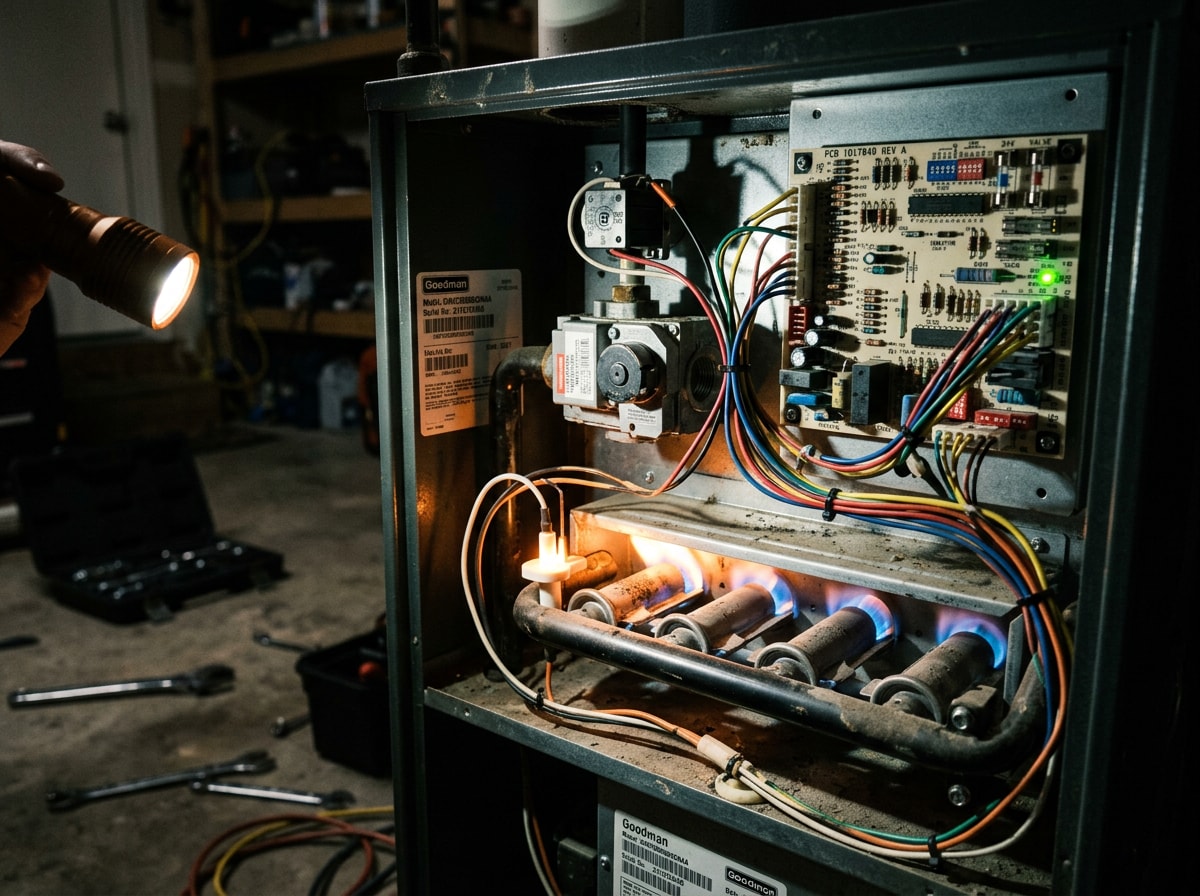
Every truck is stocked with the parts most commonly needed for emergency calls, capacitors, contactors, igniters, and common refrigerant components. We run a full diagnosis before touching anything, so the repair targets the actual cause. Most emergency calls get a same-visit fix rather than a second appointment for a special-order part.
Step 3: Verification and Follow-Up
Before we leave, we run a full cycle test to confirm cooling or heating output matches the thermostat setting. You get follow-up guidance on anything to watch, plus repair confirmation in writing for your records.
If your system's symptoms match a pattern you've seen before, our guide on AC not getting cold in San Tan Valley walks through the same diagnostic logic our technicians use on-site.
Licensing, Experience, and What "24-Hour" Actually Means Here
Cobre Valley Air holds an active Arizona Registrar of Contractors license (Specialty Dual classification) covering residential and commercial HVAC work. A licensed, bonded, and insured contractor protects you from liability if anything goes wrong during a repair, and Arizona law requires that license for any HVAC work over $1,000. Ask for the license number before any emergency crew starts work at your home, from us or anyone else.
"24-hour" should mean a live person answers, not a voicemail that gets returned the next morning. We staff dispatch and field technicians overnight specifically because Pinal County heat does not pause for business hours. Our San Tan Valley service area page has current response expectations, and routine seasonal checkups through our HVAC maintenance and AC maintenance plans catch most capacitor and refrigerant problems before they become 2 a.m. calls.
If your system is showing any of the warning signs above, don't wait for it to get worse. Schedule a free inspection and we'll get a technician out to assess it.
FAQ
What qualifies as an HVAC emergency in San Tan Valley?
A true emergency is any AC or furnace failure paired with a real safety risk: indoor temperatures climbing fast, a gas or burning smell, electrical issues like repeated breaker trips, or anyone in the home who is very young, elderly, or has a heart or respiratory condition. A thermostat glitch on a mild afternoon with no one vulnerable at home usually isn't.
My AC stopped working at night. Should I call for emergency service or wait until morning?
If the home is still holding a manageable temperature and no one is medically vulnerable, you can often wait until morning and get a standard appointment. If indoor temps keep climbing or someone's health could be affected, call right away instead of risking the wait.
Can you fix my AC the same day you come out?
Most same-day calls get resolved on the first visit because our trucks carry the parts used most often, including capacitors, contactors, and common igniters. A second trip is occasionally needed only for uncommon or special-order components.
What is the most common cause of emergency AC failure in San Tan Valley?
Capacitor failure is the leading cause we see, since constant heat cycling through Arizona summers puts ongoing strain on that component. Refrigerant loss from a small leak is the second most common issue.
Does emergency HVAC service cost more at night or on weekends?
Most companies, including ours, add a modest after-hours or dispatch fee on top of standard diagnostic and repair pricing for true overnight or weekend emergency calls. Ask for the fee structure when you call so there are no surprises before a technician arrives.
How fast can a technician reach my home at night?
Response time depends on current call volume and your location within San Tan Valley, but emergency calls get priority routing over scheduled maintenance visits. Call and describe your symptoms, and dispatch will give you a realistic window.
Do you repair both furnaces and air conditioners after hours?
Yes. The same 24-hour dispatch line and stocked trucks cover both heating and cooling emergencies, which matters in a climate with triple-digit summers and genuinely cold desert nights in winter.
Is the company licensed and insured to work in San Tan Valley?
Yes. Cobre Valley Air carries an active Arizona Registrar of Contractors license, along with bonding and insurance, so you're protected if anything goes wrong during a repair. Confirm license status on the ROC's public license lookup before scheduling with any contractor.