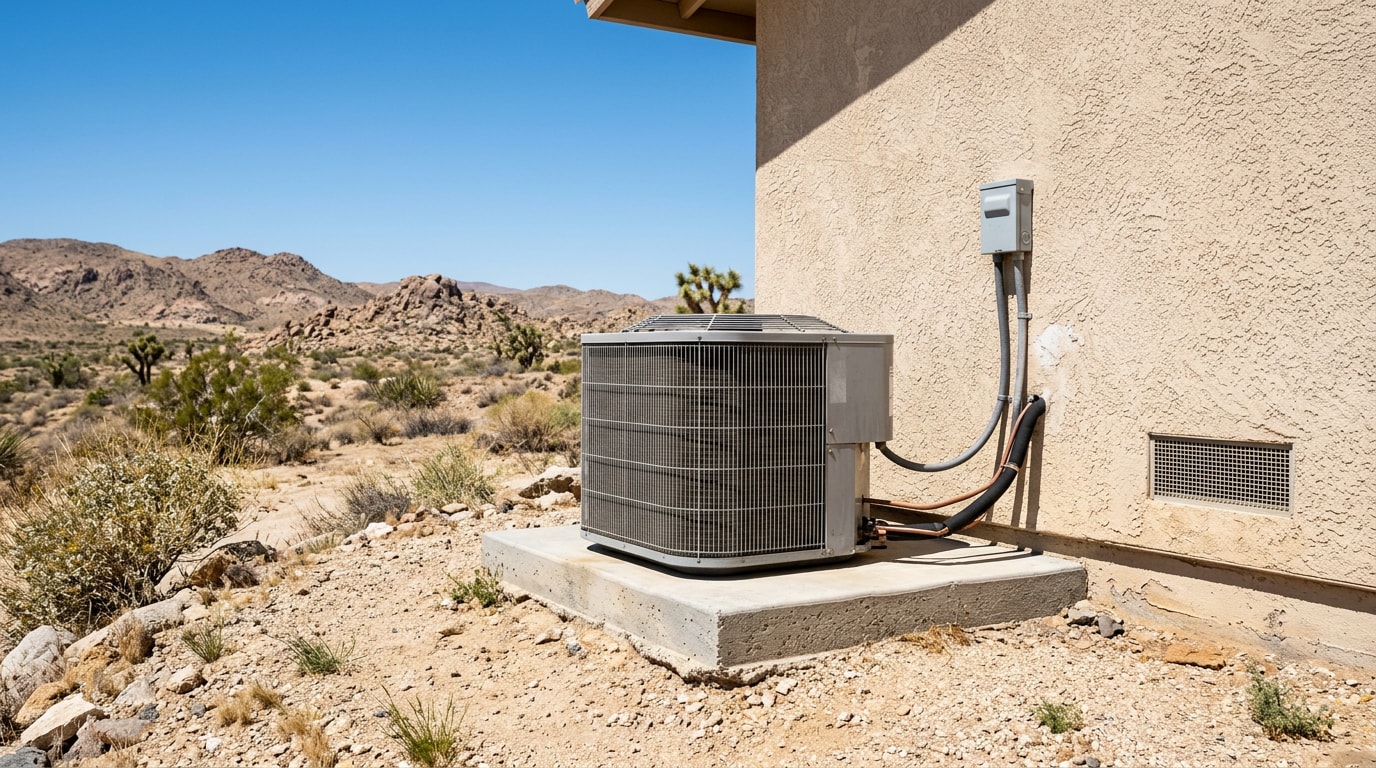

An air cooled condenser in Apache Junction, AZ works harder than almost anywhere else in the country, rejecting heat from your home into desert air that sits near or above 100°F for months at a time. That extra strain means a condenser here fails differently, and often sooner, than one in a milder climate. This guide covers what the unit does, what 2026 repairs typically cost, and how long you can realistically expect one to last in East Valley heat.
What Is an Air-Cooled Condenser (And Why Almost Every AC in Arizona Uses One)
The condenser is the outdoor half of your cooling system. It holds the compressor, the condenser coil, and the fan, and its only job is to dump the heat your indoor coil pulled out of the house back into the outside air.
Split air-conditioning or heat pump systems, the most common types used in US homes, consist of two parts: an indoor coil unit and an outdoor condensing unit . In the desert Southwest, that outdoor unit is almost always air-cooled rather than water-cooled, since water-cooled condensing isn't practical in a region that treats water as a scarce resource. That's one reason a failing condenser here gets noticed fast: there's no backup cooling method quietly taking over.
This isn't just a residential issue. Apache Junction's commercial buildings, from retail strips to warehouses, rely on the same air-cooled principle in larger rooftop package units and condensing sections. If you manage a commercial property, our commercial HVAC services page covers condenser and rooftop unit support at that scale.
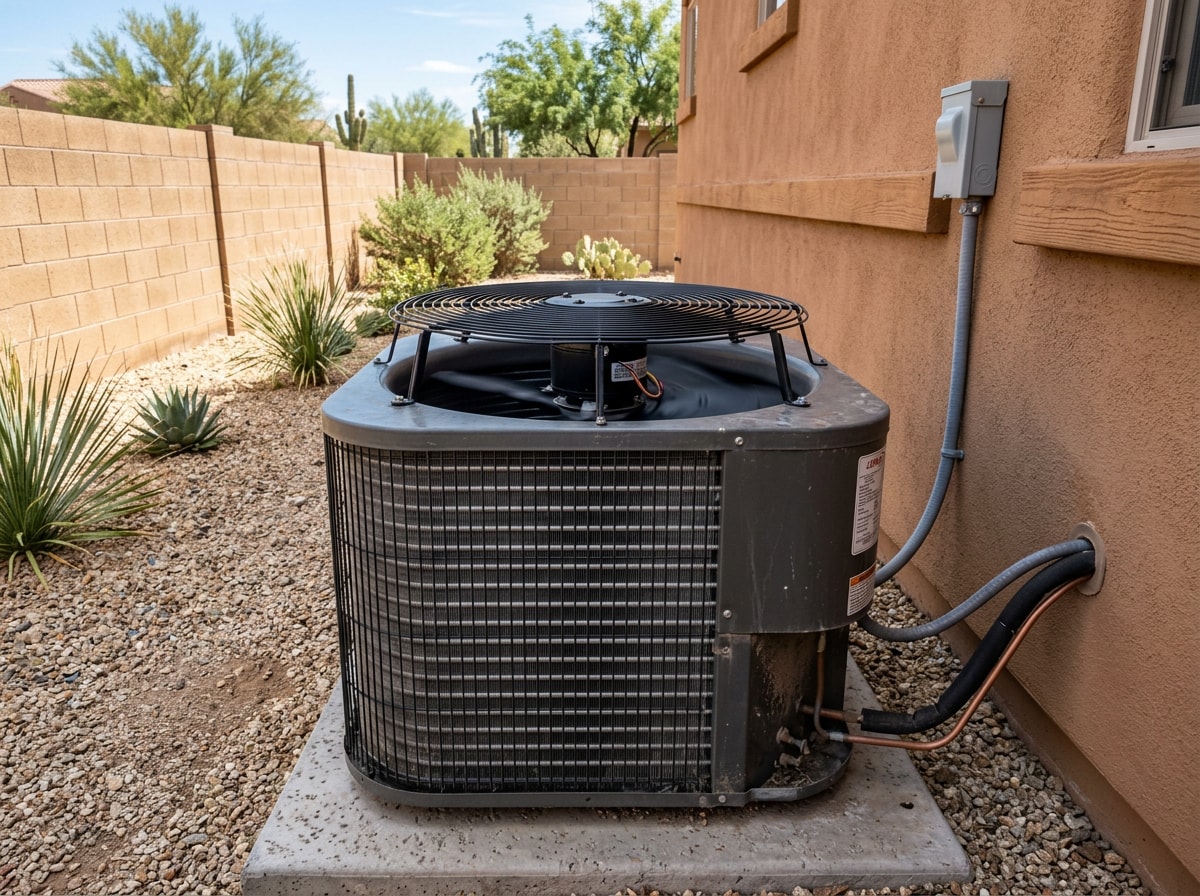
Signs Your Air-Cooled Condenser Needs Repair
Most condenser failures give warning before they cause a full breakdown. Watch for:
- Warm air coming from the vents instead of cold
- Breakers that trip repeatedly when the AC cycles on
- Grinding, buzzing, or rattling from the outdoor fan
- Water pooling near the indoor air handler
- Ice forming on the refrigerant line, even on a 110°F day
- A visible layer of dust or grit packed into the coil fins
That last one is common here specifically. Apache Junction sits close to open desert and the Superstition Mountains, so fine silt collects on condenser coils faster than it does in greener parts of the Valley. Dirty evaporator and condenser coils reduce a system's ability to cool a home and cause it to run longer, increasing energy costs and reducing the life of the equipment . If you're already seeing two or more of these signs, our AC repair team can usually diagnose the cause on the first visit, and our emergency AC repair line is there for the ones that can't wait.
How Apache Junction Heat Cuts Condenser Lifespan Short
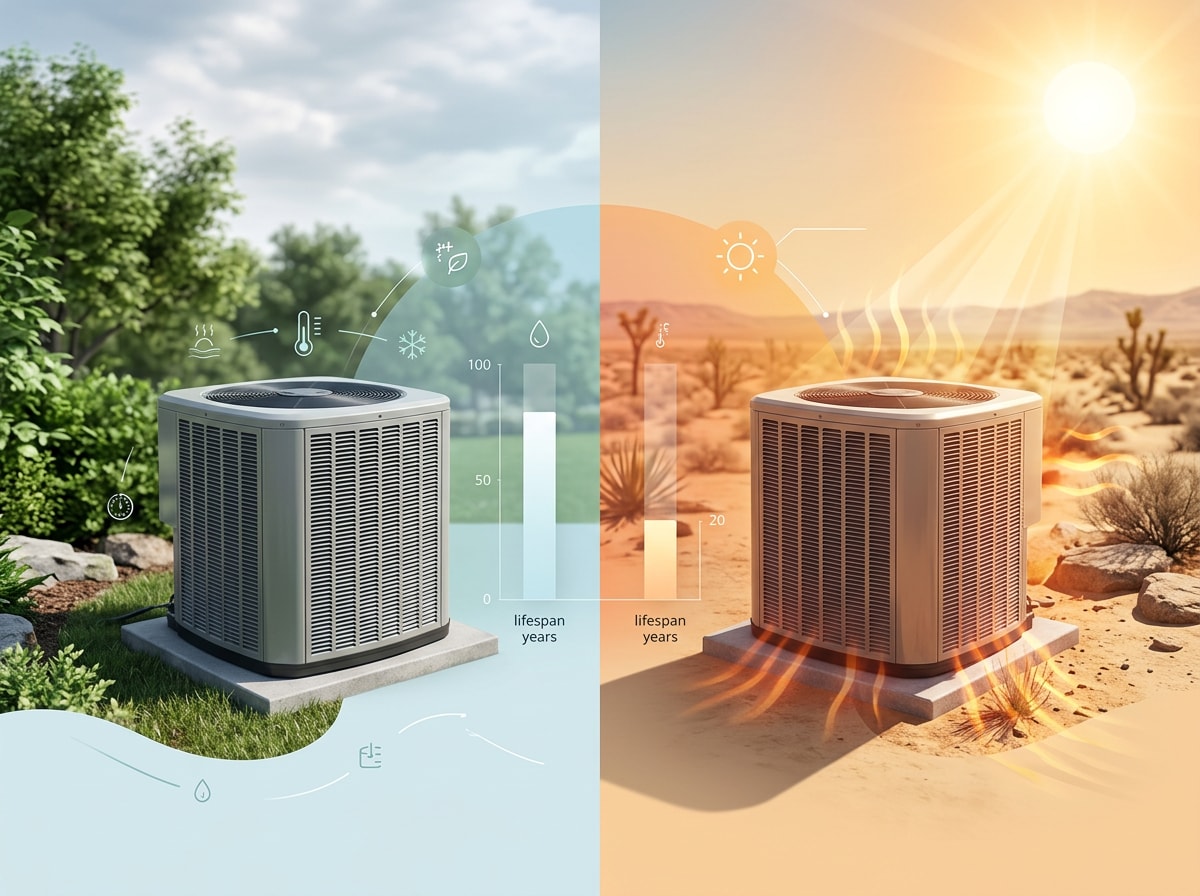
National lifespan numbers don't tell the whole story for a desert climate. The average life span of a central air-conditioning system is 12 to 15 years if it is properly installed and maintained , and ENERGY STAR advises considering replacement once a heat pump or air conditioner passes 10 years old, recommending a unit with the ENERGY STAR label .
Apache Junction pushes units toward the shorter end of that range. The area sees roughly 162.6 days a year with a high temperature above 90°F, more than most places in Arizona , which means the condenser is under heat load for close to half the calendar year. In the field, our technicians at Cobre Valley Air see fan motors, capacitors, and contactors give out well before the compressor itself does. Those smaller parts take the brunt of repeated high-ambient cycling, and replacing one early is almost always cheaper than waiting for it to take the compressor down with it.
If your system is already past year 10 and needs its second or third repair in as many summers, it's worth comparing that cost against AC replacement rather than continuing to patch it. Our AC unit install guide for Apache Junction walks through sizing, cost, and the installation process in detail.
Air-Cooled Condenser Repair Costs in Apache Junction, AZ (2026)
Repair costs depend on the diagnosis, but these general market ranges help set expectations before a technician arrives.
| Repair | Typical Cost Range |
|---|---|
| Capacitor replacement | $150 – $350 |
| Condenser fan motor replacement | $350 – $650 |
| Thermostat replacement | $150 – $400 |
| Compressor replacement | $1,200 – $2,800 |
Most common repairs, like a failed capacitor or fan motor, land in the lower part of that range. Compressor replacement costs more because it's a major component, and a failed compressor often signals the rest of the system is aging too. These are general ranges, not a binding quote; actual cost depends on the brand, part availability, and what the technician finds during diagnosis. Routine AC maintenance service catches small problems like a weak capacitor before they escalate into a compressor-level repair bill.
Common Mistakes That Shorten Condenser Life
A few habits quietly wear down a condenser faster than normal desert heat alone would:
- Pressure-washing the coil.
A power washer should never be used on coil fins, since the pressure can damage them , cutting airflow and efficiency. A soft brush and a garden hose on low pressure is the safer approach.
- Ignoring early warning signs. Mild fan noise or a slight drop in cooling rarely fixes itself, and it almost always costs less to address early.
- Letting landscaping crowd the unit. Condensers need clear airflow on all sides; shrubs, debris, or stored items against the cabinet trap heat the unit is trying to release.
- Skipping annual service. A yearly coil cleaning and electrical check catches the small components most likely to fail first in this climate.
Monsoon Season and Your Condenser
The National Weather Service sets the official Arizona monsoon season start date at June 15, though it typically takes a couple of weeks after that for consistent monsoon moisture to settle over the southern part of the state . For a condenser, that season brings two real risks: wind-blown debris packing into the coil, and power surges from lightning strikes that can fry a capacitor or control board. A surge protector on the outdoor disconnect and a quick coil check before monsoon season starts can prevent both.
HVAC Coverage Across Apache Junction
Our service area covers every neighborhood and zip code in Apache Junction, handling central AC, mini-splits, evaporative coolers, and heat pumps alike. Whether you're closer to the Superstition Mountains or nearer US-60, a technician familiar with the area's dust, heat, and monsoon patterns can reach your home the same day in most cases. You can see examples of recent installs and repairs on our projects page, check full coverage on our Apache Junction service area page, or visit our homepage for the rest of our services. Ready to get a technician out to look at your condenser? Schedule a free inspection and we'll get you on the calendar.
FAQ
What is an air-cooled condenser?
It's the outdoor unit of a central air conditioning system. It uses outside air flowing across its coil to pull heat out of the refrigerant, turning it back into a liquid so the cooling cycle can continue through the indoor evaporator coil.
Why is my AC blowing warm air in Apache Junction?
Warm air from the vents usually points to a condenser-side problem: low refrigerant from a leak, a dirty coil blocking airflow, or a failed fan motor preventing proper heat rejection. A diagnostic visit can confirm which one it is.
Can I convert my evaporative cooler to refrigerated air?
Yes. Converting a swamp cooler to refrigerated air means installing a condenser, an evaporator coil, and modifying the ductwork to handle the new system. See our air conditioning installation services for details on what that process involves.
How much does air-cooled condenser repair cost in Apache Junction?
Most single-part repairs, like a capacitor or fan motor, run between $150 and $650. Compressor replacement runs higher, typically $1,200 to $2,800, since it's a major component. Exact cost depends on the brand and what the diagnosis finds.
How long does an air-cooled condenser last in Arizona's heat?
Nationally, a well-maintained system lasts 12 to 15 years. In Apache Junction's sustained heat, smaller components like fan motors and capacitors often need replacement well before that, even if the compressor itself keeps running.
Can monsoon storms damage my air-cooled condenser?
Yes. Monsoon storms can blow debris into the coil, flood ground-level electrical components, and cause power surges that damage capacitors and control boards.
Can I clean my own condenser coil?
Light cleaning with a soft brush and a garden hose on low pressure is safe for most homeowners. Avoid pressure washers, which can bend the coil fins and reduce efficiency. Deeper cleaning or any refrigerant work should go to a licensed technician.
How often should I service my condenser in the desert?
Once a year, ideally in spring before the heat peaks. That gives a technician time to clean the coil, check refrigerant and electrical components, and catch wear on fan motors or capacitors before summer puts them under full load.