If your furnace won't stay on in Queen Valley, AZ, it's probably doing exactly what it was built to do. Furnaces run on layered safety systems that shut everything down the instant a sensor, airflow reading, or flame signal looks wrong. The real job is figuring out which safeguard tripped, and why.
Common Reasons Your Furnace Won't Stay On
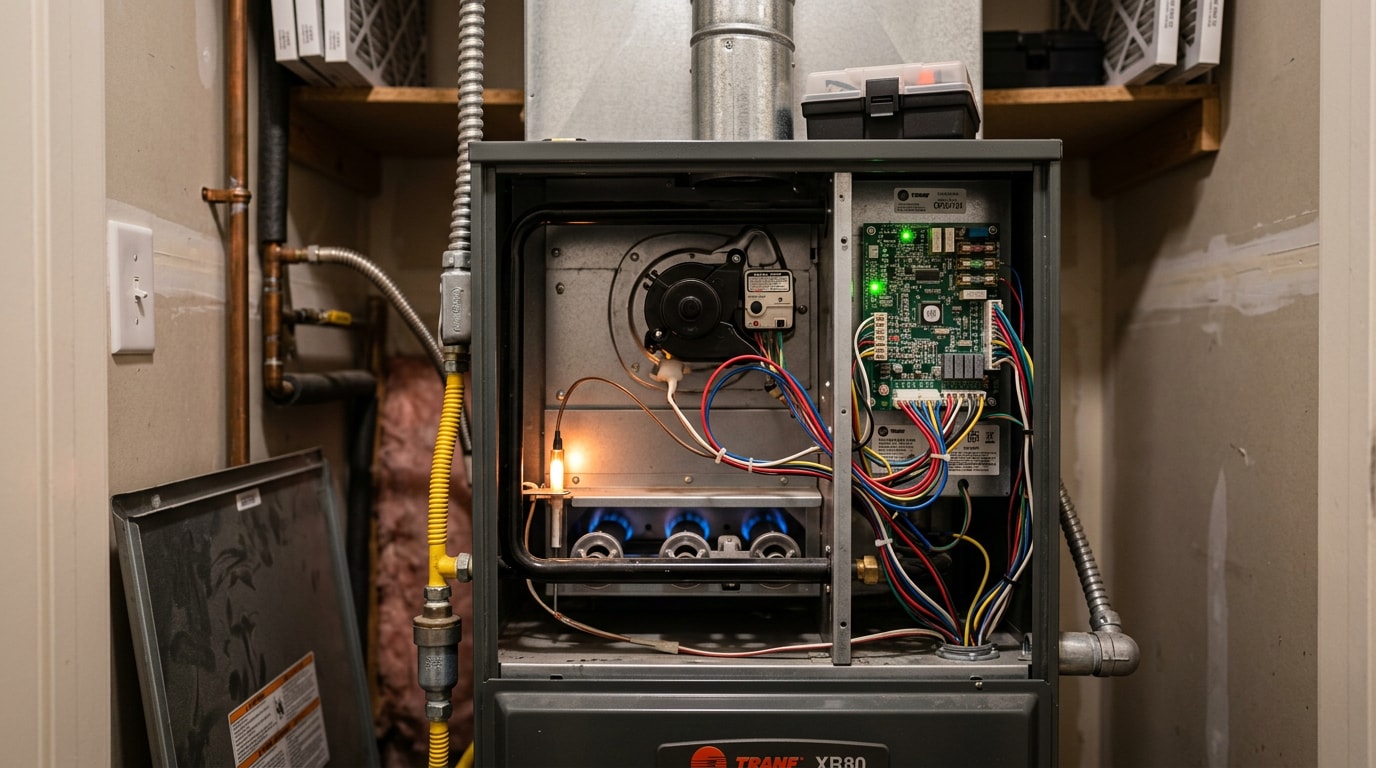
A furnace that shuts off early is almost always a safety device doing its job, not a random glitch. Gas furnaces use an ignition system to light the burners and a flame sensor to confirm that flame is real and stable. If that confirmation doesn't happen within a few seconds, the control board cuts gas flow as a precaution.
Here are the components most often behind this pattern.
Dirty Air Filter
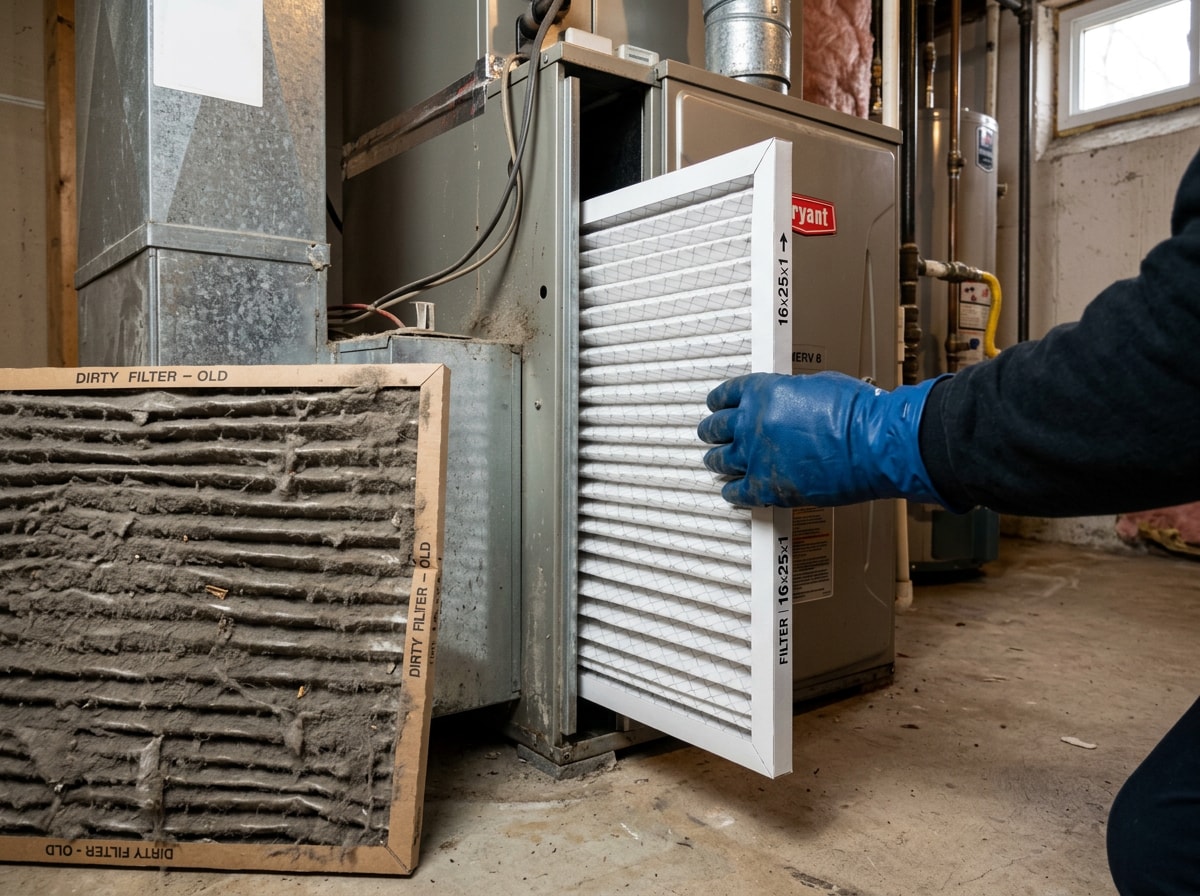
A clogged filter chokes off airflow across the heat exchanger, and the furnace overheats internally. The high-limit switch senses this and shuts the burners off as protection. A classic symptom: the furnace runs for several minutes, blows warm air, then quits, sometimes restarting once it cools down.
Thermostat Issues
Miscalibration, dead batteries, the wrong mode setting, or a thermostat mounted in a drafty spot can all cause early shutdown or inconsistent cycling. Before assuming a mechanical fault, confirm the thermostat is set to Heat with a setpoint a few degrees above room temperature. This one check resolves more short-cycling complaints than people expect.
Faulty or Dirty Flame Sensor
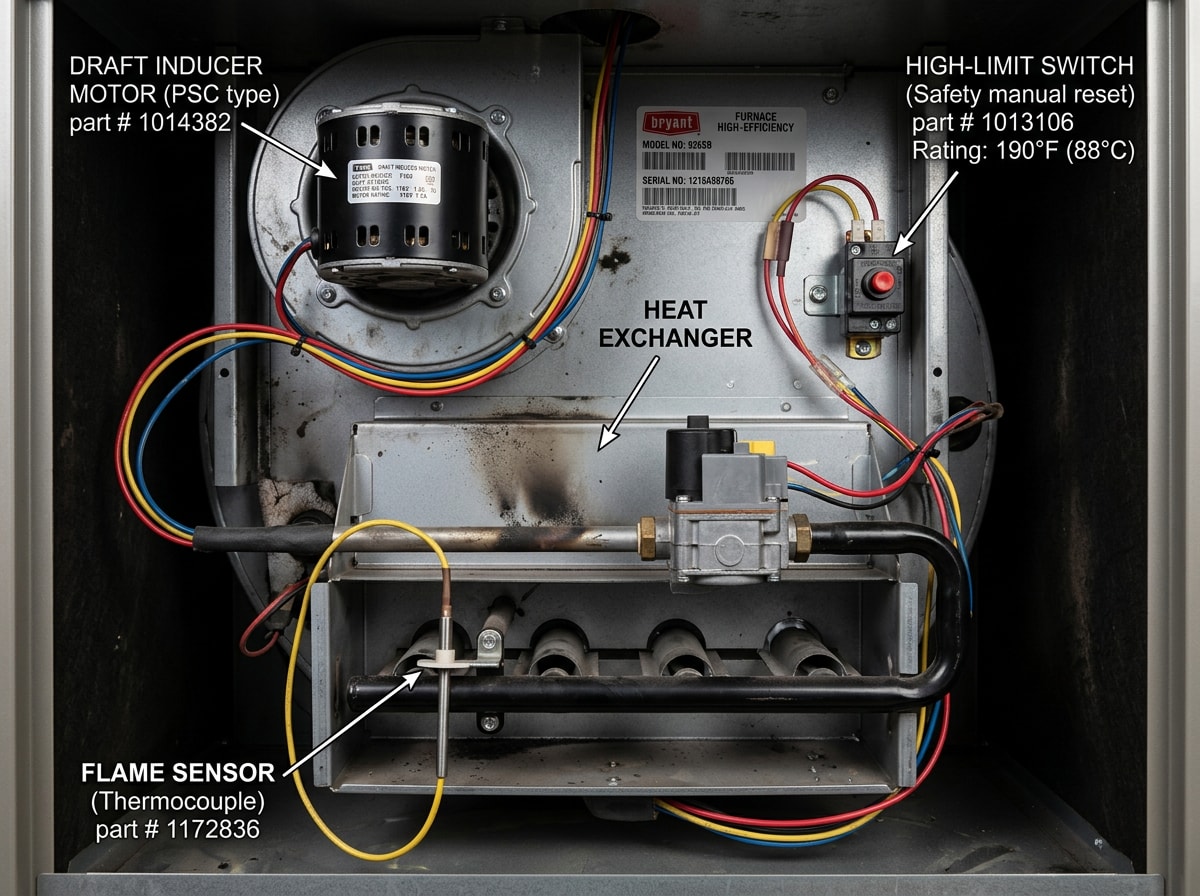
The flame sensor has one job: confirm a flame exists before the burners are allowed to keep running. Carbon or oxidation buildup on the sensor rod blocks that signal, so the control board shuts the gas valve as a precaution. The telltale pattern is distinctive: the furnace ignites normally, then shuts off again within a few seconds.
Pilot Light, Ignition, or Thermocouple Issues
Older standing-pilot furnaces rely on a thermocouple to prove the pilot flame is lit. A worn or misaligned thermocouple can close the gas valve even when the pilot is burning fine. Newer furnaces with electronic ignition skip the pilot but can still fail at the hot-surface igniter or ignition control module.
Relighting a pilot by following the furnace's printed instructions is usually safe. Repeated failures to stay lit signal a worn part that needs professional replacement.
Faulty Limit Switch
The limit switch shuts the furnace down if internal temperatures climb too high. When the switch itself degrades or its reading drifts, it can trigger a shutdown even when the furnace isn't actually overheating. This is harder to self-diagnose than a dirty filter and usually requires a multimeter check by a technician.
Blocked Vents or Registers
Closed or furniture-blocked supply and return vents restrict airflow the same way a dirty filter does, forcing the system to work against built-up pressure. The fix is simple enough for most homeowners: walk the house and confirm every supply and return vent is open and unobstructed.
Defective Pressure Switch or Draft Inducer Motor
Before ignition even happens, the draft inducer motor has to clear the combustion chamber of exhaust gases, and a pressure switch confirms venting is working. If the motor is failing or the switch isn't sensing proper pressure, the control board won't allow, or won't sustain, ignition. This usually shows up as the furnace trying to start, running briefly, then shutting down almost immediately.
Gas Supply or Burner Problems
Low gas pressure, a partially closed shutoff valve, or dirty or misaligned burners can all prevent a stable flame from forming. Any rotten-egg odor or hissing sound near gas lines is not a DIY troubleshooting item. Leave the home immediately and call for help. State emergency-management guidance lays out the signs of a gas leak and the exact steps to take if you suspect one.
Why Queen Valley Furnaces Behave Differently Than City Furnaces
Queen Valley sits outside the Phoenix-area natural gas grid, and most homes here run on propane rather than piped municipal gas. That changes the first troubleshooting step most generic furnace articles skip entirely: check the propane tank level and the regulator before assuming a part has failed.
A furnace that won't stay lit because a propane tank has run low behaves almost identically to a furnace with a bad flame sensor. It ignites, then shuts down within seconds because the burner can't maintain a stable flame on dropping tank pressure. Confirming tank level and that the regulator hasn't frozen or iced over (common on cold desert nights) takes two minutes and rules out the single most overlooked cause in rural Pinal County homes.
Furnaces here also sit idle for six or more months every year while cooling carries the load. When the first cold snap hits, components that have been dormant since spring, especially igniters, flame sensors, and draft inducer motors, are the first to show their age.
DIY Furnace Troubleshooting Checklist
A short list of safe checks rules out the simplest causes before anyone calls for service:
- Confirm the thermostat is set to Heat with a setpoint a few degrees above room temperature.
- Check that the furnace's power switch and breaker are both on.
- Check the propane tank level and regulator if your home runs on propane.
- Swap in a fresh filter if the current one looks gray or matted.
- Walk the house to confirm every vent is open.
- Look at the furnace control board for a blinking error-code light; many manufacturers use this to flag a specific fault.
None of this involves opening electrical panels or working on gas lines. Those steps belong to a trained technician. If the checklist doesn't solve it, a furnace repair visit is the next logical step, and you can schedule a free inspection before a cold night turns into a no-heat emergency.
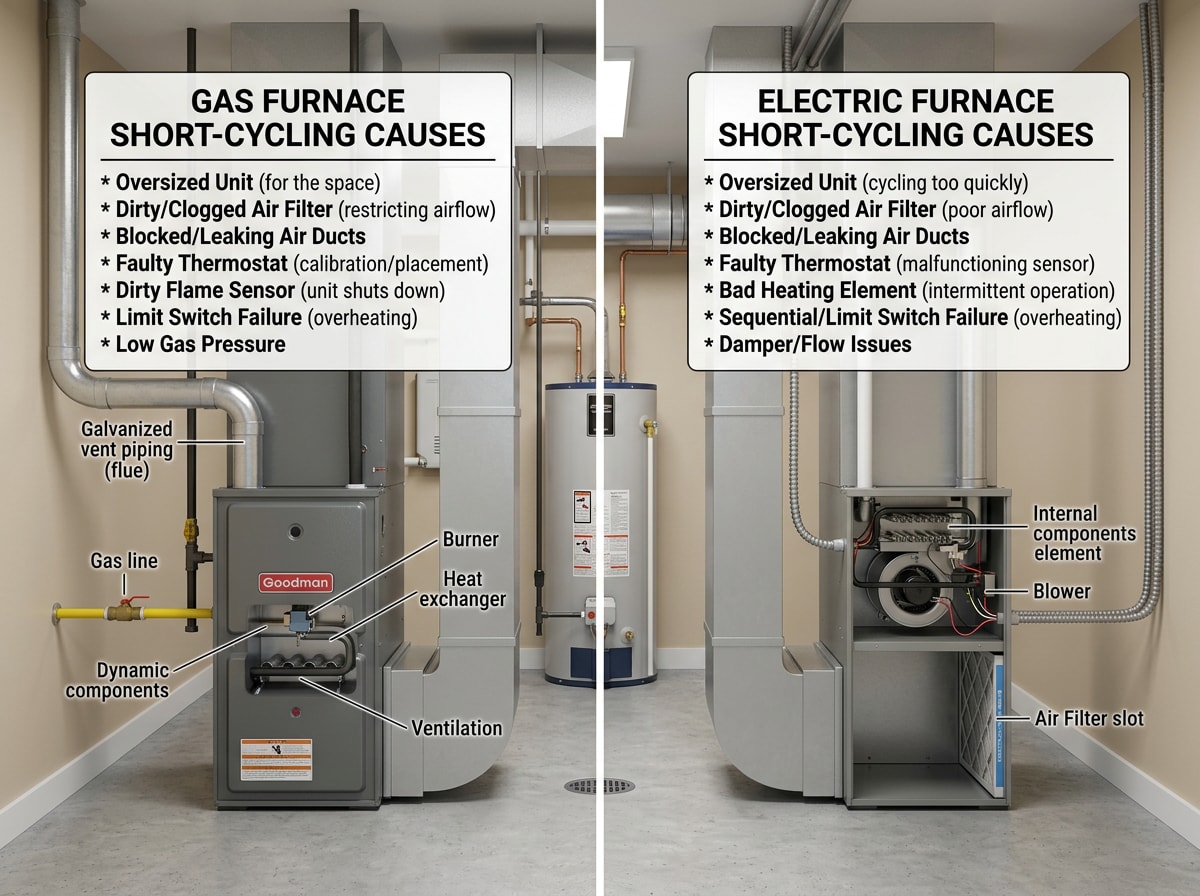
Gas vs. Electric Furnace Short-Cycling: What's Different
Gas and electric furnaces fail in different ways, so the diagnostic path splits early.
| Furnace Type | Common Short-Cycling Causes | First Thing to Check |
|---|---|---|
| Gas (or propane) | Dirty flame sensor, failing thermocouple/igniter, low gas or propane pressure, pressure switch or draft inducer fault | Flame sensor and fuel supply |
| Electric | Failed heating element, tripped sequencer that won't stage elements, breaker nearing its limit under load | Breaker panel and sequencer |
Operating efficiency differs too. Gas furnaces convert fuel to heat at 80 to 98 percent AFUE depending on the model, while electric resistance furnaces convert nearly all incoming electricity to heat at the unit itself. The U.S. Department of Energy breaks down how different home heating systems compare on efficiency and fuel type in more detail.
What to Expect During a Professional Furnace Repair Visit
When a technician arrives for a furnace that won't stay on, the diagnostic sequence usually starts with airflow: filter condition, duct restrictions, blower operation, before moving to ignition and flame-sensing components. From there, a thorough visit typically includes checking the pressure switch and venting path, testing the limit switch's accuracy, and verifying gas or propane pressure.
Knowing this sequence sets realistic expectations. A technician working through these steps methodically is standard practice, not a stall tactic. We've walked Queen Valley homeowners through this exact sequence more times than any other heating call during the first cold week of the season, and the propane tank check at the start saves a repeat visit more often than any other single step.
A furnace repair service appointment generally covers this full diagnostic path in one visit, and a furnace inspection can catch a failing part before it causes a full shutdown.
Do I Need Emergency Furnace Service?
Some signs point to a routine repair. Others mean the furnace should be shut off and a professional called right away.
Genuine emergencies include:
- No heat at all during freezing overnight temperatures
- A furnace that won't restart under any circumstance
- Any gas or propane odor near the furnace or tank
- Short-cycling that continues after the DIY checklist above has been ruled out
- A limit switch that keeps tripping repeatedly, or a suspected electrical fault
For situations that can't wait, contact us for a faster response, and local residents can confirm coverage on the Queen Valley, AZ service area page.
Maintenance Tips to Prevent This Issue
Most of the causes above become far less likely with consistent maintenance.
- Change the filter on a regular schedule.
- Keep every vent and register clear of furniture or rugs.
- Check propane tank level and schedule a delivery before it runs critically low each winter.
- Book an annual tune-up before heating season so a technician can inspect the flame sensor and limit switch while problems are still minor.
Filter-replacement intervals vary by type and household, so it's worth following current filter and HVAC maintenance guidance from the Department of Energy rather than guessing. A basic fiberglass filter may need monthly changes, while a pleated filter can often run 60 to 90 days between swaps, though homes with pets or heavy dust may need to check more often.
A furnace maintenance plan that bundles these inspections into one scheduled visit each year tends to catch small issues, a sticking switch, a sensor needing cleaning, before they turn into a furnace that won't stay on at all. For a broader look at matching equipment to this climate, see our guide on the best heating system for a house in Queen Valley, AZ.
If you're still not sure what's causing the shutdown, visit our homepage to see the full range of heating services we offer across Pinal County.
FAQ
Why does my furnace keep shutting off shortly after it turns on?
This pattern almost always points to the flame sensor or restricted airflow. A dirty sensor can't confirm the flame is real, so the control board cuts gas supply within seconds. A clogged filter or blocked vents trigger an overheating response slightly later in the cycle.
Why does my furnace turn off after 30 seconds?
A shutdown this fast typically isn't about overheating, it's an ignition problem. A dirty or failing flame sensor, a misaligned igniter, or a weak flame signal are the most common culprits, since the control board needs confirmation of a stable flame within that short window to keep running.
Why does my furnace keep shutting off after a few minutes?
A longer run time before shutdown usually points to the high-limit switch tripping from overheating. This generally means airflow is restricted somewhere: a dirty filter, blocked vents, or in some cases a failing switch that's reading temperatures incorrectly.
Can poor airflow from ducts make the furnace shut off?
Yes. Duct leaks or blockages restrict airflow just as effectively as a dirty filter or closed vent, even though they're harder to spot. Crushed flex duct, a collapsed section, or significant leakage along the duct run can starve the system of return air and trigger the same high-limit shutdown.
Is it safe to relight the pilot light myself?
Yes, if you follow the furnace's printed relighting instructions exactly and there's no gas odor present. If the pilot won't stay lit after a couple of tries, stop. That pattern usually means a worn thermocouple or a dirty flame sensor, and repeated relighting attempts waste gas without fixing the underlying part.
Could an oversized furnace cause this short-cycling pattern?
Yes. A furnace that's too powerful for the home heats the space quickly, satisfies the thermostat, and shuts off before completing a full, efficient cycle. If you've ruled out filters, vents, the thermostat, and the flame sensor and the short-cycling continues, sizing is worth having a technician check.