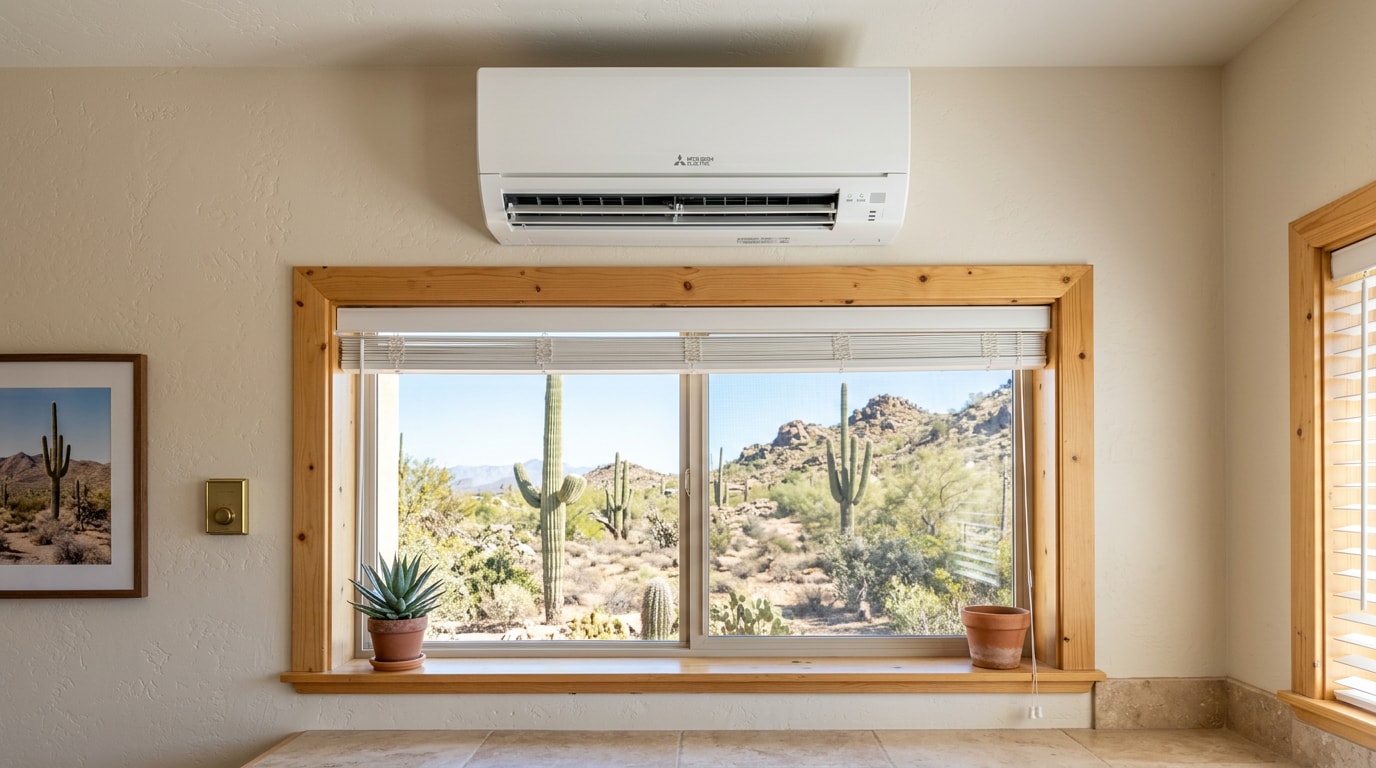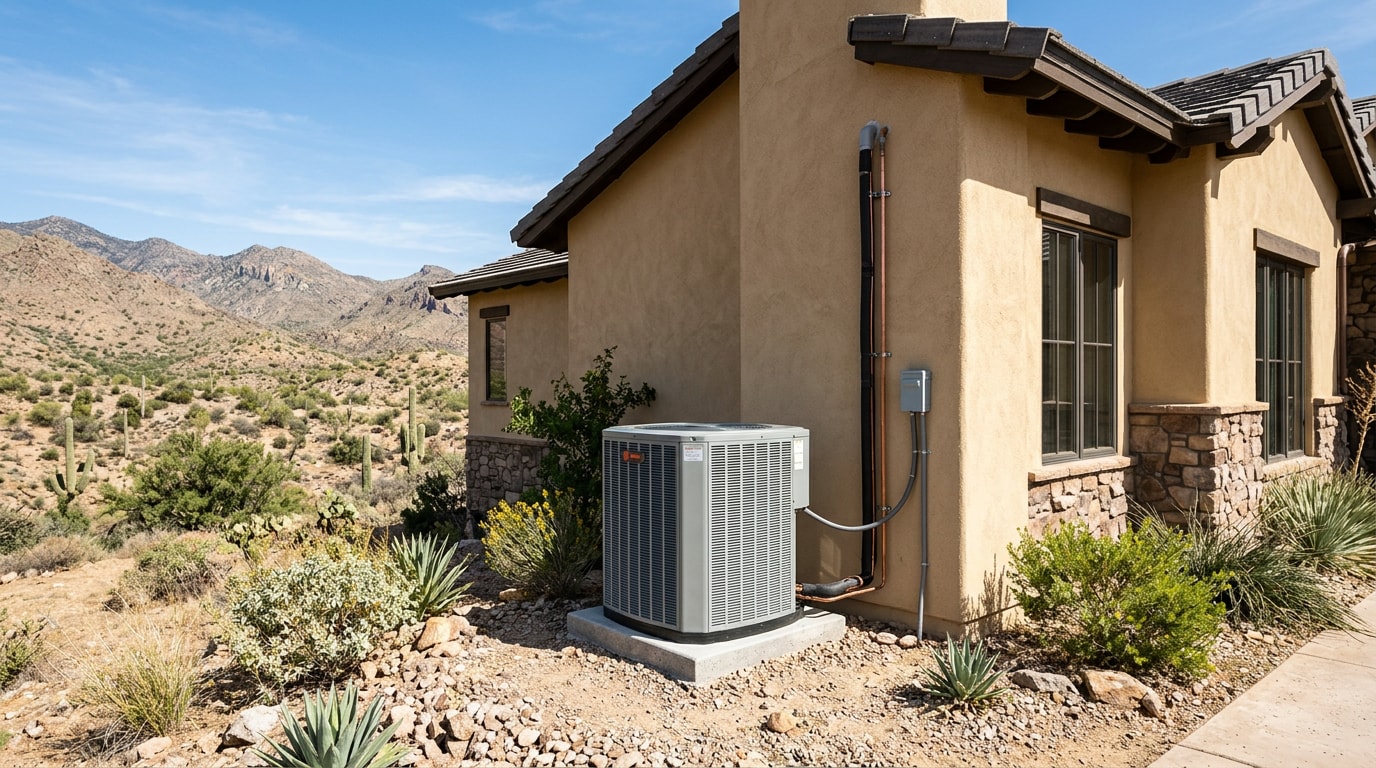

The best heating system for a house in Queen Valley, AZ is usually a properly sized heat pump, not the gas furnace that most Phoenix-focused guides default to. Queen Valley sits at a noticeably higher elevation than the Phoenix valley floor, so winter mornings here run cooler than what a generic "Arizona heating" article assumes. Before you buy, there's also a 2026 rebate change most local guides haven't updated yet, and it changes the math on what a new system actually costs you.
Key Takeaways
- A correctly sized heat pump is the practical default for most Queen Valley homes: one unit, year-round comfort, lower running cost than a separate furnace and AC.
- A gas furnace still makes sense for homes with existing gas lines or households that want faster heat recovery on the coldest mornings.
- Homes without ductwork, plus casitas, workshops, and additions, usually do best with a ductless mini-split.
- The federal 25C tax credit for heat pumps expired for any equipment installed after December 31, 2025 — if a quote still mentions it, ask the contractor to confirm in writing.
- AFUE, HSPF2, and SEER2 ratings tell you more about long-term running cost than brand name ever will.
Quick Answer: What Should You Actually Install?
For most Queen Valley homes, a heat pump rated at or above the ENERGY STAR efficiency minimums covers both heating and cooling in one system, which simplifies maintenance and typically costs less to run across a full year than a separate furnace and AC setup. A traditional furnace-and-AC split still earns its place in homes that already have gas service or where a household strongly prefers the fast, high-intensity heat a furnace produces on a cold morning.
| System Type | Upfront Cost | Running Cost | Best-Fit Scenario |
|---|---|---|---|
| Heat Pump | Moderate | Low | Most Queen Valley homes |
| Gas Furnace + AC | Moderate-High | Moderate | Homes with existing gas lines |
| Ductless Mini-Split | Low-Moderate | Low | Additions, casitas, ductless homes |
| Boiler/Hydronic | High | Low-Moderate | Air-quality-focused retrofits |
Not sure which column fits your house? A free inspection from our team includes a load calculation, so the recommendation is based on your actual square footage and ductwork, not a generic rule of thumb.
Why Queen Valley's Elevation Changes the Math
Most "best heating system" advice written for Arizona is really written for Phoenix, where winters stay mild enough that heating is almost an afterthought. Queen Valley sits well above the Phoenix valley floor, and across Arizona, elevation is the single biggest driver of how cold winter nights actually get. Arizona State University's climate office notes that while the low desert floor rarely drops below freezing at night, the state's higher-elevation communities see a much different pattern, with winter nights that regularly drop far colder than the desert floor ever does.
That doesn't mean Queen Valley needs furnace-only heating. It does mean a heating system sized purely around Phoenix's near-frost-free winters can come up short on a 38-degree January morning. This is exactly the scenario a dual-fuel setup, a heat pump paired with a small backup furnace, was built to handle.
Heating System Options for Queen Valley Homes
Gas Furnaces
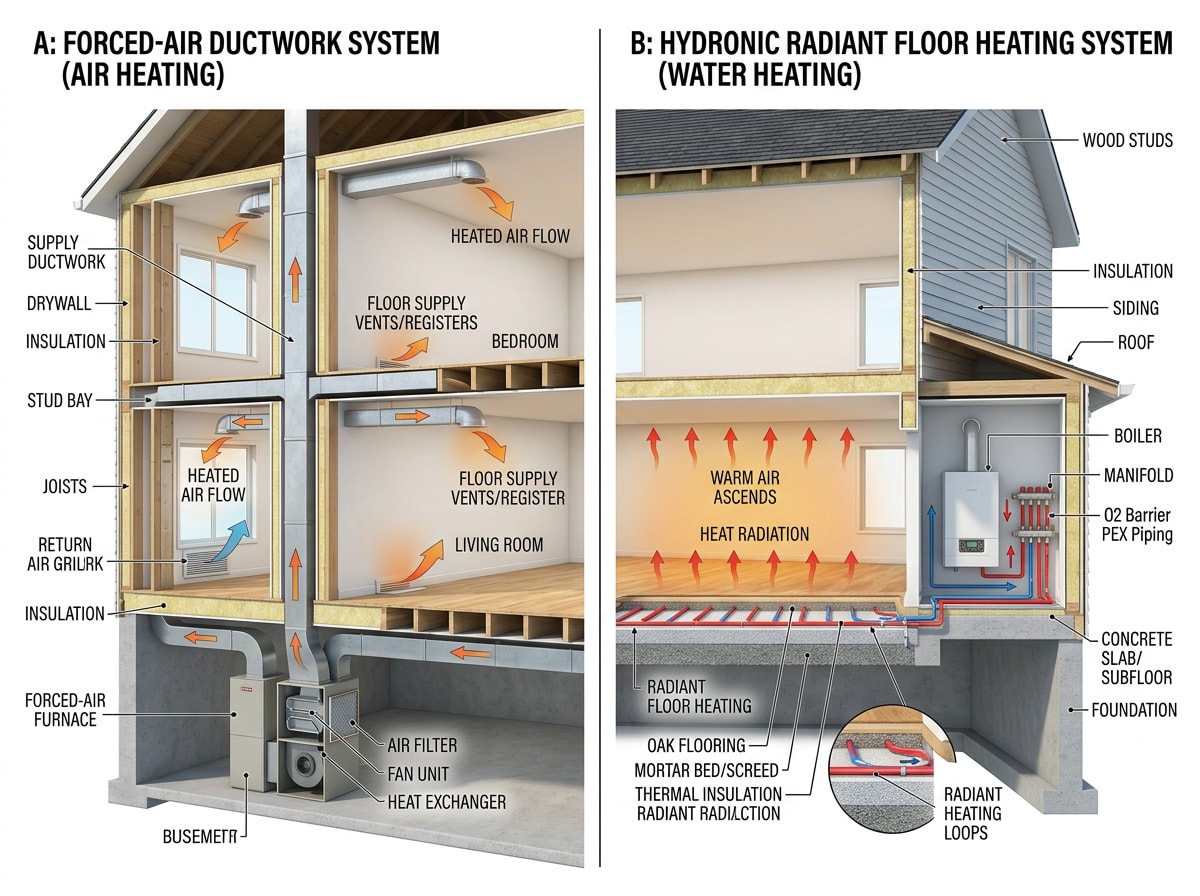
A gas furnace burns fuel to heat air, then pushes it through ductwork with a blower fan. It recovers heat fast, which matters on the coldest mornings, and it runs cheaply where natural gas service already exists.
The number that matters most here is AFUE (annual fuel utilization efficiency), which tells you how much of the fuel you pay for actually becomes heat in your home rather than escaping as exhaust. The U.S. Department of Energy's furnace and boiler guidance is a solid plain-language reference if you want to understand what that number means before you compare quotes. If your current furnace is already struggling, our furnace installation) team can walk you through condensing versus non-condensing options for your specific ductwork.
Heat Pumps
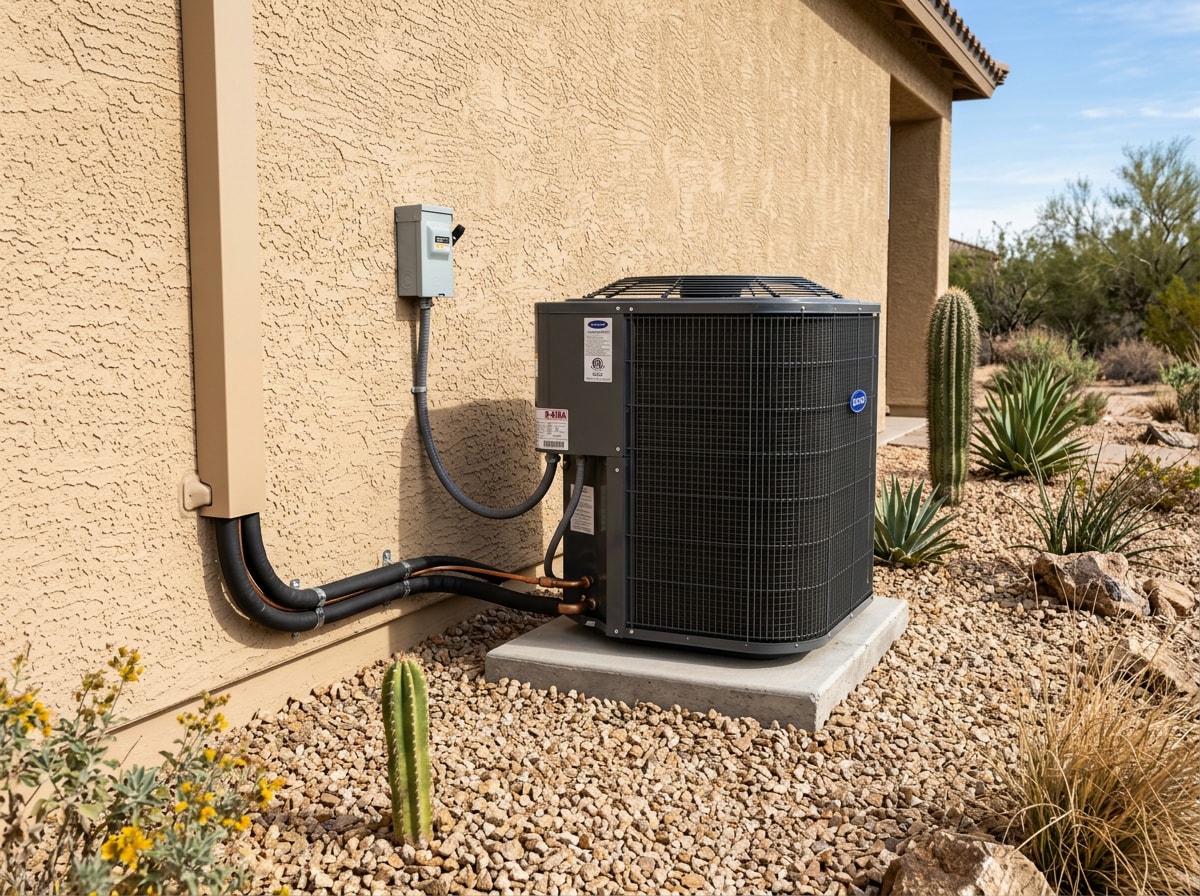
A heat pump doesn't burn fuel to make heat. It moves existing heat from the outside air into your home, then reverses the cycle in summer to cool it. That makes it a natural fit for a climate like Queen Valley's, where winters are cold enough to matter but rarely cold enough to overwhelm a modern compressor.
Two ratings matter when you compare models: HSPF2 for heating efficiency and SEER2 for cooling. According to ENERGY STAR's key product criteria, a certified split-system heat pump needs to reach at least 7.8 HSPF2, 15.2 SEER2, and 11.0 EER2. Models below the federal floor of 7.5 HSPF2 can't legally be sold as new equipment, so that number is your real starting line, not a marketing number.
For the rare hard-freeze night, most heat pumps include a backup electric-resistance mode, sometimes called emergency heat. If you've ever seen that setting on your thermostat and wondered what it actually does, our guide on what emergency heat means for Arizona homeowners breaks down when it kicks in and when it signals a problem instead. You can browse our full heating systems page for model options sized to Queen Valley homes.
Ductless Mini-Split Heat Pumps
Mini-splits deliver zoned heating and cooling with no ductwork at all, which fits a lot of Queen Valley properties with additions, casitas, or detached workshops built after the main house went up. Every zone gets its own thermostat, so you stop paying to heat rooms nobody's using. They're also one of the more practical retrofit options for older homes where adding traditional ducts would mean tearing into walls and ceilings. See our mini split installation page for sizing guidance by room.
Boilers and Hydronic Heat
Boilers heat water and circulate it through radiators or in-floor tubing, which delivers quiet, even heat without the airflow and dust that forced-air systems kick up. They're far less common in Arizona than furnaces or heat pumps, but they're still a legitimate choice for homeowners who prioritize indoor air quality and even heat distribution over installation cost.
Efficiency Ratings That Actually Matter
Three ratings decide what a system actually costs you to run over its lifespan. Here's the federal floor versus the ENERGY STAR bar for each:
| Rating | What It Measures | Federal Minimum | ENERGY STAR Minimum |
|---|---|---|---|
| AFUE (furnaces) | Fuel converted to usable heat | 80% | 90%+ (region-dependent) |
| HSPF2 (heat pump heating) | Heating output per unit of electricity | 7.5 | 7.8 (split systems) |
| SEER2 (cooling) | Cooling output per unit of electricity | 14.3 | 15.2 |
The federal 80% AFUE floor for standard non-weatherized gas furnaces has been in place since 2007, so any furnace sold today should already clear it. Chasing a slightly higher-than-minimum rating usually pays for itself faster than chasing the top-tier number, since the jump from 80% to 95% AFUE costs more upfront than it saves most Arizona households in a mild heating season.
What Changed for Arizona Heat Pump Buyers in 2026
If a quote or blog post you're reading still promises a federal tax credit on a new heat pump, that information is out of date. The 25C Energy Efficient Home Improvement Credit, which covered up to $2,000 toward a qualifying heat pump, does not apply to any equipment placed in service after December 31, 2025. The IRS confirmed the cutoff directly in its FAQ on the One Big Beautiful Bill Act's energy credit changes.
That doesn't mean there's zero money on the table. Some Arizona utilities still run their own equipment rebates independent of the federal credit. Ask your utility directly, or ask your installer to show you the rebate in writing rather than quoting last year's incentive from memory.
What Affects Installation Cost in Queen Valley
A handful of site-specific factors decide the real number on your quote more than the brand on the unit:
- Home size and layout. Larger lots and additions built in stages often mean mismatched ductwork that needs correcting before a new system is sized.
- Existing gas service. If your home already has a gas line, a furnace replacement is usually simpler than adding gas service for the first time.
- Ductwork condition. Leaky or undersized ducts waste conditioned air no matter how efficient the equipment is.
- Electrical panel capacity. A heat pump draws more electrical load than a furnace alone, so older panels sometimes need an upgrade.
- System type. Ductless mini-splits generally cost less to install than a full ducted retrofit but more per zone than extending existing ductwork.
Because these factors vary house to house, we don't publish blanket pricing. A free inspection gives you a number based on your actual home instead of a regional average that may not apply to a rural Queen Valley lot. You can also browse recent completed projects in the area to see the kind of work involved before you commit.
About the Author
This guide was written by Mike Delgado, a NATE-certified lead technician with Cobre Valley Air, serving Globe, Queen Valley, and the surrounding Pinal County communities. In more than a decade of installing and servicing heating equipment across the high desert east of Phoenix, I've watched single-stage furnaces short-cycle on 38-degree Queen Valley mornings while a correctly sized heat pump next door ran a full, quiet cycle without a hiccup. If you want a second opinion on a quote or a load calculation for your specific home, you can reach our team directly.
FAQ
Is a heat pump or furnace better for Queen Valley winters?
A heat pump is the better fit for most homes, since winters stay mild enough that backup heat is rarely needed. A furnace still makes sense if you already have gas lines installed or want faster heat recovery on the coldest mornings.
What is the best heat pump for a Queen Valley home in 2026?
Look for a split system rated at least 7.8 HSPF2 and 15.2 SEER2, the ENERGY STAR minimums for split-system heat pumps. The right size for your home matters more than chasing the highest rating on the shelf, which is why a load calculation beats guessing from square footage alone.
Do I still need a furnace if I live in Queen Valley?
No, not necessarily. A heat pump with a backup emergency-heat mode covers the rare hard-freeze night without a separate furnace. A dedicated furnace still makes sense if you have existing gas service or strongly prefer its faster heat recovery.
Are heat pumps effective in Arizona's higher-elevation communities?
Yes. They handle Arizona's intense summer cooling load well and provide enough heat for the region's mild-to-moderate winters, including the cooler nights at Queen Valley's elevation. They're less effective in climates with prolonged hard freezes, which Queen Valley doesn't experience.
Is there still a tax credit for a heat pump in 2026?
No. The federal 25C tax credit expired for any equipment placed in service after December 31, 2025. Check with your local utility for any rebate programs that may still be active, and get it confirmed in writing before you count on it.
How much does it cost to install a new heating system in Queen Valley?
Cost depends on system type, home size, ductwork condition, and whether gas service already exists. The most accurate way to get a real number is a free inspection, since generic regional pricing rarely holds up on rural lots with custom ductwork.