If your house AC isn't blowing cold air in Globe, AZ, the cause is almost always one of six things, and most can be ruled out in under ten minutes. Globe's elevation, dust, and older housing stock add wrinkles that generic troubleshooting guides never mention. Here's how to find the real problem fast, and when it's time to stop troubleshooting and call a technician.
Quick Reference: Match Your Symptom to the Likely Cause
Before you start swapping parts or calling around, figure out exactly what your system is doing. The symptom usually points straight to the cause.
| What You're Noticing | Likely Cause | Can You Fix It Yourself? |
|---|---|---|
| Vents blow room-temperature or warm air | Low refrigerant, failed compressor, or tripped breaker | Check breaker yourself; refrigerant/compressor needs a pro |
| Weak or no airflow at all | Dirty filter, blocked vents, or frozen coil | Filter check is DIY; frozen coil needs a thaw-and-diagnose |
| System runs constantly, never reaches setpoint | Dirty condenser, undersized charge, or elevation miscalibration | Partial DIY (clean condenser); charge issues need a pro |
| Ice visible on refrigerant lines or indoor coil | Frozen evaporator coil | Thaw yourself first, then call a pro if it returns |
| Thermostat display is blank or unresponsive | Dead batteries, tripped breaker, or wiring fault | Battery swap is DIY; wiring faults need a pro |
Start With These Two-Minute Checks
Most no-cool service calls trace back to the thermostat or the air filter. Both take under five minutes to inspect, and ruling them out first can save you a diagnostic fee.
Thermostat Settings
Confirm the system is set to Cool, not Fan or Heat, and that the fan setting is on Auto rather than On. Fan-only mode circulates air without cooling it.
Check that the setpoint sits a few degrees below the current room temperature. If it's set above room temp, the system has no reason to run. Swap the thermostat batteries if the display looks dim or unresponsive, since dead batteries can cause erratic behavior or skipped schedules on smart thermostats.
Dirty or Clogged Air Filter
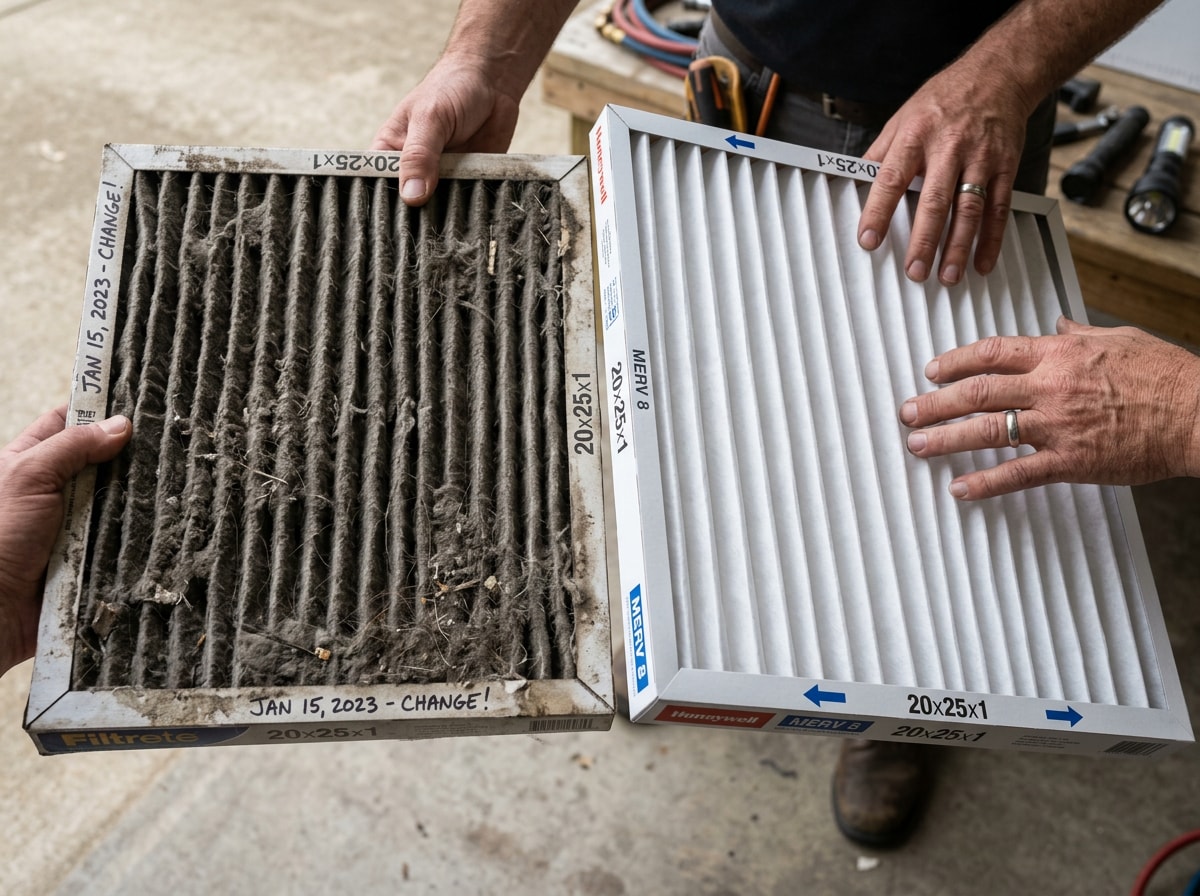
A dirty filter restricts airflow across the evaporator coil. When too little air moves across that coil, the system can't absorb enough heat to cool your home effectively.
Hold the filter up to a light source. If you can't see light passing through, replace it. Globe's dust and seasonal monsoon grit mean many homes need a new filter every 30 to 60 days rather than the 90-day cadence often quoted for milder climates, especially with pets or during windy months. A clogged filter left in place long enough can also trigger the frozen-coil problem covered next. Our AC maintenance service page covers filter sizing and a reminder schedule if you want to stop guessing.
When the Problem Is Mechanical: Frozen Coils, Refrigerant, and Dirty Condensers
If the thermostat and filter checks didn't solve it, the cause is likely mechanical. These next three issues can often be confirmed visually, but fixing them safely usually requires professional tools.
Frozen Evaporator Coil
Restricted airflow or low refrigerant can cause moisture on the evaporator coil to freeze instead of drain. Once ice builds up, the system loses its ability to cool air at all, even while still running.
Look for visible ice on refrigerant lines near the indoor unit or frost on the coil itself. If you spot this, switch the thermostat fan to Fan Only and turn the compressor off, letting the ice melt fully, usually a few hours, before running cooling again. Restarting a frozen system immediately can push liquid refrigerant back into the compressor and cause expensive damage.
Low or Depleted Refrigerant
Refrigerant doesn't get "used up" in a sealed system. If levels are low, there's a leak somewhere, and that's a repair job for a licensed technician, not a homeowner project.
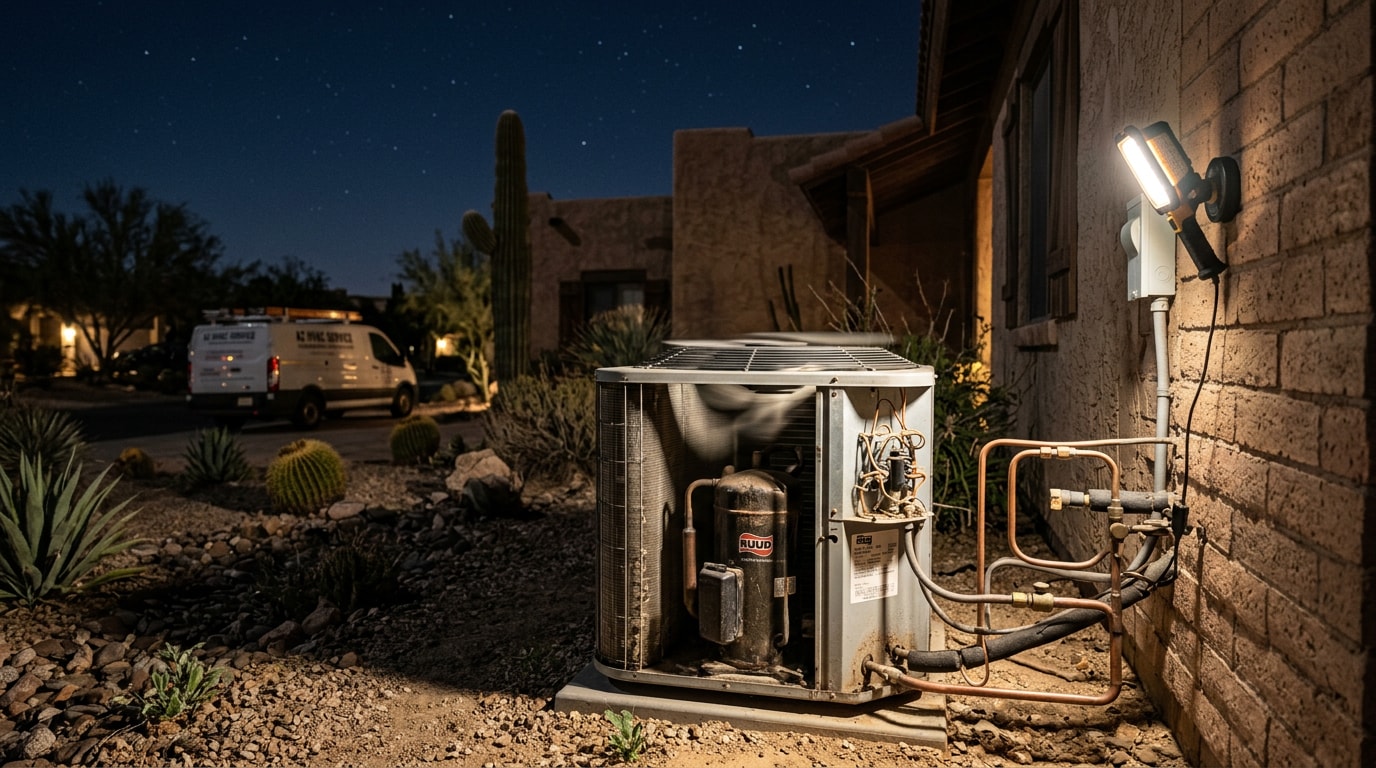
Warning signs include a hissing sound near the lines, oily residue at connection points, and ice forming on the coil despite a clean filter. EPA regulations under Section 608 of the Clean Air Act require that technicians who maintain, service, repair, or dispose of equipment that could release ozone-depleting refrigerants must be certified , so only an EPA-certified technician can legally purchase, handle, or recharge refrigerant. Recharging a system without first fixing the leak only buys a few weeks before the symptoms return.
Dirty Condenser Coils
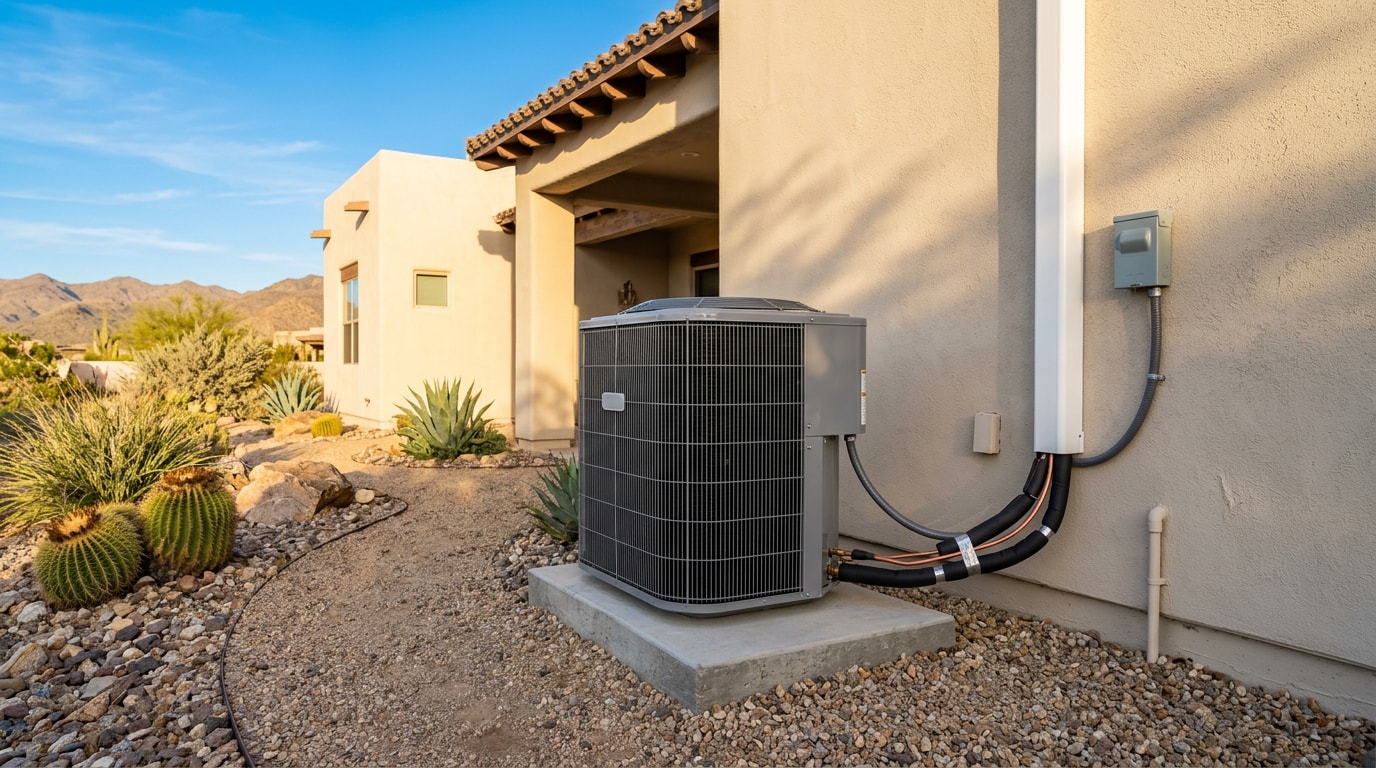
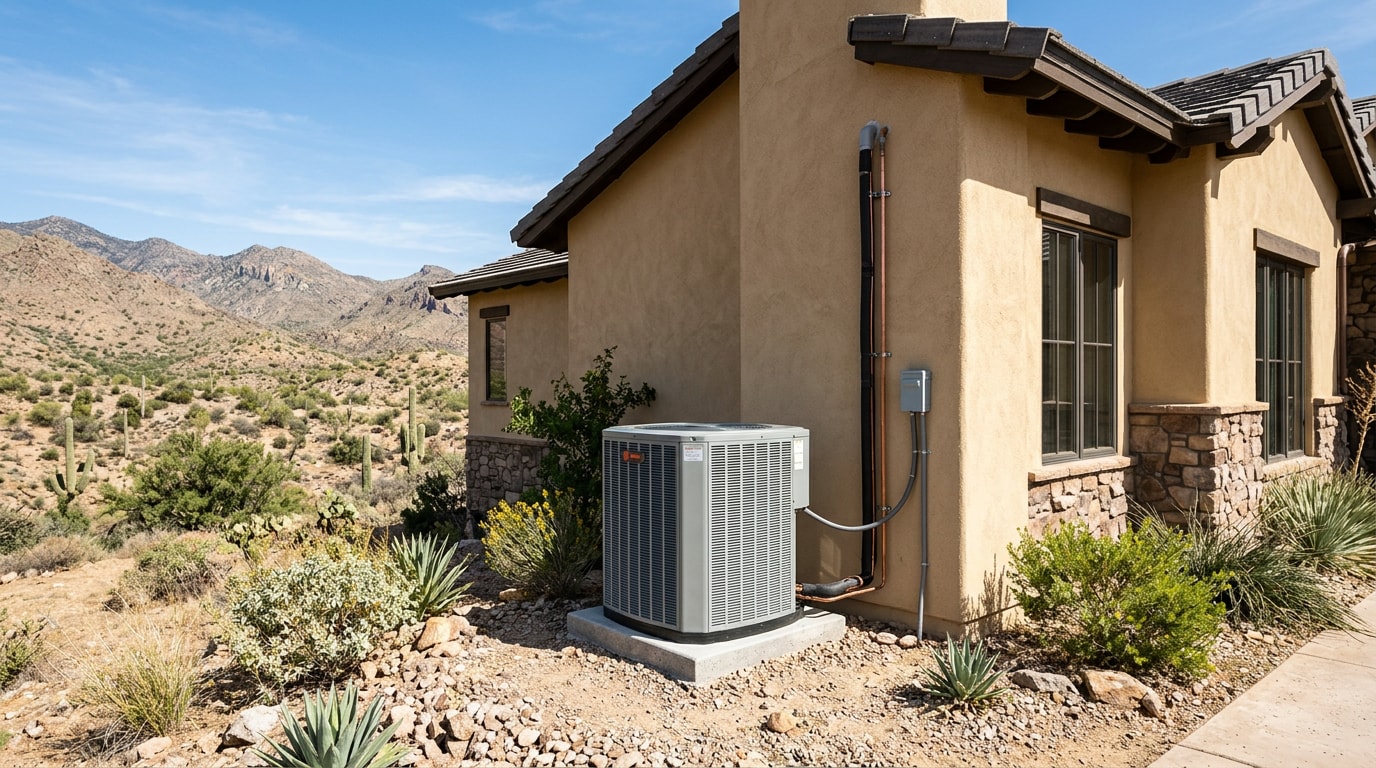
The outdoor unit relies on clean coils to release heat pulled from inside your home. When dust, pollen, or dead vegetation coat those coils, heat transfer slows and the whole system works harder for less cooling.
Signs include visible dirt caked on the fins, reduced airflow at the top of the unit, and a condenser that runs hot to the touch. You can safely rinse the outdoor unit with a garden hose, power off first, for light buildup. Bent fins or deep grime are better left to a technician with proper coil-cleaning tools. Our AC repair service page outlines what a typical visit covers if the problem goes beyond a hose-down.
DIY vs. Professional Repair: Where the Line Is
| Task | DIY-Safe | Needs a Licensed Pro |
|---|---|---|
| Check/replace thermostat batteries | Yes | - |
| Set thermostat mode and fan setting | Yes | - |
| Replace air filter | Yes | - |
| Reset a tripped breaker (once) | Yes | - |
| Hose down outdoor unit (light debris) | Yes | - |
| Thaw a frozen coil | Yes | - |
| Diagnose why the coil froze | - | Yes |
| Refrigerant leak detection or recharge | - | Yes |
| Compressor or capacitor repair | - | Yes |
| Elevation-adjusted refrigerant charge | - | Yes |
Anything involving refrigerant, electrical components inside the unit, or the compressor crosses into professional territory. Attempting those repairs without training risks injury, code violations, or turning a moderate repair into a full system replacement. If your checks haven't resolved the problem, schedule a free inspection rather than keep guessing.
The Globe-Specific Factor Most Guides Miss: Elevation and Monsoon Dust
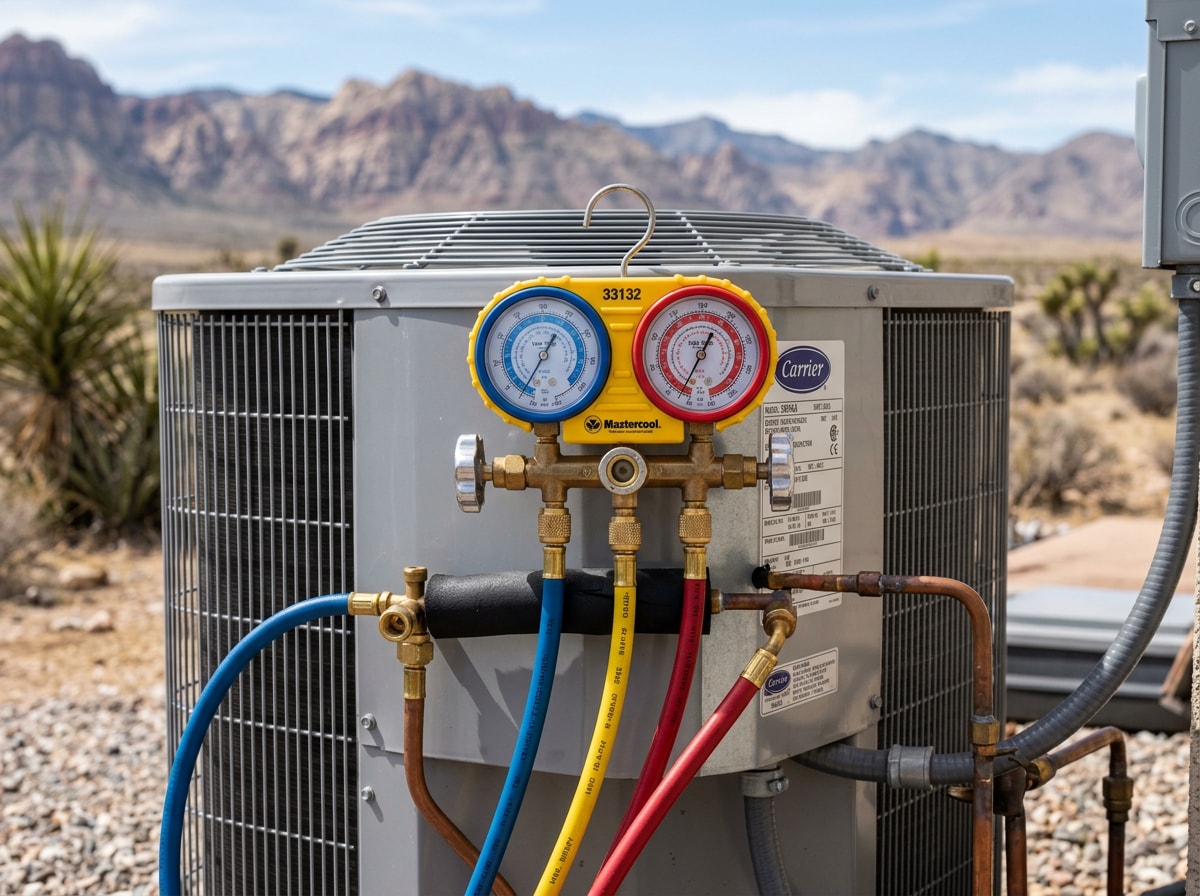
Globe sits well above the Phoenix Valley floor. National Weather Service point-forecast data puts the city's elevation around 3,596 feet , and most generic AC troubleshooting guides never account for what that does to a cooling system.
Lower atmospheric pressure at elevation changes how refrigerant behaves as it cycles through the system, affecting boiling point and compressor load. A system charged to "Valley spec" by a technician unfamiliar with higher-elevation installs can end up slightly over- or undercharged for Globe's actual air pressure.
That mismatch typically shows up as:
- Longer runtimes without the house ever reaching setpoint
- Warmer-than-expected supply air even with a clean filter
- Coils that ice up more easily because the pressure curve doesn't match the thinner air outside
Globe's mining-town dust and monsoon humidity compound the problem. Dust settles into condenser fins faster here than in cleaner-air climates, and monsoon humidity spikes make a marginal refrigerant charge noticeably worse during July and August precisely when cooling demand peaks. In our service calls across Globe and the Cobre Valley, an elevation-mismatched charge combined with a dusty condenser is the most common reason a system runs all afternoon without ever cooling the house. If your system has never cooled quite right since installation, both factors are worth asking a local technician about directly.
Older Globe Homes Add Another Variable
Many of Globe's older homes have ductwork that was patched, resized, or rerouted during past renovations, plus insulation and electrical panels that predate modern central AC loads. A standard diagnostic checklist built around newer construction can miss a mismatched duct run or an underpowered circuit that's quietly limiting system performance.
If your home is one of Globe's older properties, mention its age and any past renovation work to your technician up front. It changes where they look first.
What a Thorough AC Diagnostic Should Include in Globe
A proper diagnostic visit should never stop at "check the filter." It should include:
- A full refrigerant assessment that accounts for local elevation
- Electrical component testing at the disconnect and control board
- Airflow and coil inspection at both the indoor and outdoor units
- A functional check of the thermostat itself
Knowing what belongs on that checklist helps you evaluate whether a repair call was actually thorough or just a quick guess. See our Globe, AZ service area page for coverage details and response times in your neighborhood.
Repair or Replace? What Globe Homeowners Should Weigh
The repair-or-replace decision usually comes down to four factors: the unit's age, its efficiency compared to current models, whether parts are still readily available, and how the repair cost compares to the system's remaining value.
A single repair on a system that's otherwise reliable almost always makes sense to fix. A major component failure, compressor, coil, or refrigerant leak, on a unit already past 12 to 15 years old is a different calculation. If you're weighing both options, our AC replacement page breaks down what influences that cost locally. For a system that's clearly struggling but you're not sure which way to go, our guide on AC not getting cold) walks through the same diagnostic logic in more depth.
Keep This From Happening Again
Consistent upkeep is what keeps this entire no-cool scenario from repeating next summer. A workable maintenance routine doesn't need to be complicated:
- Swap filters every 30 to 60 days during dusty or peak-use months
- Keep at least two feet of clearance around the outdoor unit
- Make sure interior vents and doors aren't blocked
- Schedule a seasonal tune-up each spring before the real heat arrives
Keeping your cooling system at peak performance means having a contractor do an annual pre-season check-up , according to ENERGY STAR's maintenance guidance. Pairing a DIY filter schedule with an annual visit from our HVAC maintenance service covers nearly everything that causes mid-summer no-cool calls. If your system is still running hot or cycling constantly after a tune-up, an emergency AC repair visit can catch a developing problem before it becomes a breakdown.
Who's Behind This Guide
This guide was put together by the technicians at Cobre Valley Air, a licensed HVAC contractor (Arizona ROC #339078) based in Globe, AZ, with more than 1,000 installs completed and nearly two decades of combined field experience across the Cobre Valley's elevation and dust conditions. If you've worked through these checks and your house still isn't cooling, schedule a free inspection and we'll find the real cause instead of guessing.
FAQ
Why Is My AC Running but Not Cooling the House?
The most likely culprits are a dirty filter restricting airflow, a thermostat set incorrectly, a frozen evaporator coil, or low refrigerant from a leak. Work through the two-minute checks first, then move to the mechanical causes if the problem persists.
Is It Normal for an AC to Run All Day in Arizona?
Yes. Long runtimes during peak summer afternoons are normal and expected in Arizona's heat. It becomes a concern only if the house still isn't reaching setpoint, if you notice ice on the lines, or if energy bills spike without a matching heat wave.
Can a Dirty Air Filter Really Stop Cold Air?
Yes. A dirty filter blocks airflow across the evaporator coil, which can lead to reduced cooling and, eventually, a frozen coil that stops cold air production almost entirely until it thaws.
Is It Cheaper to Repair or Replace My AC Unit?
It depends on the unit's age, how often it's broken down recently, and whether the repair cost is a small fraction of what a full replacement would cost. Older systems with a major component failure often favor replacement; younger systems with a minor issue almost always favor repair.
How Much Does It Cost to Fix an AC That's Not Blowing Cold Air?
It varies widely by cause. A filter swap costs very little, while a refrigerant leak repair or compressor replacement typically runs much higher. A technician can give you an exact number after a proper diagnostic rather than a phone-estimate guess.
Does Globe's Elevation Really Affect My AC's Cooling Power?
Yes. Lower atmospheric pressure at Globe's elevation changes refrigerant behavior and compressor load, so a system charged to Valley-floor specs can run constantly without ever reaching your target temperature. A technician familiar with elevation adjustments can correct this during a diagnostic visit.