Emergency heat is a manual thermostat setting that shuts off your heat pump completely and runs backup heat only, and in Florence, AZ, seeing it kick on almost always points to equipment trouble rather than cold weather. This guide breaks down what the setting does, how it differs from auxiliary heat, and when flipping it on actually makes sense for a Pinal County home. Our technicians field this exact question every winter, usually right before they find a frozen coil or a failed compressor underneath it.
What Does Emergency Heat Mean on Your Thermostat?
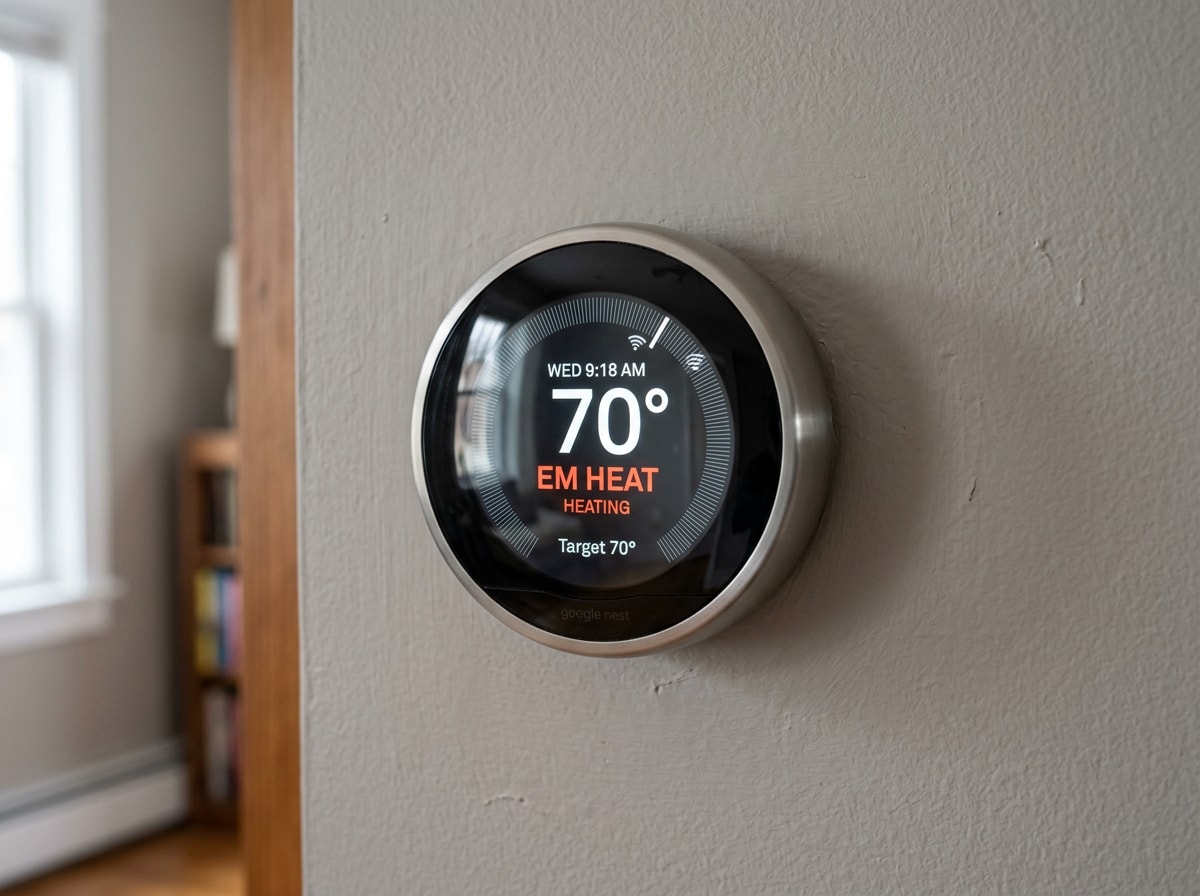
Emergency Heat is a backup heating mode built into most heat pump systems. It's labeled EM Heat on most thermostats, and it's not automatic. You have to switch it on yourself.
While auxiliary heat typically works alongside your heat pump to give it a boost during cold days, emergency heat completely shuts off the heat pump and runs only off the backup source. That backup source is usually an electric heat strip, though some dual-fuel setups use a gas or oil furnace instead.
Here's the part that confuses most homeowners: the Emergency heat option isn't available for non-heat pump systems. If your Florence home runs a straight gas furnace with a separate AC unit, this setting simply doesn't apply to you. It only matters if you have a heat pump, mini split, or dual-fuel system doing double duty for heating and cooling.
Auxiliary Heat vs. Emergency Heat: What's the Difference?
The main difference between auxiliary heat and emergency heat is who activates the backup source and whether the heat pump keeps operating. Auxiliary heat is a helper. Emergency heat is a replacement.
| Mode | Who Activates It | What Runs | Typical Trigger |
|---|---|---|---|
| Normal Heat Pump | Automatic | Outdoor heat pump only | Routine thermostat call |
| Auxiliary Heat | Automatic |
Heat pump and electric heat strips together
| Heat pump needs a boost in cold weather | |
|---|---|
| Emergency Heat | Manual (you) |
Backup source alone, with the compressor normally stopped
| Heat pump failure or technician instruction |
Emergency heat must be manually turned on, which is the single biggest giveaway that something's off when you see it active.
How Emergency Heat Works
When you flip the switch to EM Heat, your compressor and heat pump shut down entirely, and your system's backup heating system turns on.
The system bypasses the heat pump and directly accesses either the electric heat strip or the gas or oil furnace.
Electric resistance heat strips work the way a toaster or space heater does: current passes through metal coils, and those coils heat the air moving past them. It's reliable, but it's not efficient. The U.S. Department of Energy's guidance on residential heat pumps outlines why backup resistance heat is rated and sized separately from a heat pump's normal efficiency numbers, since the two heating methods work on completely different principles (Purchasing Energy-Efficient Residential Air-Source Heat Pumps).
If your system has switched to emergency heat and you're not sure why, an HVAC repair specialist can check the outdoor unit, the coil, and the compressor in one visit rather than leaving you to guess.
Why Emergency Heat Rarely Triggers in Florence, AZ
This is where Florence homeowners differ from someone in Minnesota or upstate New York. Heat pumps operating in northern climates typically need a supplemental heating source once outdoor temperatures drop below roughly 35°F. That threshold is where most auxiliary heat lockout settings are configured.
Florence's winter lows rarely sit in that range for long. National Weather Service climate normals for the Phoenix forecast area, which covers the Florence/Pinal County corridor, show that during winter months the lower desert valleys typically see daytime temperatures average around 70°F, with nighttime readings falling to or slightly below freezing only on the coldest nights (NWS Phoenix 1991-2020 Climate Normals). That's a narrow, occasional window, not a sustained cold snap.
The practical takeaway: if your heat pump switches into emergency heat here, it's far more likely to be a frozen coil, a failed compressor, a tripped breaker, or a refrigerant issue than a genuine case of "it's too cold outside for the heat pump to keep up." In Florence, EM Heat is usually a symptom, not a seasonal routine.
When You Should Use Emergency Heat
Use the EM Heat setting when:
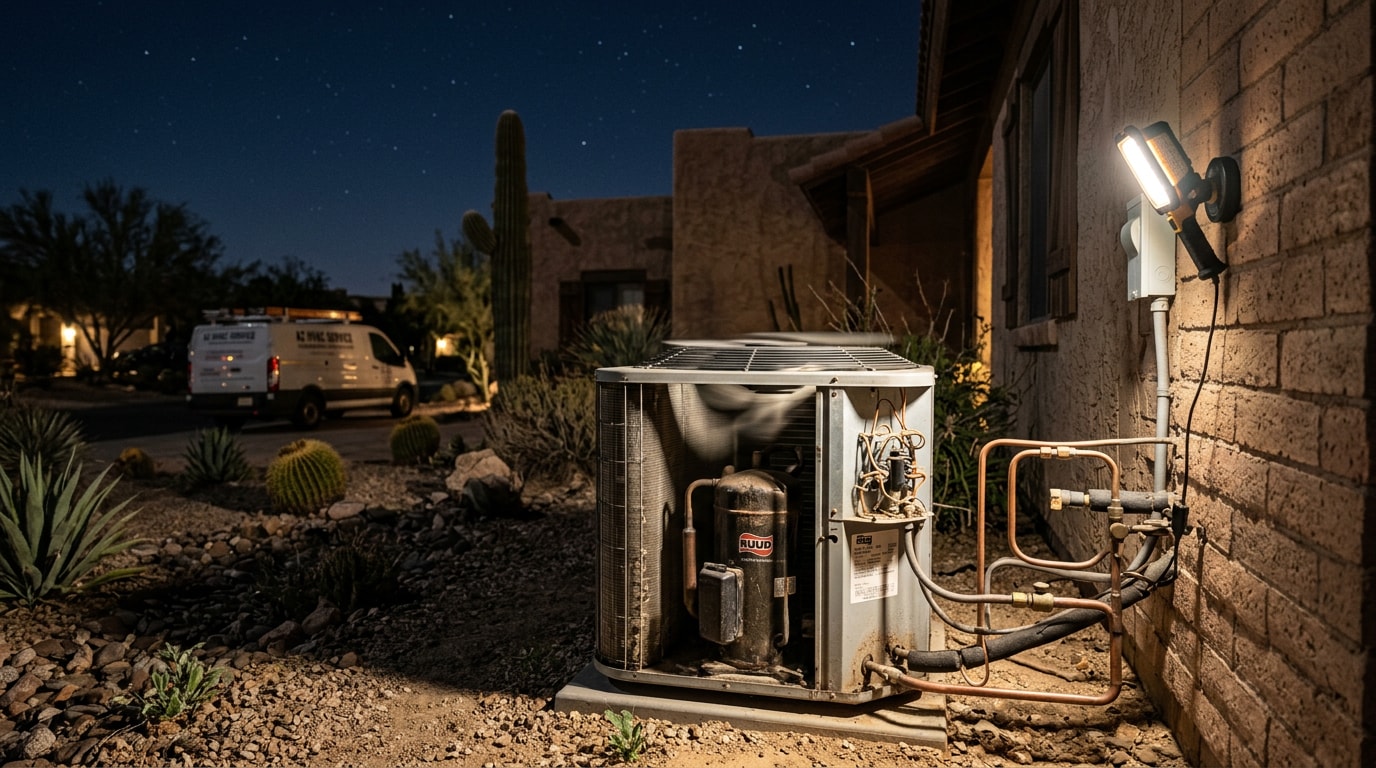
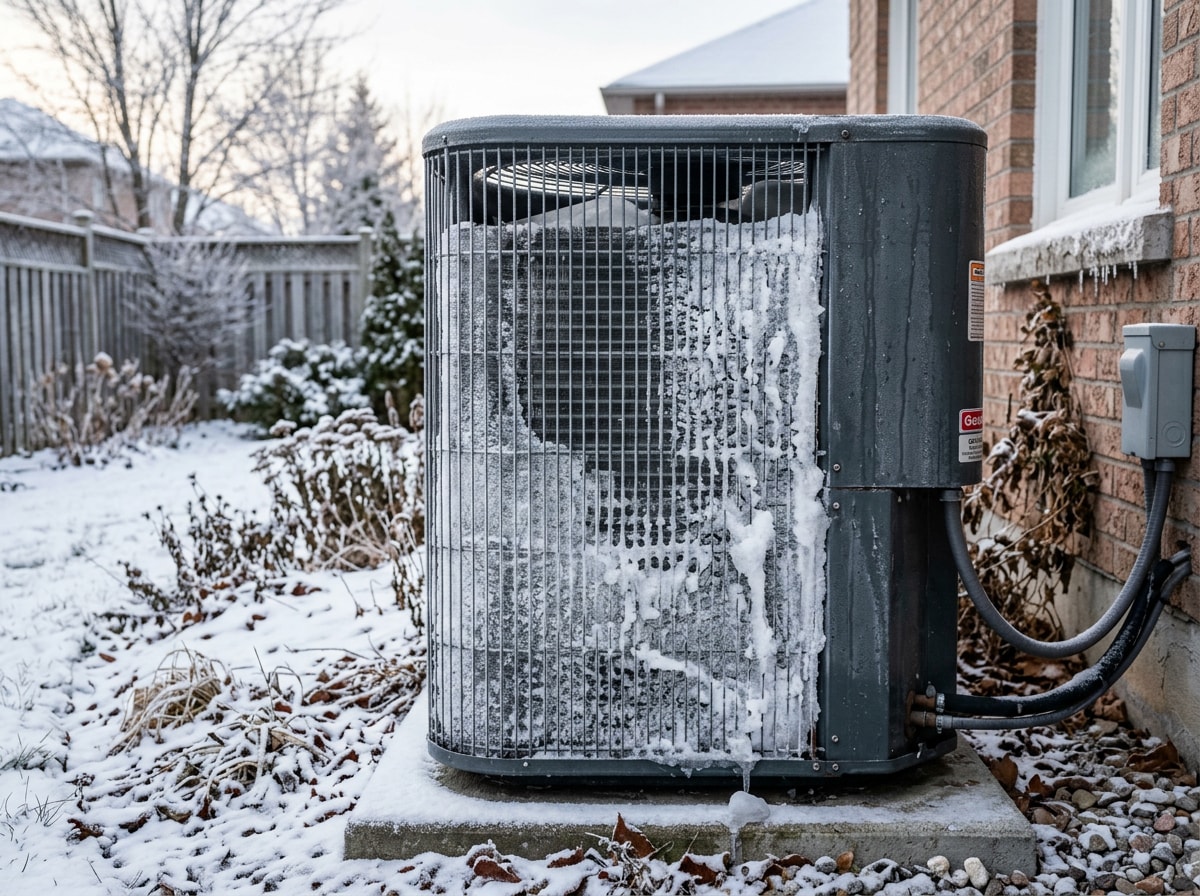
- Your heat pump has frozen over, failed, or shows visible damage
- A technician has told you to run backup heat while a part is on order
- The outdoor unit clearly isn't running at all, even though the thermostat is calling for heat
Both auxiliary and emergency heat should be treated as temporary settings, since they use a lot of energy and will increase your electricity bill. Running it for a day or two while you wait on a repair isn't dangerous. Leaving it on for weeks because the real problem never got diagnosed is where it gets expensive.
If your heat pump keeps dropping into emergency heat on its own, or you had to switch it manually and the outdoor unit still won't kick back on after a repair, schedule HVAC repair rather than letting the system run on backup heat indefinitely.
Signs You Need a Technician, Not Just Emergency Heat
A few warning signs point to a problem bigger than a thermostat setting:
- Ice or frost coating the outdoor unit even on a mild Florence afternoon
- The EM Heat light turning on by itself, without you touching the thermostat
- A breaker that keeps tripping when the heat pump tries to start
- A sudden, unexplained jump in your electric bill during the cooler months
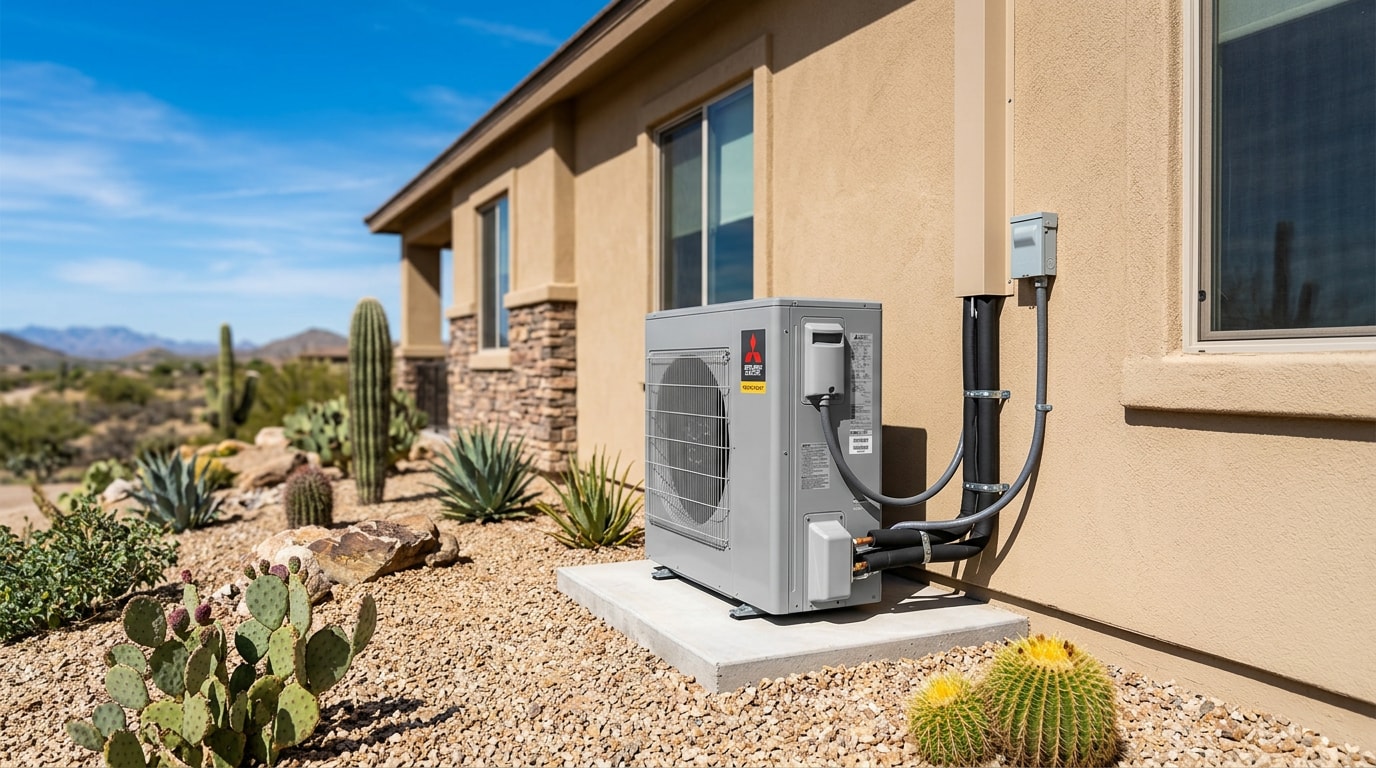
Routine HVAC maintenance catches most of these issues before they force a switch to backup heat in the first place. If you're running a ductless system instead of a central heat pump, the same logic applies. A mini split repair technician can diagnose a frozen or failing ductless unit just as quickly. And if your backup source is a furnace rather than electric strips, furnace repair covers that side of a dual-fuel system.
Homeowners dealing with moisture issues around their system at the same time may also want to check our guide on AC leaking in Florence, AZ, since frozen coils and leaking lines often show up together.
For general efficiency context on how heat pumps are supposed to perform before backup heat ever gets involved, ENERGY STAR's guidance notes that a heat pump is usually more efficient to run than a furnace or boiler year-round, which is part of why Florence homes lean on them in the first place (ENERGY STAR Air-Source Heat Pumps).
Need a second opinion on your system before winter gets here? Get a free estimate from our team, or visit our homepage to see the full range of heating and cooling work we handle across Florence and the surrounding area.
FAQ
Is emergency heat the same as auxiliary heat?
No. Emergency heat is a setting you select manually when the heat pump cannot operate properly and the home needs its backup source alone, while auxiliary heat kicks in automatically alongside a still-functioning heat pump.
How long can you run emergency heat?
Technically, it can run as long as you leave it on. Practically, it should only run until a technician arrives or a repair gets finished. It's a backup, not a long-term heating plan.
Is it bad or expensive to run emergency heat?
It won't damage your system short-term, but electric resistance heat draws considerably more power than a working heat pump. Expect a noticeable bump in your electric bill the longer it stays on.
Should I leave my thermostat on emergency heat?
No. Switch back to "Heat" or "Auto" once the heat pump is repaired. Leaving it on EM Heat unnecessarily keeps your bill elevated and can hide whether the actual repair worked.
What temperature triggers emergency heat in Florence, AZ?
There isn't a set temperature that should trigger it here. Florence rarely gets cold enough, long enough, for a properly working heat pump to need backup heat on its own. If EM Heat turns on, treat it as a signal to get the system checked rather than a normal cold-weather response.
Why did my thermostat switch to emergency heat on its own?
Some thermostats display an EM Heat alert automatically when they detect the heat pump isn't responding, even though you didn't select the mode yourself. That almost always means a mechanical or electrical fault, such as a frozen coil, a failed compressor, or a blown fuse, and it's worth a technician visit rather than resetting the thermostat and hoping it clears.