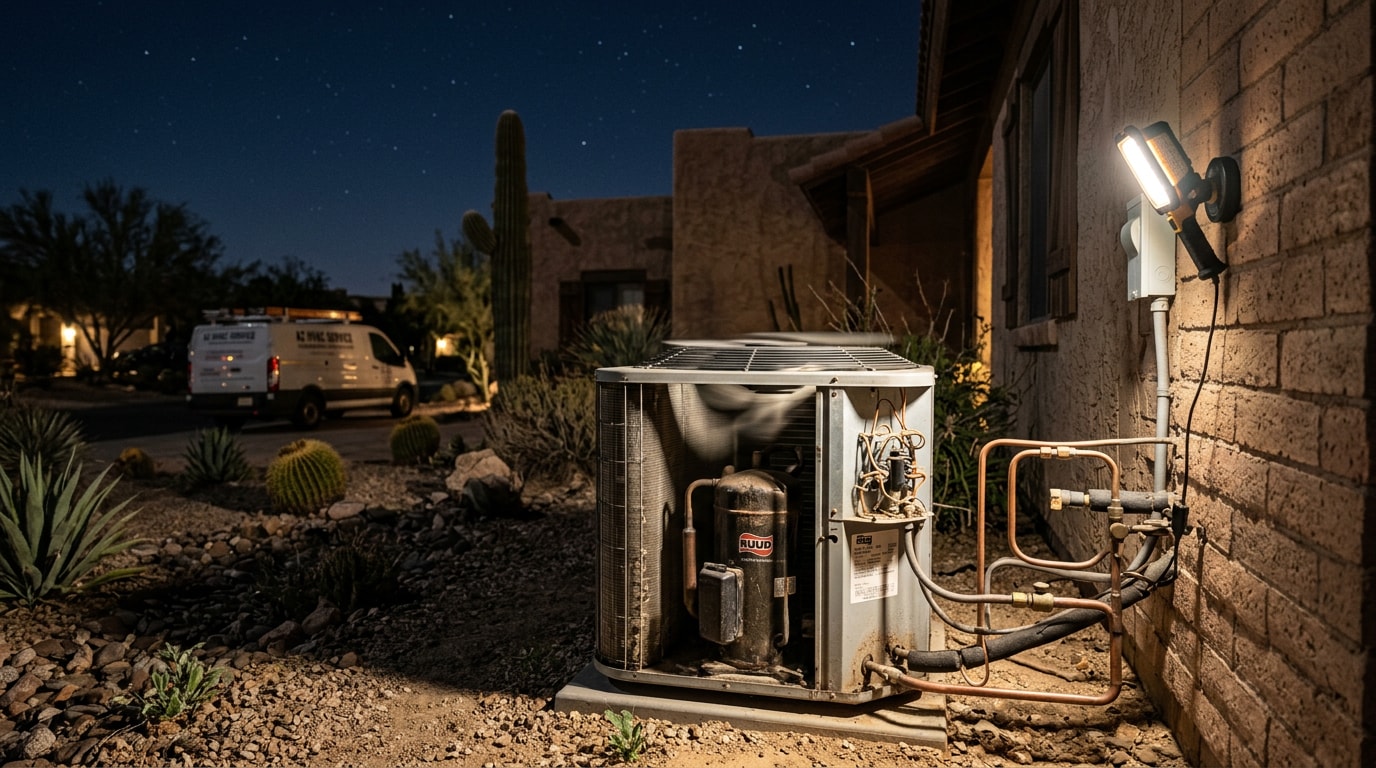
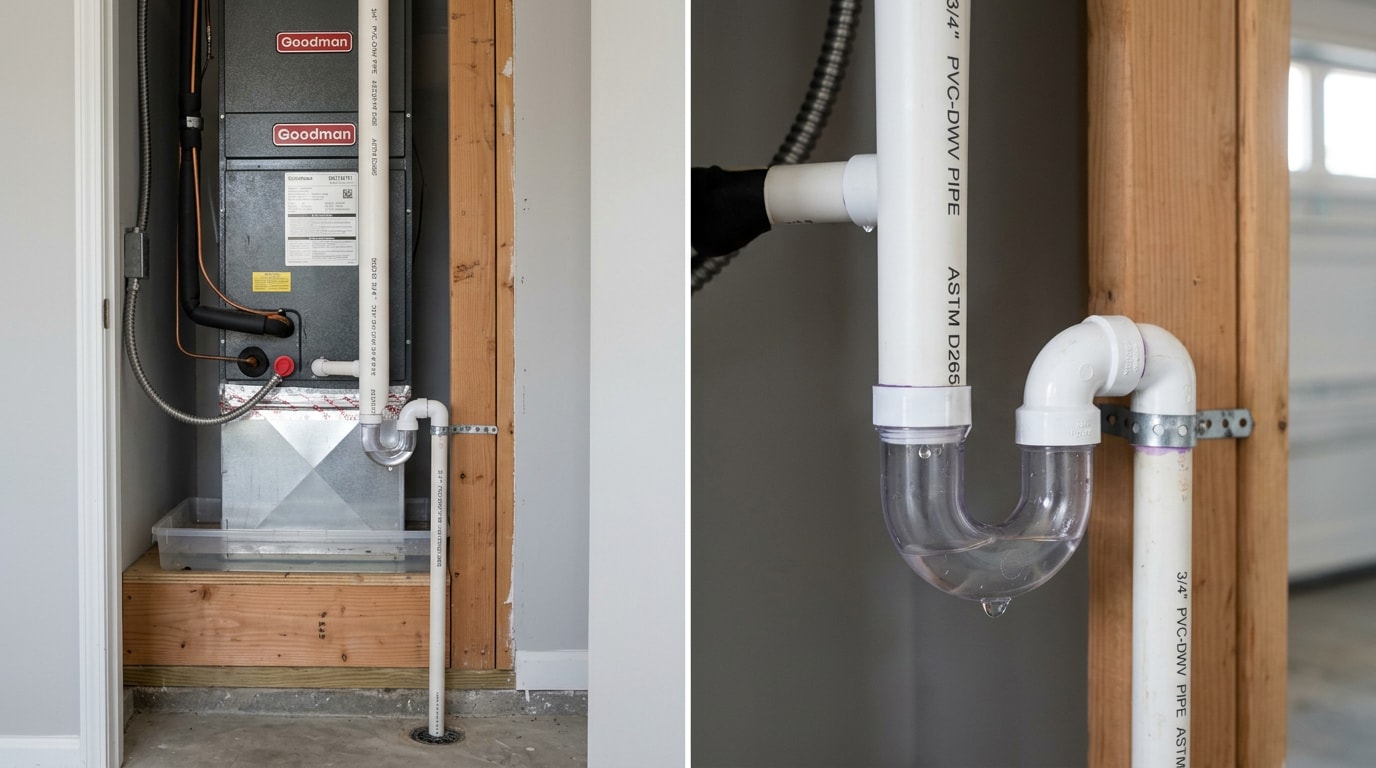
AC leaking in Florence, AZ ranks among the most common cooling complaints Pinal County homeowners deal with once monsoon humidity meets triple-digit heat. Most leaks trace back to one of two fixable culprits, and knowing which one you have determines whether a towel and a shop vac solve it or a technician needs to step in. Here's how to tell the difference before the water spreads to your ceiling or floor.
Where the Water Comes From When Your AC Is Leaking
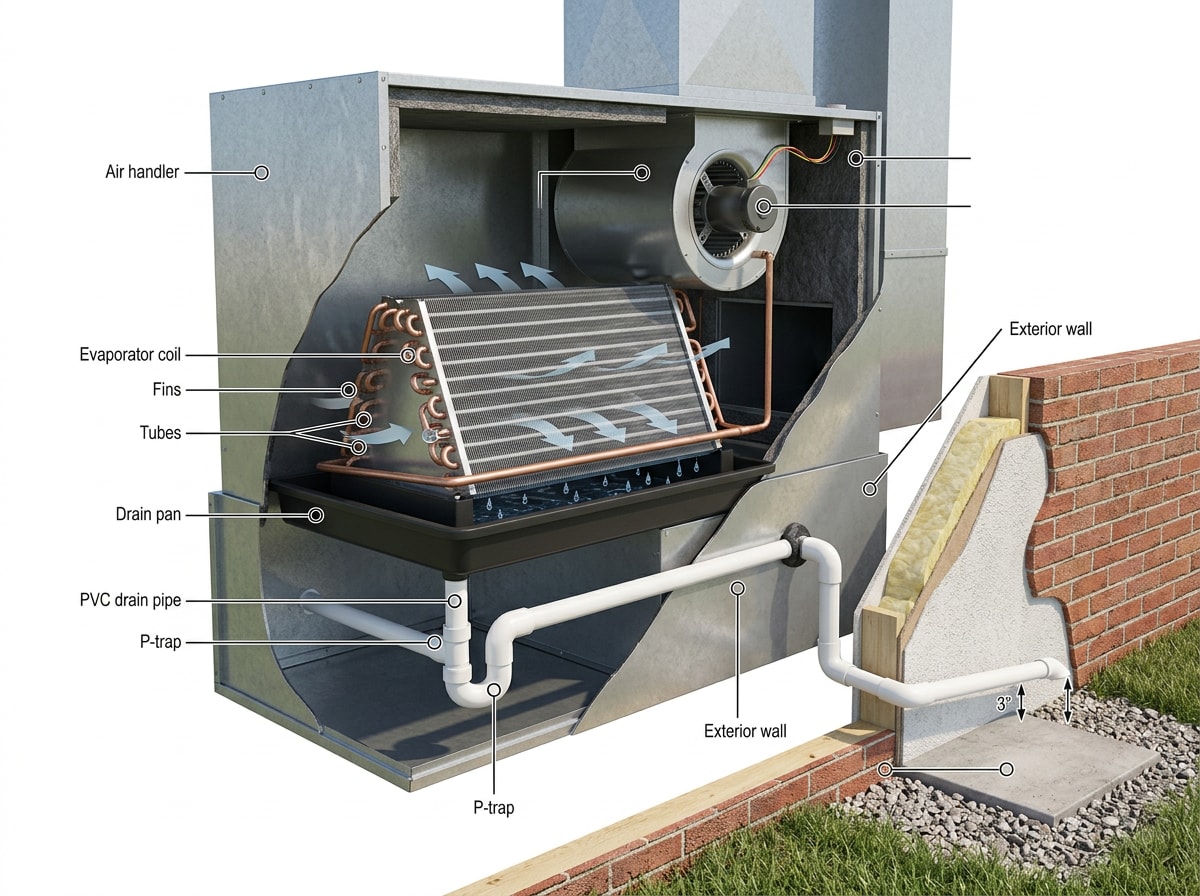
Your air conditioner doesn't just cool air, it pulls moisture out of it. Warm air passes over the cold evaporator coil, humidity condenses into water, and that condensate is supposed to drip into a pan and drain outside harmlessly.
In Florence, this process runs overtime. Summer heat keeps the system cycling constantly, and monsoon season pushes indoor moisture levels higher than most people expect from a desert climate. A home AC can produce several gallons of condensate a day during peak season. The water itself is normal; the problem starts when it doesn't drain where it's supposed to.
On service calls across Florence and the surrounding grid, our technicians see this exact pattern every monsoon season: a system that ran fine all spring suddenly drips the week humidity spikes. For routine upkeep that catches drainage issues before they become a puddle, a seasonal AC maintenance plan is the cheapest insurance you can buy.
Common Reasons Your AC Is Leaking Water
Two causes account for the vast majority of leaks reported across Pinal County homes.
Clogged Condensate Drain Line
A clogged condensate drain is the single most frequent cause of AC leaks in Arizona homes. Fine desert dust mixes with condensation to form a sludgy buildup inside the line. Algae also grows inside the dark, damp drain line, making the clog worse over time. Eventually, water backs up and spills out instead of draining away.
Many systems have a float switch designed to shut the unit off when water rises too high in the pan. If your AC suddenly stopped cooling with no warning, a tripped float switch is a strong clue. Cracked, rusted, or disconnected drain pans often share this same root cause and usually show up alongside a drain line clog rather than as a separate problem.
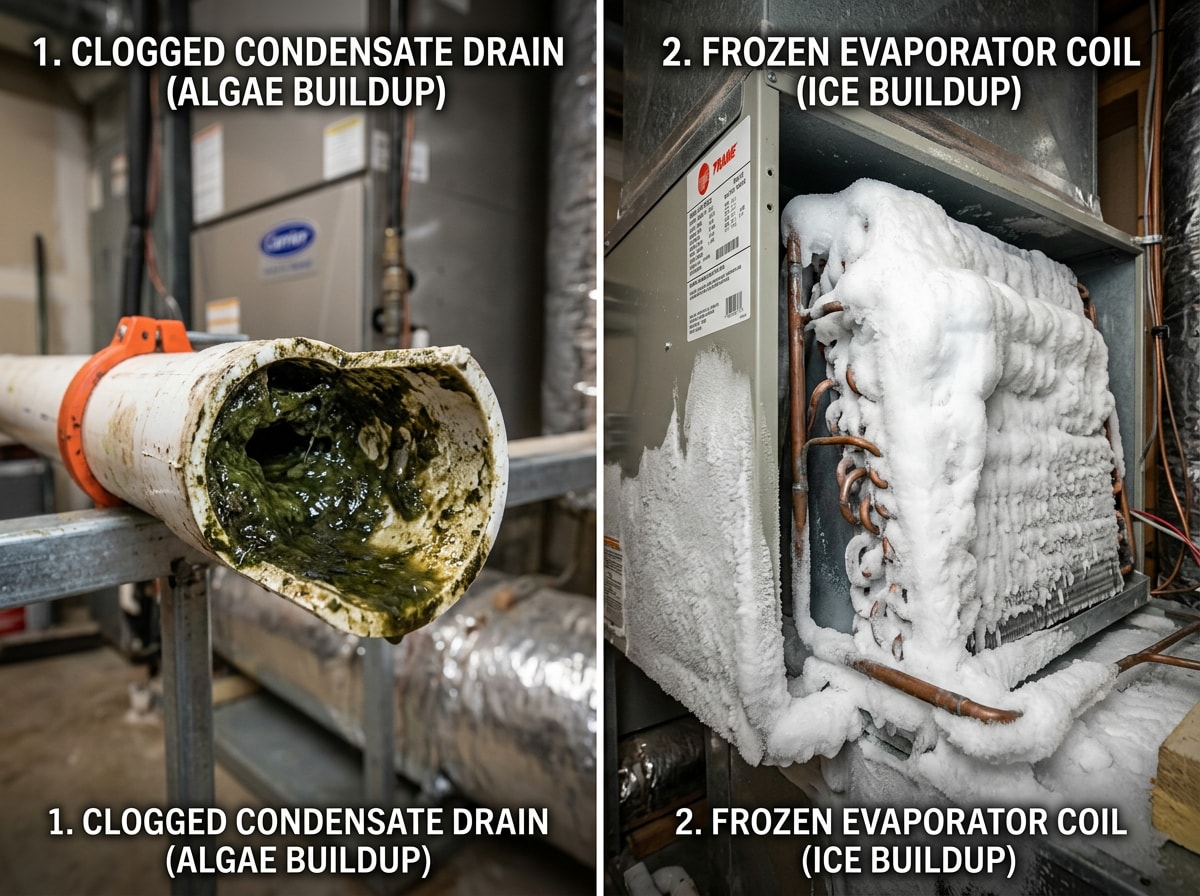
Frozen Evaporator Coil
A frozen evaporator coil usually starts with a dirty air filter. A clogged filter restricts airflow across the coil, the coil gets too cold, and condensation on its surface freezes solid. When the system cycles off or you turn the fan on, that ice melts all at once and floods the drain pan faster than it can drain.
Low refrigerant and poorly leveled installations can trigger the same freeze-and-flood pattern, so a recurring frozen coil isn't always a filter issue alone. A clean filter prevents dust and dirt from building up in the system, which can lead to expensive maintenance or early system failure , and in a dusty climate like Pinal County that means checking more often than the standard 90-day reminder.
Is It Water or Refrigerant?
Condensate is clear, odorless, and pools near the indoor unit. A refrigerant leak often shows an oily residue, a hissing or bubbling sound, and weak cooling even as the system runs constantly. The two require completely different responses, so identifying which one you have matters before you touch anything.
| Factor | Condensate Water | Refrigerant Leak |
|---|---|---|
| Appearance | Clear, water-like | Oily residue or film |
| Smell | None | Sometimes chemical/sweet |
| Sound | Quiet | Hissing or bubbling |
| Location (attic air handlers common in Florence) | Pooling at drain pan or ceiling below | Near coil connections or line sets |
| Cooling performance | Usually unaffected until clog worsens | Noticeably weaker, system runs longer |
| Safety risk | Low, mainly water damage | Higher, requires certified handling |
Refrigerant is a regulated substance. EPA regulations under Section 608 of the Clean Air Act require that technicians who maintain, service, repair, or dispose of equipment that could release refrigerants into the atmosphere be certified . You can confirm what that certification covers on the EPA's Section 608 technician certification page. Trying to diagnose condensate versus refrigerant yourself is fine; trying to fix a refrigerant leak yourself is not.
DIY vs. Professional Repair
Some leaks are genuinely safe to handle. Others aren't worth the risk once electrical components or refrigerant are involved.
What You Can Safely Do Yourself
- Turn the thermostat off. This stops more water from entering the pan and protects the system from running damaged.
- Soak up standing water with towels.
- Check the filter and replace it if it's dirty.
- Run a wet/dry vac at the outdoor drain line termination to pull the clog free.
- Follow with a vinegar flush down the drain line to slow future algae growth.
Stop and call a professional if you see ice on the copper refrigerant lines, notice an oily residue, or the leak returns shortly after you've cleared the drain. For anything beyond basic drain maintenance, Florence homeowners can browse AC repair services rather than risk a misdiagnosis. If the problem turns out to be weak cooling rather than a clean leak, our AC not getting cold diagnostic guide for San Tan Valley homeowners walks through the same symptom-matching process in more depth.
Potential Damage to Your Home If Left Unfixed
A leak that sits unaddressed rarely stays small. Water stains and sagging drywall or ceiling tiles are the most visible signs of AC water damage. Moisture trapped near wiring or outlets near the air handler can create a genuine electrical hazard.
If a water-damaged area can't be dried within 24-48 hours, you should assume mold growth has started , according to CDC guidance on mold cleanup after water damage. A struggling, water-logged system also tends to run less efficiently, which shows up as climbing energy bills before the leak itself becomes obvious.
Professional Evaluation and Repair
A licensed technician typically works through a straightforward process: matching what you're seeing (ice, oily residue, standing water, a tripped switch) to a likely cause, then confirming it before repairing anything.
Common fixes include:
- Thawing a frozen coil and replacing the filter
- Pressure-testing for a refrigerant leak
- Clearing or replacing a drain line
- Installing a float safety switch if the system doesn't already have one
- Replacing a failed condensate pump
Proper licensing matters here because it confirms the contractor is qualified to handle both electrical components and refrigerant safely, not just drain lines. Cobre Valley Air serves Florence and the rest of Pinal County, and you can check current availability through our Florence, AZ service area page. Ready to stop the drip for good? Get a Free Estimate and we'll match the fix to the actual cause, not just the symptom.
FAQ
Why Is My AC Leaking Water Inside the House?
The most common cause is a clogged condensate drain line, though a frozen evaporator coil, a cracked drain pan, or a failed condensate pump can all cause the same symptom. Checking the filter and drain line first usually narrows down which one you're dealing with.
Should I Turn Off My AC If It's Leaking Water?
Yes. Switching the thermostat off stops more water from collecting in the pan and prevents further strain on a system that's already struggling. It also gives you time to clean up standing water before it spreads.
Is It Normal for an AC to Leak a Little Water?
A small amount of condensate dripping from the outdoor drain line termination is normal, especially during monsoon season. Water pooling indoors, near the air handler, or on a ceiling below an attic unit is never normal and means the drain system has backed up somewhere.
Can a Leaking AC Cause Mold?
Yes. Trapped moisture from a backed-up drain or overflowing pan can start supporting mold growth within one to two days. Addressing a leak quickly is the best way to avoid that timeline altogether.
Can a Leaking AC Cause Water Damage to My Home?
Yes. Once a drain pan overflows or a line stays clogged, water can soak into drywall, stain ceilings, and even reach subfloors if the unit sits in an attic or closet above living space. The longer it goes unnoticed, the more expensive the repair tends to become.
How Much Does It Cost to Fix an AC Leak?
It depends entirely on the cause. Clearing a clogged drain line is one of the least expensive HVAC repairs there is, while replacing a failed condensate pump, a cracked coil, or fixing a refrigerant leak costs significantly more. A technician needs to diagnose the actual cause before any honest number is possible, which is why a free estimate is the fastest way to get a real figure for your system.
Explore more of our work on the Projects page, or visit Cobre Valley Air to see the full range of HVAC services we provide across Florence and Pinal County.