AC not getting cold in San Tan Valley, AZ usually means one of four things: a dirty filter, low refrigerant, a dust-caked condenser, or a system that's simply too old to keep up with the desert heat load. This guide breaks down each cause by the symptom you're actually seeing, tells you what you can check yourself, and flags exactly when it's time to call a licensed technician. I'm Tyler Pearce, owner of Cobre Valley Air LLC, and I've diagnosed this exact complaint on hundreds of Pinal County systems.
Why ACs Struggle to Cool in San Tan Valley's Desert Climate
Desert heat, fine dust, and monsoon humidity all push cooling systems here harder than almost anywhere else in the country. Nearby Phoenix's official National Weather Service normal high for early July sits at 107°F, with highs regularly pushing past 110 in the hottest stretches of summer. San Tan Valley sits in the same desert basin and sees comparable heat loads, which is the root cause behind most of the cooling complaints we run into each season.
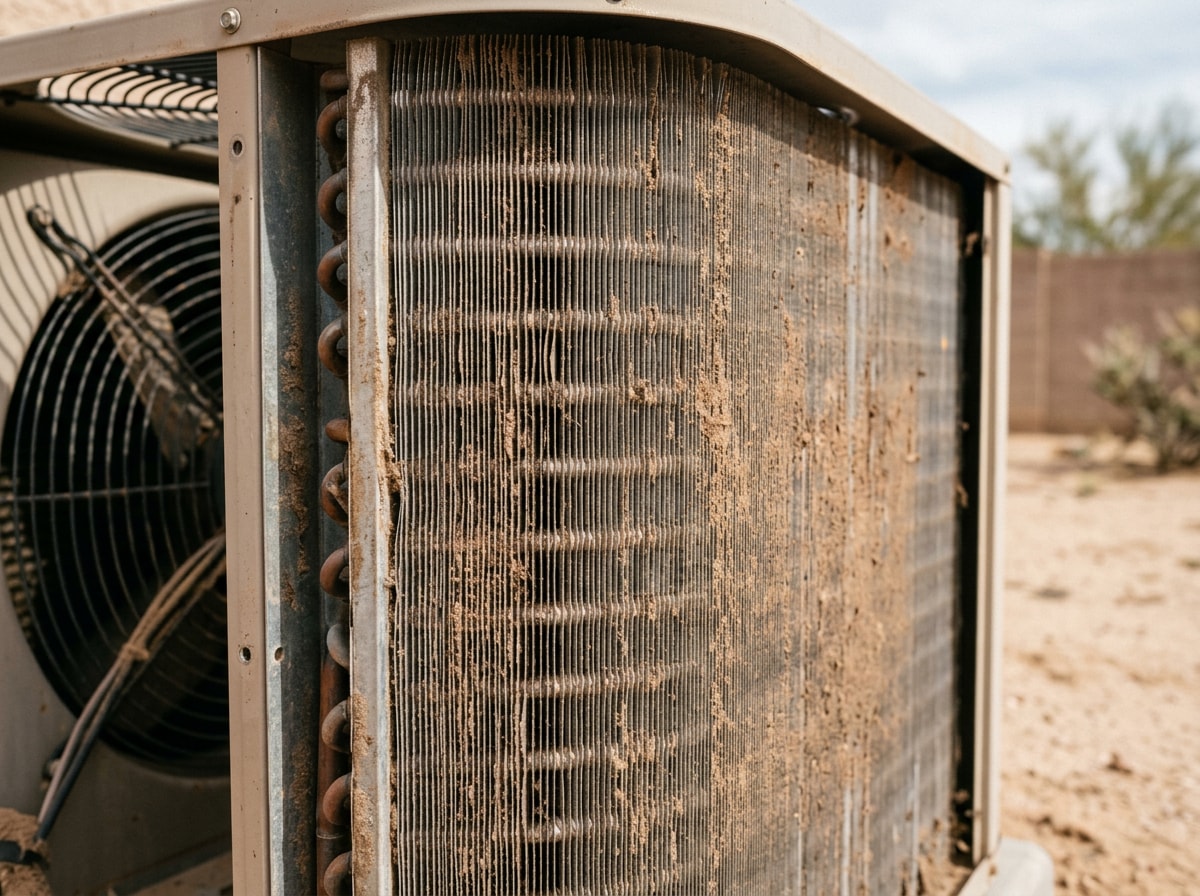
Fine desert dust compounds the problem. It settles into the thin aluminum fins of your outdoor condenser coil and acts almost like a blanket, trapping heat the unit is supposed to release outside. A dust-clogged condenser can't shed heat efficiently no matter how hard the compressor runs.
Monsoon season adds another layer. Humid air requires extra dehumidification work on top of basic temperature control, which is a well-known factor behind AC complaints every July and August.
If your unit serves a home in this area, our San Tan Valley service area page covers what local conditions mean for your specific system.
Signs Your AC Needs Professional Repair
Before diagnosing a cause, match what you're experiencing to a known symptom pattern. The four patterns below cover almost every version of "my AC isn't cooling" that local homeowners report.
AC Runs Constantly But House Stays Warm
A system that runs nonstop in the afternoon without ever reaching the thermostat setting has lost cooling capacity relative to the heat load it's fighting. This is different from a unit that cycles normally but simply blows warm air.
This usually traces back to one of a few things:
- Low refrigerant
- Dirty coils
- A failing compressor
- Duct leaks dumping cool air into a hot attic before it reaches your rooms
If the problem shows up specifically during peak afternoon heat, that timing is itself a clue pointing toward lost capacity rather than a simple sensor glitch. Our AC repair service page outlines how technicians isolate which of these is happening in your system.
Weak or Warm Air Blowing From Vents
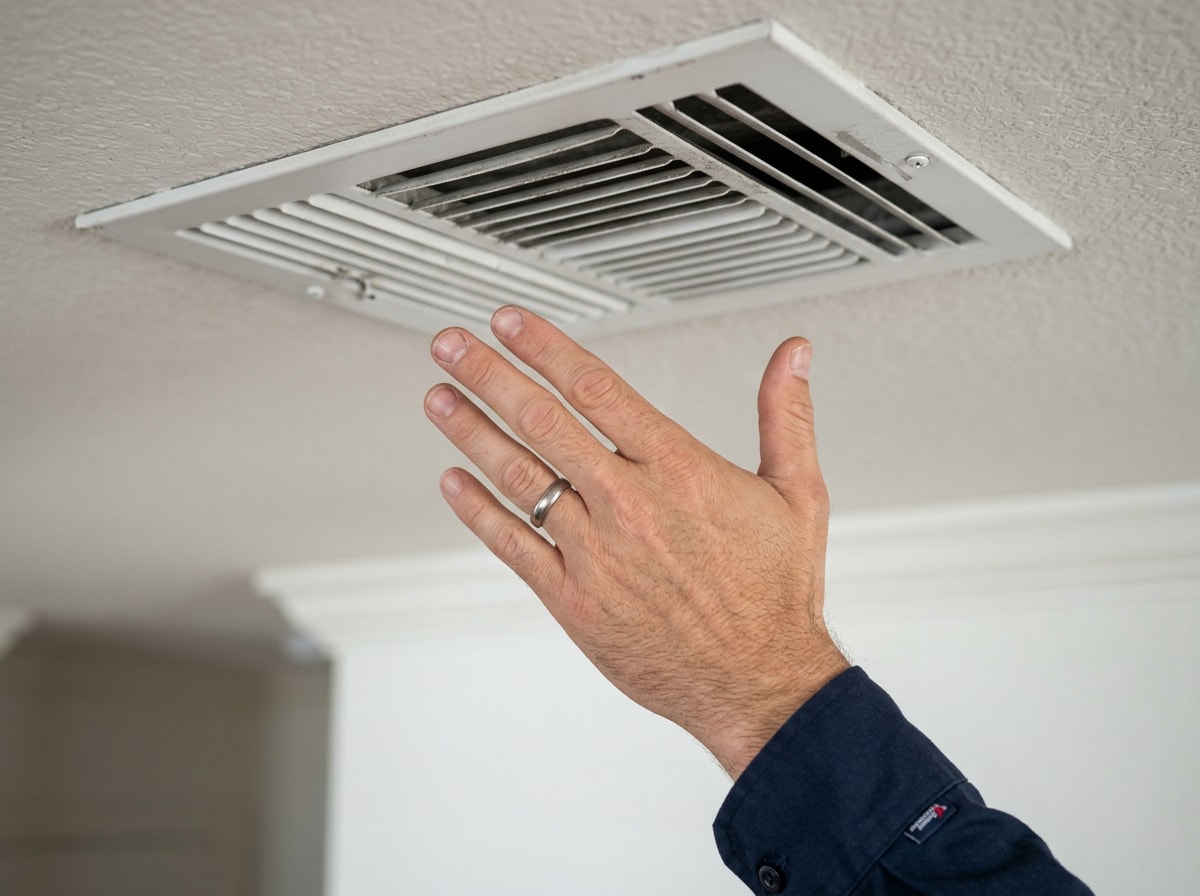
Hold your hand in front of a supply vent for a few seconds. Air that's merely cool instead of genuinely cold, or airflow that feels weak and thin, both point to a mechanical problem rather than a thermostat setting.
This combination usually means one of two things:
- Low refrigerant or a restricted evaporator coil limiting heat absorption
- A failing blower motor that can't push enough air across the coil
Distinguishing between these requires checking both temperature and airflow volume together, since either problem alone can produce a similar complaint at the vent. Homes with a back bedroom or bonus room that never cools evenly sometimes have a duct design problem rather than an equipment failure; our mini split repair page covers ductless options for rooms like that.
Water Leaking Around Your Indoor Unit
Puddles near the air handler, or water staining on a nearby ceiling, almost always trace back to one of two things: a clogged condensate drain line, or a frozen evaporator coil that's now thawing and overflowing the drain pan.
Both of these can also explain a sudden loss of cooling. A frozen coil can't absorb heat properly, and a backed-up condensate drain often signals an airflow problem upstream. Don't ignore water around the unit — left alone, it can damage flooring, drywall, and the equipment itself.
The System Short-Cycles
Short cycling describes an AC that turns on, runs for just a few minutes, then shuts off and restarts shortly after. This pattern wastes energy and puts real stress on the most expensive part of the system, the compressor.
Common causes include oversized equipment that cools too fast and shuts off before dehumidifying properly, low refrigerant, a failing thermostat sensor, or a dirty evaporator coil restricting airflow enough to trip a safety switch. If your AC turns on and off in a tight, repeating pattern, mention that specifically when you call a technician.
What's Causing Your AC Not to Cool
Two mechanical issues account for the large majority of "runs but won't cool" calls in San Tan Valley: a dirty air filter restricting airflow, and a refrigerant leak reducing the system's heat-absorbing capacity. Both are diagnosable in minutes by a technician, but only one is something you can check yourself.
Dirty or Impacted Air Filters
Your blower pulls warm household air through the return duct, across the air filter, and over the cold evaporator coil before sending it back out as cooled air. When that filter is clogged, not enough air moves across the coil, so it can ice over instead of cooling efficiently.
A clogged filter is one of the cheapest fixes in this entire guide. Replace the filter, then run the system in fan-only mode for an hour or two to let any ice thaw before testing cooling again.
Desert dust means this happens faster here than in less dusty climates. Routinely replacing or cleaning your air filters can lower an air conditioner's energy consumption by 5 to 15 percent , according to the Department of Energy's home cooling guidance. During peak season, we tell customers to check filters every two to four weeks instead of waiting a full month. Our HVAC maintenance page covers a seasonal filter and coil schedule built for this climate.
Refrigerant Leaks
Refrigerant is the fluid that actually absorbs heat from your home's air and carries it outside to be released. A leak typically develops at coil joints, line connections, or fittings, often worsened by corrosion or the expansion and contraction stress extreme desert heat puts on metal components over years of use.
Low refrigerant isn't a DIY fix, and it isn't legal to self-correct, either. Anyone who removes refrigerant from a residential AC system must be a certified technician and must evacuate refrigerant to a set level using certified refrigerant recovery equipment before servicing or disposing of the appliance , under the EPA's Section 608 refrigerant management rules. That's a protection for you as much as it is a regulation — it's the reason a reputable company can't just "top off" your Freon and send you on your way without finding the leak first.
What to Expect From Professional AC Repair in San Tan Valley
A proper diagnostic starts with verifying thermostat settings and calibration, then moves to an airflow assessment covering filters, ductwork, and the temperature split between supply and return air. From there, a technician inspects both the condenser and evaporator coils for dust buildup, ice, or physical damage.
This process lets a technician pinpoint the actual cause rather than guessing, which saves you from paying for parts or labor you didn't need. At Cobre Valley Air, we walk every customer through what we found and why, before any repair work starts. If you're ready to get a system checked, get a free estimate and we'll get a tech out to diagnose it properly.
Repair vs. Replacement: Making the Smart Choice
Once a technician identifies the problem, the next question is usually whether to repair or replace the equipment. Four factors drive that decision.
| Factor | Leans Toward Repair | Leans Toward Replacement |
|---|---|---|
| Unit age | Under 10 years old | Past 12-15 years old |
| Repair cost | Under roughly half the price of a new system | Approaching or exceeding half the replacement cost |
| Repair history | First or second repair in several years | Recurring repairs each season |
| Efficiency | SEER rating still reasonably close to current standards | Outdated SEER rating driving up bills |
Past the 12-15 year mark, with recurring repairs and an outdated SEER rating, replacement often pays for itself through lower energy bills within a few years. If your current unit is still under warranty, it's worth checking what that warranty actually covers before paying out of pocket; our AC warranty guide for Gold Canyon homeowners walks through what's typically included and what voids coverage. Our HVAC installation page covers current equipment options if you're weighing a full replacement.
Protecting Your AC Investment in San Tan Valley's Climate
Preventive care matters more here than in milder climates, mainly because of how fast dust accumulates. Most HVAC pros recommend checking filters every 30 days during peak cooling season, more often if you're near open desert, construction, or farmland.
Catching coil and airflow issues early, before a freeze-thaw cycle damages fins or stresses the compressor, is the single best way to protect your investment over the long run. Routine spring maintenance tends to prevent the majority of mid-summer breakdowns covered in this guide. Our AC maintenance service page outlines what a seasonal tune-up typically includes, and you can schedule a free estimate before the next heat wave hits.
FAQ
What should I do if my AC stops working suddenly?
Start with basic homeowner-safe checks: confirm the thermostat is set to "cool" with fresh batteries, and check your electrical panel for a tripped breaker. If the AC stopped working after those checks, it's time for a professional diagnostic rather than more troubleshooting on your own.
Why is my AC not blowing cold air?
The leading causes are a dirty filter restricting airflow, low refrigerant from a leak, a thermostat malfunction, or a dust-clogged condenser coil losing heat-shedding ability. Any of these can leave you with air that's cool but never truly cold.
How do I fix my AC not blowing cool air?
Work through it in order: check the thermostat settings and batteries, inspect and replace the air filter if it's dirty, look at the outdoor condenser for visible dust or debris, then call a professional if cooling still hasn't improved. These steps catch the most common fixable issues first.
Why does my AC take so long to get cold?
Slow cooling usually points to restricted airflow, low refrigerant, or equipment that's undersized or aging for San Tan Valley's heat load. Given how much harder compressors work on 110-degree-plus days, a slower-than-usual cooldown is often the earliest warning sign of a bigger problem.
Is it normal for my AC to run constantly in San Tan Valley summers?
Longer run times during the hottest part of the afternoon are normal here. What's not normal is a system that runs nonstop and still can't reach the thermostat setting — that's a sign of lost capacity, not just a heavy heat load.
Can dust really stop my AC from cooling?
Yes. Dust that coats the outdoor condenser fins traps heat the unit needs to release, and dust that gets past a clogged filter can build up on the indoor evaporator coil. Either one reduces how much heat the system can move, even if every mechanical part is otherwise working fine.