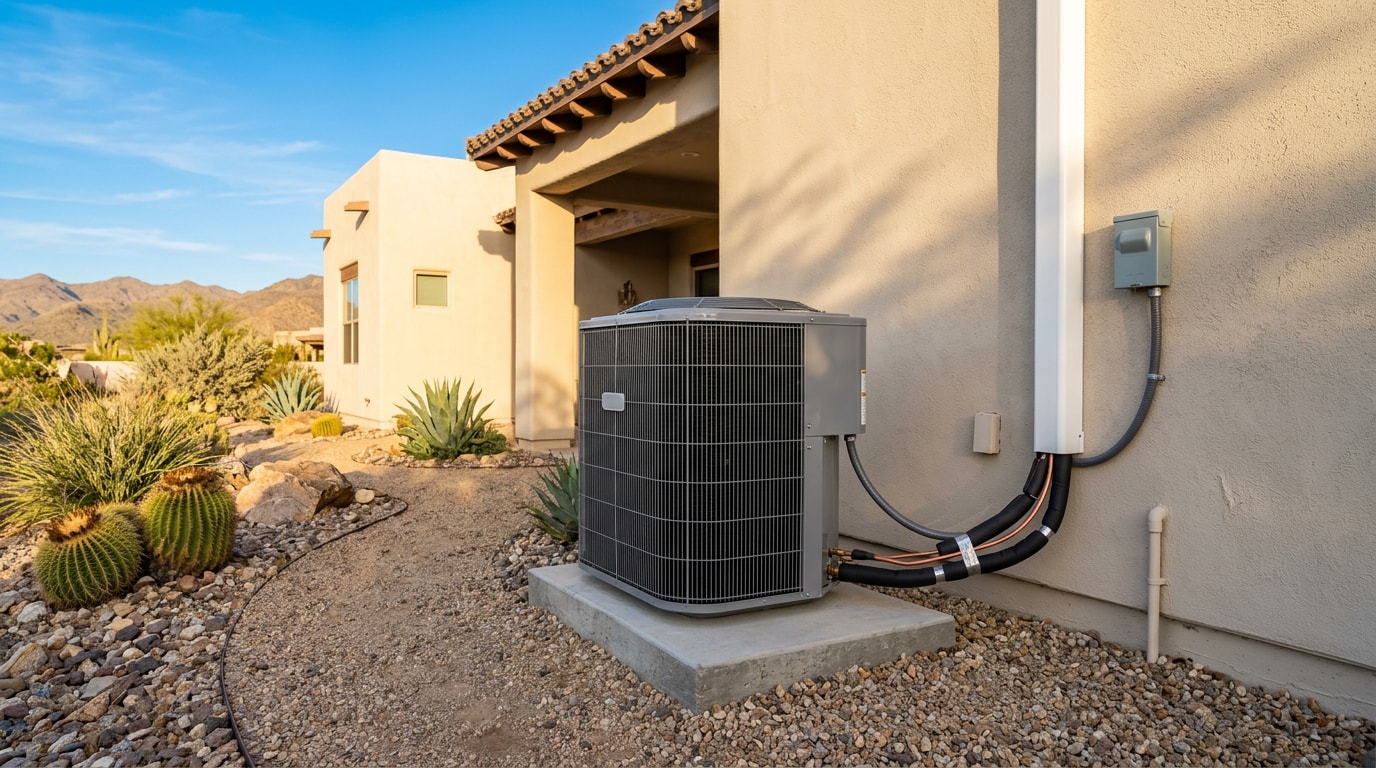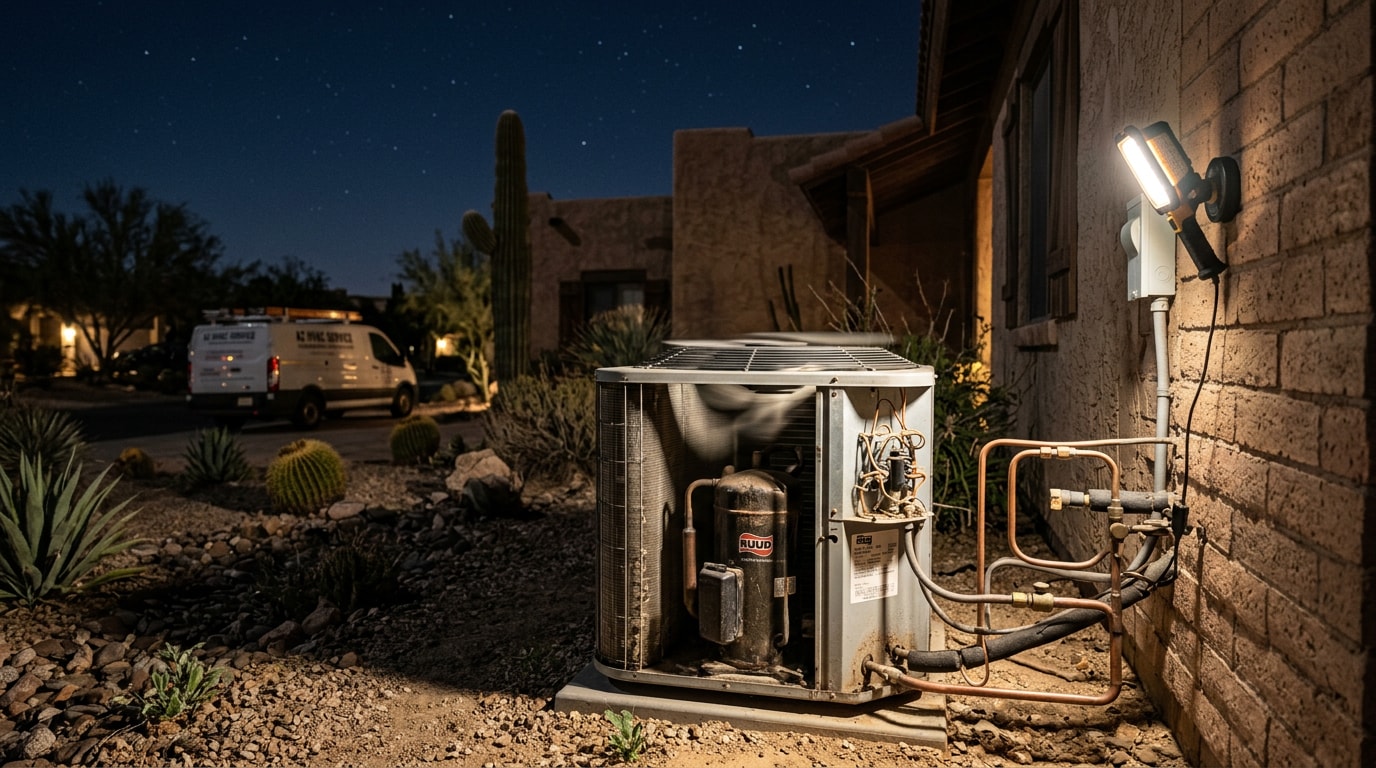
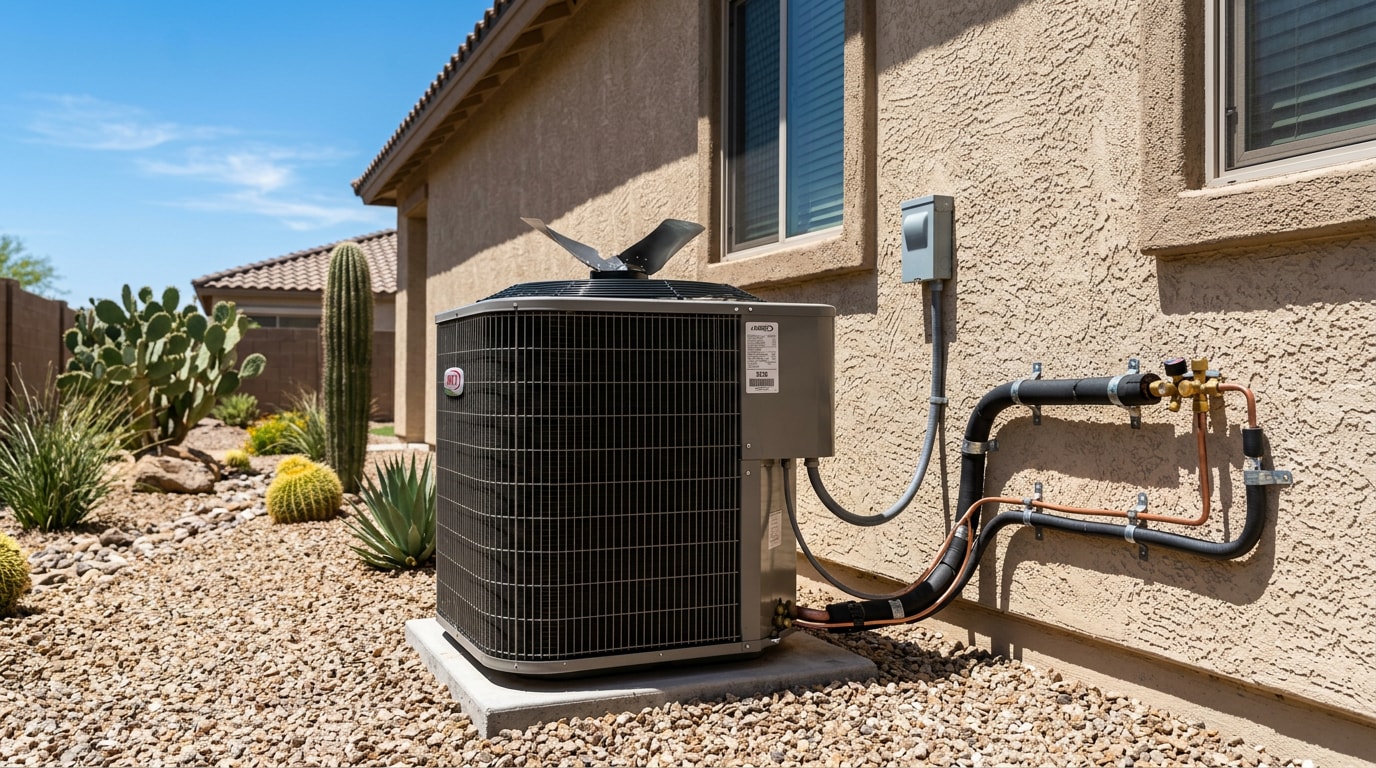
AC blowing hot air in Mesa, AZ turns a routine summer afternoon into an emergency fast. Triple-digit heat doesn't leave room for guesswork or a wait-and-see approach. Below are the real causes, the checks you can safely run yourself, and the exact signs that mean it's time to call a professional.
Reasons Why Your AC May Be Blowing Hot Air
A hot-air AC almost always traces back to one of three failure points: the controls, the airflow path, or the refrigerant system. Narrowing down which one is acting up points you straight to the fix.
Thermostat Settings and Simple Power Issues That Affect Cooling
Sometimes the fix is embarrassingly simple.
A thermostat accidentally set to "fan" instead of "cool" will circulate room-temperature air endlessly. Dead thermostat batteries, a tripped breaker, or a flipped outdoor disconnect switch produce the exact same symptom.
In Mesa, afternoon power fluctuations and brownouts during peak-demand hours happen often enough that a quick breaker check belongs at the top of any troubleshooting list, before you assume something's actually broken. If the simple stuff checks out, a local AC repair technician can run a full diagnostic.
Airflow Restrictions That Reduce Cooling Performance
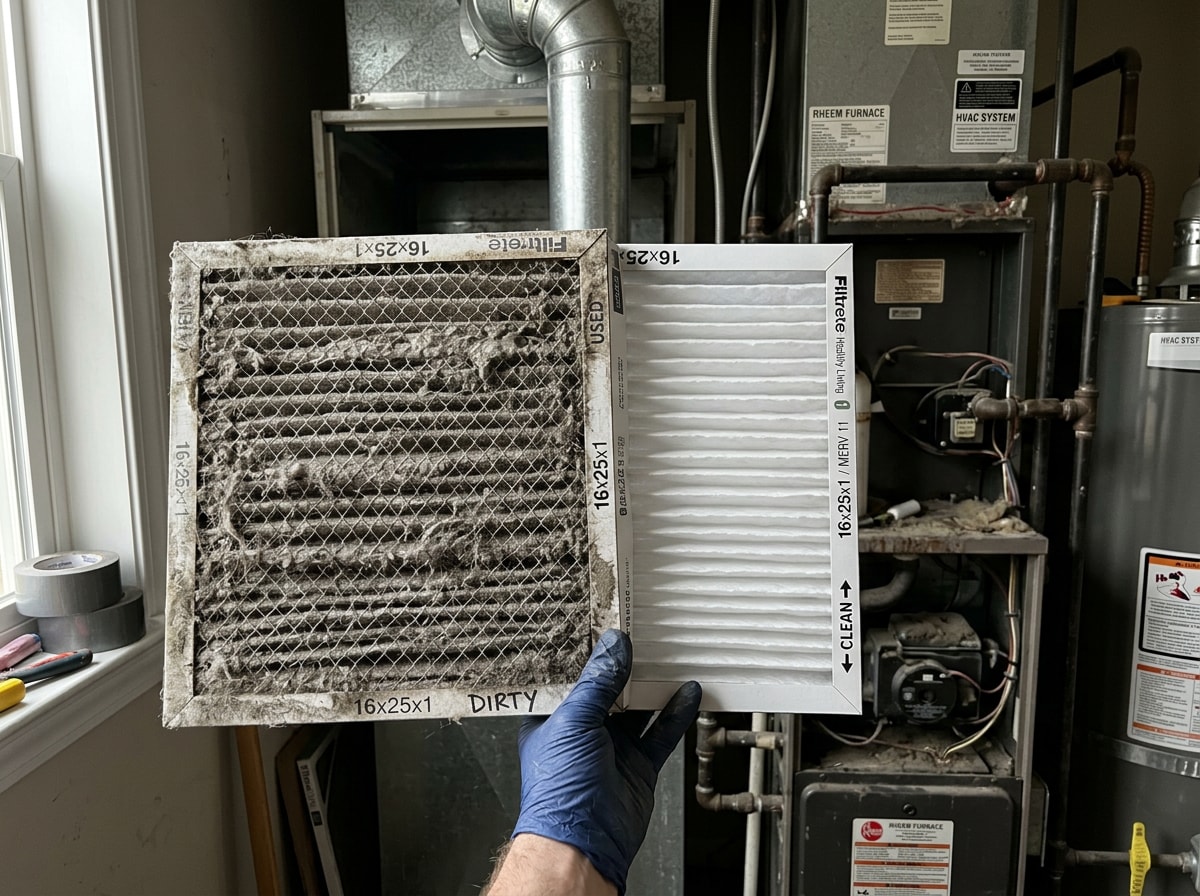
A dirty air filter, blocked supply vents, or leaky ductwork all choke off airflow. When air can't move across the evaporator coil properly, the system struggles to pull heat out of your home. Dirty evaporator or condenser coils cause the same heat-exchange breakdown even when airflow itself seems fine.
Mesa's dust storms and monsoon debris clog filters and coils noticeably faster than in milder climates, so a flat 90-day replacement schedule often isn't enough here. Routine maintenance may include replacing air filters to avoid clogging, which reduces your air conditioner's ability to absorb heat. Duct leaks in attic spaces compound the problem by losing cooled air before it ever reaches your vents.
Here's the part most guides skip: cooling isn't a small line item on your power bill. Air conditioning accounts for roughly 19% of household electricity use in the United States, about 254 billion kilowatt-hours a year, according to the U.S. Energy Information Administration. A restricted filter or dirty coil doesn't just cause warm air, it quietly drives that number even higher every month it goes unaddressed.
Refrigerant Leaks
Refrigerant absorbs heat from indoor air and releases it outside, so low refrigerant from a leak means your AC keeps running but can't actually cool. Leaks typically show up at solder joints, service valve connections, or along the line set.
This isn't a DIY repair. EPA regulations under Section 608 of the Clean Air Act require that technicians who maintain, service, repair, or dispose of equipment that could release ozone depleting refrigerants into the atmosphere must be certified. An AC recharge without finding the leak first just means the same problem returns within weeks. If you suspect low refrigerant, schedule a diagnostic visit rather than topping it off yourself.
If your system is also short-cycling or struggling to hit the set temperature on mild days, the diagnostic steps overlap closely with what we cover in our San Tan Valley AC diagnostic guide, which is worth a look if hot air is only part of the problem.
DIY Checks You Can Try When Your AC Blows Warm Air
Run through these in order, safest and easiest first.
- Thermostat check – confirm it's set to cool mode, not fan, and that the temperature is below room temperature.
- Air filter check – pull the filter and hold it to light; replace it if you can't see through it.
- Clear vents – move furniture or curtains blocking supply vents.
- Condenser clearance – walk outside and check that the outdoor unit has at least two feet of clearance from plants or debris.
- Breaker check – look for a tripped switch at the panel.
| Check | Safe for homeowners? | What it rules out |
|---|---|---|
| Thermostat mode/temperature | Yes | Fan-only setting, miscommunication |
| Air filter condition | Yes | Restricted airflow, iced coil risk |
| Vent and furniture clearance | Yes | Blocked supply air |
| Condenser clearance outside | Yes | Overheated, obstructed outdoor unit |
| Breaker/disconnect switch | Yes | Power loss to the system |
| Opening the outdoor electrical panel | No, call a pro | Capacitor, contactor, wiring faults |
| Checking refrigerant charge | No, call a pro | Leaks, low charge, recovery compliance |
Steps 1 through 5 are safe to handle yourself even in extreme heat. Opening the outdoor unit's electrical panel or touching refrigerant lines is where DIY stops and professional maintenance takes over.
What Qualifies as an AC Emergency in Mesa
Not every warm-air complaint needs a same-day call, but certain signs mean waiting isn't safe, especially given how quickly indoor temperatures climb during a Mesa summer.
AC blowing hot is its own emergency category: the system runs and moves air, but that air isn't cold. Leading causes include a failing compressor, a fully lost refrigerant charge, or a stuck reversing valve. For households with elderly residents, young children, or anyone with a medical condition, a no-cooling AC during extreme heat carries real health risk. If your body gets too hot, you can get sick, so know the symptoms of overheating and when to seek medical care.
Other signs that move a repair from "schedule it" to "call now":
- A burning smell from vents or the outdoor unit
- The breaker tripping every time the AC starts
- Ice visible on the indoor coil or refrigerant lines
- Water pooling around the indoor unit
In our dispatch experience, Mesa calls for hot-air complaints cluster in two waves: thermostat and filter issues dominate the early-summer rush in May and June, while refrigerant leaks and compressor failures climb through July and August as systems run nearly nonstop. If you're already past the easy checks, contact us for a free estimate and we'll get a technician out to diagnose it properly.
FAQ
Why is my AC blowing hot air?
Most often it's a thermostat set to fan mode, a clogged filter restricting airflow, dirty coils, or low refrigerant from a leak. Less commonly, a failing compressor is to blame. Checking the thermostat and filter first rules out the two simplest causes before assuming a bigger repair is needed.
My AC is blowing warm air. Should I turn it off?
Switching to fan mode is fine temporarily while you troubleshoot. If you notice unusual noise, a burning smell, or the breaker tripping repeatedly, shut the system off completely and call for service before running it again.
My AC is blowing hot air. What's wrong?
The usual suspects are low refrigerant, a failing compressor, a frozen or dirty coil, or a faulty thermostat. Pinning down the exact cause usually takes a technician with gauges and experience, since several causes share the same symptom.
Why does my AC blow cold air one day and hot air the next?
This pattern points to a coil icing and thawing in cycles, a refrigerant leak that worsens as the system runs, or a failing capacitor that only sometimes lets the compressor start. It's rarely a one-time glitch; it means a component is on its way out.
Do you offer 24-hour AC repair in Mesa?
Many local AC companies, including ours, offer around-the-clock emergency service, including nights, weekends, and holidays, since hot-air failures rarely wait for business hours. Check service availability in Mesa before an emergency hits so you're not searching during a heat wave.
---
Reviewed by the licensed, EPA 608-certified technicians at Cobre Valley Air, serving Mesa, AZ and the greater East Valley. Have a system blowing hot air right now? Get a free estimate and we'll schedule a diagnostic visit.