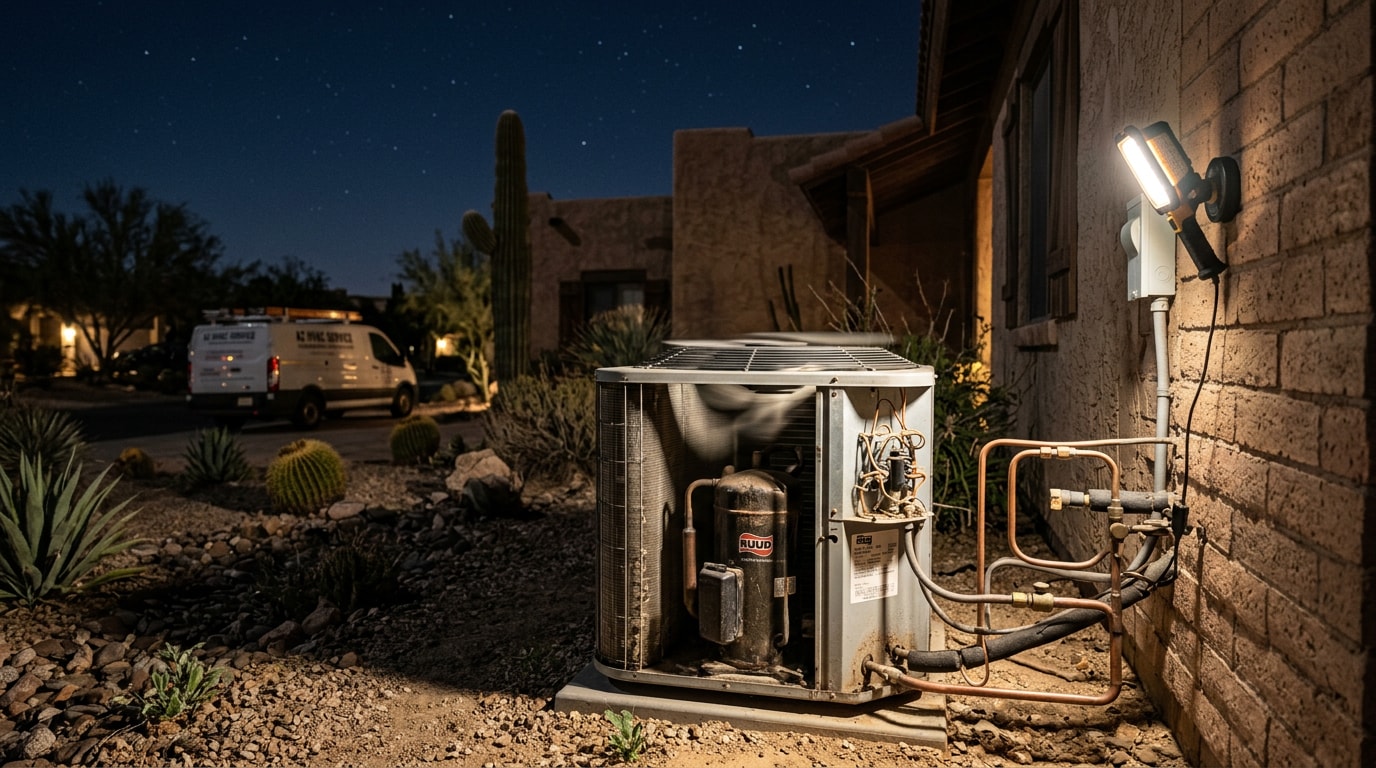
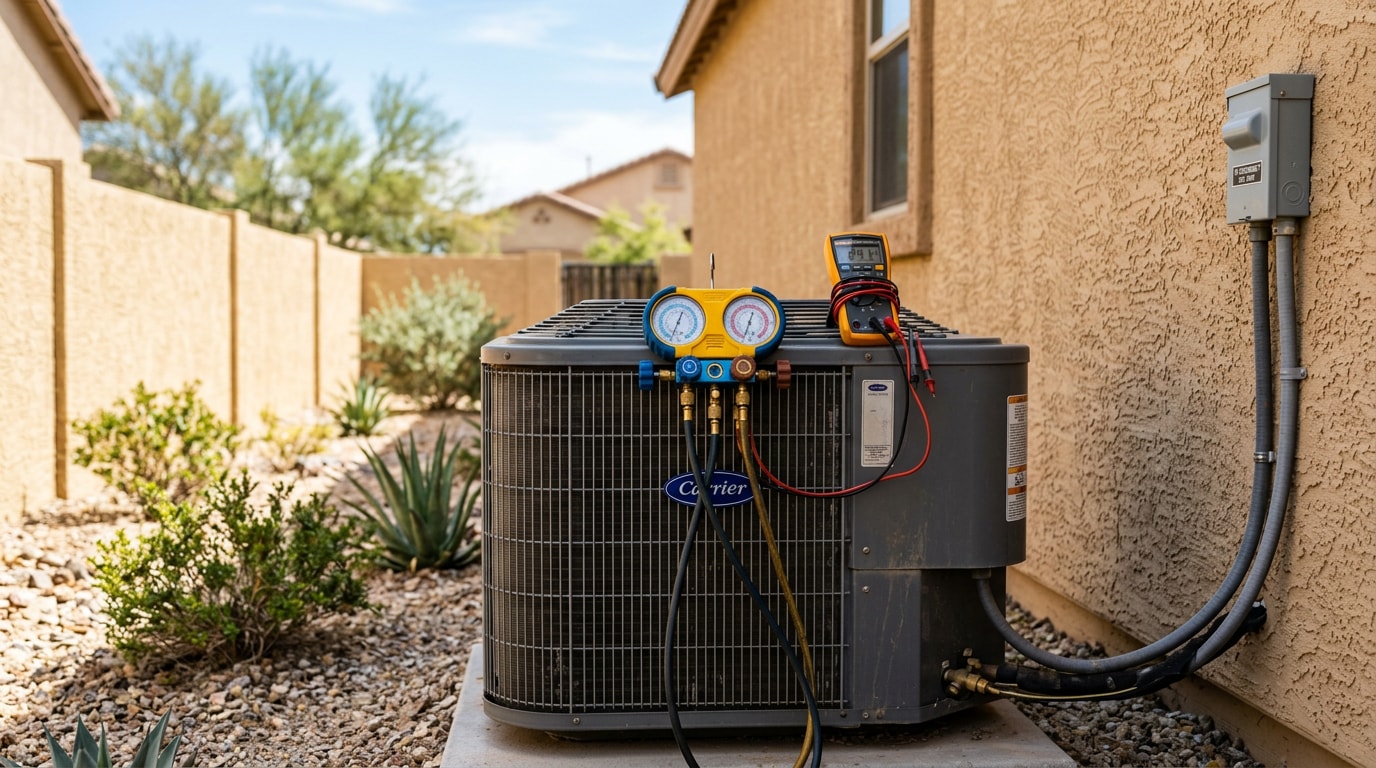
An AC diagnostic in Mesa, AZ is the only reliable way to find out why your system quit cooling before you spend money guessing. This guide breaks down the warning signs worth acting on, exactly what a technician tests, and what it costs in 2026. By the end, you'll know whether you're looking at a $200 fix or a bigger conversation.
When to Call for an AC Diagnostic in Mesa
Some symptoms mean it's time to stop waiting.
- Warm air from the vents or weak, uneven airflow between rooms
- Short cycling — the outdoor unit turning on and off every few minutes
- A burning smell, a tripped breaker, or new grinding and buzzing noises
Electrical and mechanical warning signs deserve the fastest attention. A breaker that trips more than once, or a compressor that hums but won't start, usually means the system needs a technician rather than another reset. If your air is coming out warm, our guide on why your AC is blowing hot air in Mesa walks through the most common causes before you call.
Safe Checks Before You Schedule Service
A few checks can save you a trip fee if the fix is simple:
- Confirm the thermostat is set to Cool, not Fan or Off
- Swap in fresh thermostat batteries
- Check whether the HVAC breaker has tripped
- Pull the return filter and look for a thick layer of dust
Don't repeatedly reset a tripped breaker, open electrical panels, or add refrigerant yourself. Those are the moments to stop troubleshooting and call a technician instead.
What's Included in a Professional AC Diagnostic
A thorough diagnostic doesn't stop at the obvious symptom. It checks the entire system so a second problem doesn't surface as a callback next week. Here's what a complete visit typically covers:
- Thermostat operation and control signals — confirming the thermostat is communicating correctly with the system
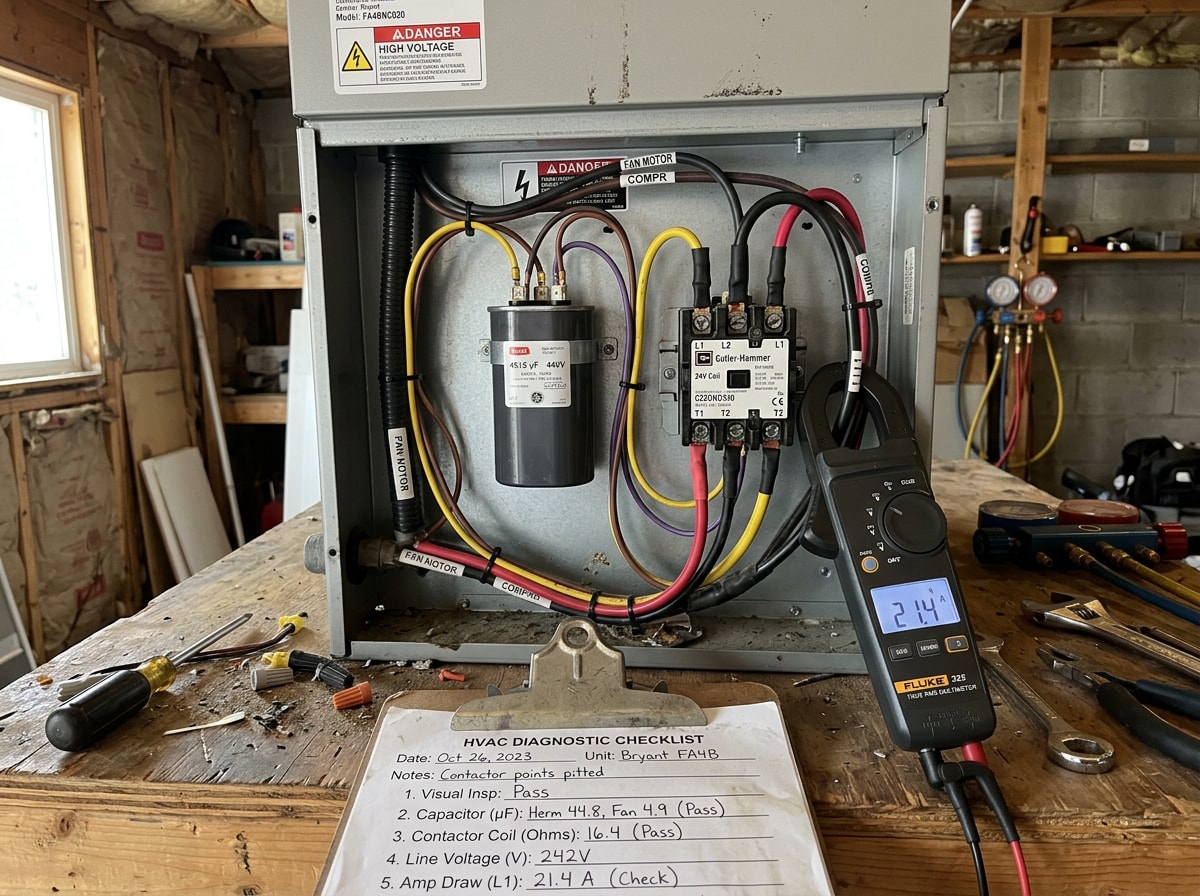
- Electrical components — capacitors, contactors, motors, and safety controls, which fail early in extreme heat
- Filter condition, blower performance, and static pressure — checking for restrictions that starve the system of air
- Indoor and outdoor coil condition — looking for dirt, corrosion, or mineral buildup
- Condensate drainage and secondary pan inspection — catching water backup before it causes damage
- Compressor amp draw — verifying the compressor is working within its rated range
- Supply register temperature differential — confirming the system is actually removing heat
AC Diagnostic Cost in Mesa, AZ (2026)
A diagnostic visit is a paid inspection, not a free add-on, and that's by design — a technician who charges for diagnosis has less incentive to guess. Most Mesa-area companies price diagnostic or dispatch visits somewhere between $75 and $200, often crediting the fee toward the repair if you move forward that day. Confirm the current rate and credit policy when you book.
Once the diagnosis is in, repair pricing depends heavily on what failed:
| Repair Type | Typical Cost Range |
|---|---|
| Capacitor or contactor replacement | $150 – $400 |
| Thermostat or control board repair | $150 – $450 |
| Refrigerant leak repair + recharge | $400 – $1,200 |
| Condensate drain clearing or pan repair | $150 – $350 |
| Blower motor replacement | $400 – $900 |
| Compressor or evaporator coil replacement | $1,200 – $2,800 |
Exact pricing depends on your system's size, age, and part availability. Ready to find out which bucket your repair falls into? Get a free estimate and we'll walk you through the numbers before any work starts.
Live System Tests and What the Numbers Mean
The checklist above tells you what gets inspected. The numbers from those tests tell you what's actually wrong, since a reading just outside normal range usually points to one specific part.
| Test | Normal Range | Problem Reading | Likely Cause |
|---|---|---|---|
| Capacitor microfarad rating | Within about 6% of labeled rating | More than 10% below rating | Weak or failing capacitor |
| Compressor amp draw | Within manufacturer's rated load amps | Noticeably above rated amps | Compressor strain or electrical fault |
| Total external static pressure | Within manufacturer's allowable range | Significantly above allowable range | Dirty coil, clogged filter, undersized ducts |
| Supply/return temperature split | Roughly 15–20°F | Under 10°F or over 25°F | Refrigerant issue or airflow restriction |
For example, a system blowing lukewarm air might show a normal amp draw but static pressure well above the manufacturer's maximum. That points to a dirty evaporator coil, not a failing compressor, and a far less expensive repair.
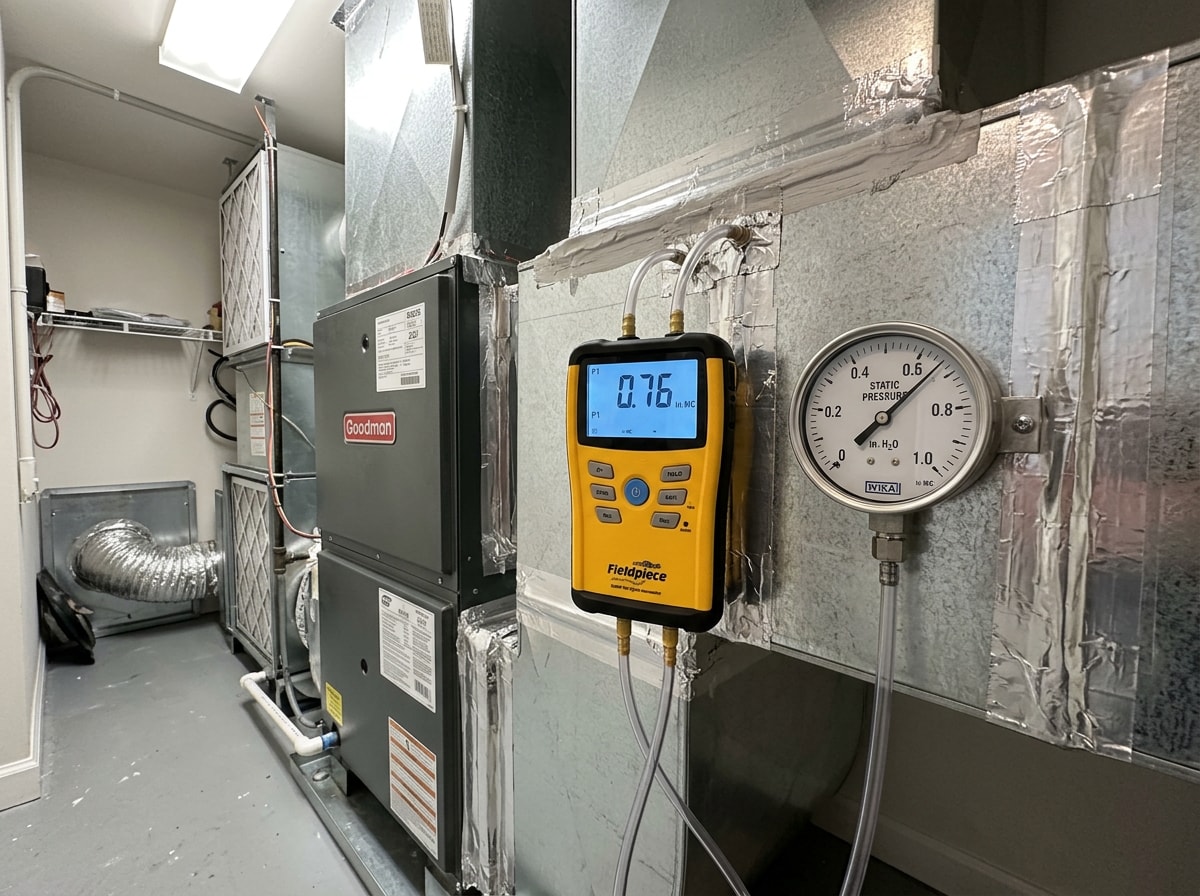
Electrical checks measure whether a capacitor is still holding its rated charge and whether amp draw on the compressor and fan motor matches the equipment nameplate. A reading well above that number usually signals a motor or compressor under strain.
Refrigerant checks compare suction and head pressures against the manufacturer's target for the current outdoor temperature. Pressures outside that range point to a leak, an overcharge, or an undercharge. Any technician who touches refrigerant is legally required to hold EPA certification. EPA regulations under Section 608 of the Clean Air Act require that technicians who maintain, service, repair, or dispose of equipment that could release ozone depleting refrigerants into the atmosphere must be certified. That's a basic credential to confirm before letting anyone open your system.
Airflow checks compare supply and return temperatures and measure total external static pressure against the manufacturer's allowable range. High static pressure is one of the most common findings in Mesa homes, usually from a dirty filter, undersized return ductwork, or a coil caked with dust.
Common AC Failures in Mesa Homes
A handful of local conditions drive most of the calls we run. Mesa's heat load is a big one. National Weather Service data for Phoenix shows July 2026's average high temperature at 108.3°F, 1.8°F above the 1991–2020 normal of 106.5°F , and that kind of sustained extreme heat accelerates wear on capacitors, contactors, and motors that run nearly nonstop for months.
Beyond the heat itself, three patterns repeat across neighborhoods:
- Desert dust infiltrates filters and coils, reducing both airflow and indoor air quality over a single summer
- Hard water leaves mineral scale on evaporator coils and in condensate lines, gradually cutting cooling efficiency even when every component tests fine
- Older ductwork in homes built in the 1970s and 1980s is often undersized or leaky, showing up as hot spots in certain rooms no matter how well the equipment runs
Routine HVAC maintenance catches dust buildup and mineral scale before they turn into a diagnostic call. A proper tune-up each spring also keeps minor wear from becoming a mid-July breakdown.
AC Repair or Replacement? From Diagnostic Findings to a Recommendation
A good diagnostic points toward a clear next step, not just a part number.
Repairs worth scheduling: A weak capacitor, a failing contactor, or a clogged condensate line are straightforward, cost-effective fixes. These restore full performance without raising bigger questions about the system's overall health. If that's the finding, schedule AC repair and move on with your summer.
Replacement conversations: A failing compressor, a cracked heat exchanger, or a system aging alongside a string of previous repairs shifts the math. A commonly used guideline: consider replacement when repair costs exceed about half the system's replacement value and your equipment is more than 10 years old, needs frequent repairs, and energy bills are climbing — all signs that age and condition have made the system less efficient. A diagnostic that turns up two or three failing components at once is often the clearest signal that replacement deserves serious consideration.
Proper installation matters here too. Federal guidance for central AC purchases recommends that residential central air conditioners be installed in accordance with the ANSI/ACCA HVAC Quality Installation Specification , since oversizing and improper charging shorten equipment life regardless of how good the unit is on paper.
What to Ask Before the Technician Leaves
A diagnostic visit is more useful when you leave with real answers, not just a repaired unit.
- What failed first? This tells you whether the symptom you noticed matches the root cause, not just a downstream effect.
- What was actually measured? Amp draw, static pressure, and refrigerant readings are what a diagnostic report should be based on — ask to see the numbers, not just a verdict.
- Is a second opinion reasonable here? If a major repair or replacement is recommended, a technician confident in the findings should welcome the question.
AC Diagnostic Service Across Mesa and the East Valley
We run this same diagnostic sequence on every call, whether it's a Mesa home or a property out toward the East Valley's growing communities. Cobre Valley Air also serves homeowners in San Tan Valley, Queen Creek, Apache Junction, and Gold Canyon, where building ages and dust exposure closely match conditions in Mesa.
If you're comparing a repair estimate against a replacement, our 1-ton AC pricing and sizing guide for Apache Junction is a useful companion for understanding where new-equipment costs land in 2026.
About Cobre Valley Air
Cobre Valley Air LLC is owned and operated by Tyler Pearce, an Arizona ROC-licensed contractor (#339078) and BPI-certified technician who started in this trade as a laborer before building a company focused on honest diagnostics over sales quotas. The team holds membership in the Arizona Heat Pump Council and brings that same measure-first approach to every diagnostic call across Mesa and the East Valley. Questions about a quote or a second opinion? Contact us directly.
FAQ
How Much Does an AC Diagnostic Cost in Mesa, AZ?
Diagnostic or dispatch fees generally run $75 to $200, and many companies credit that fee toward the repair if you approve the work the same day. Confirm the policy when you book.
What Does an AC Diagnostic Include?
A complete visit checks thermostat operation, electrical components, refrigerant pressures, airflow and static pressure, coil condition, and condensate drainage. You should get a written explanation of what failed and why, not just a repair quote.
Should I Repair or Replace My AC Unit in Mesa?
A general guideline is to consider replacement when repair costs exceed about 50% of the system's replacement value and the unit is more than 10 years old. A system needing repeated repairs is often less cost-effective over time than a newer, more efficient unit, even though the upfront cost is higher.
How Long Does an AC Diagnostic Visit Take?
Emergency diagnostic calls are typically wrapped up in 45 to 60 minutes. Routine or maintenance-style visits often run 60 to 90 minutes depending on system access and how many readings are needed to confirm the cause.
Why Is My AC Blowing Warm Air?
Warm air can come from a thermostat set incorrectly, a dirty filter restricting airflow, a failed capacitor or motor, low refrigerant, or a failing compressor. A full diagnostic is the most reliable way to narrow down which of these is responsible instead of guessing from the symptom alone.
Is There a Free AC Diagnostic in Mesa?
Some companies advertise a free check paired with a repair, but a real diagnostic involving gauges, amp meters, and static pressure testing is a paid service almost everywhere. Treat a "free" offer as a starting point for conversation, not a full inspection.