Chiller HVAC Queen Valley, AZ property owners can count on has to survive summer afternoons that regularly climb past 110°F, conditions most packaged rooftop units were never built to handle. On commercial service calls across Pinal County, we've seen standard split systems max out the moment a building's cooling load outgrows what ductwork alone can manage. This guide covers chiller types, desert sizing math, 2026 cost ranges, and the maintenance schedule that keeps a chiller running through an Arizona summer.
Understanding Commercial Chillers
A commercial chiller is a large-capacity cooling system that removes heat from water or another fluid, then circulates that chilled fluid through a building to cool the air.
Unlike a residential split system that cools air directly, a chiller cools a liquid loop. That distinction matters once square footage or process-cooling needs grow beyond what standard ductwork can handle.
Queen Valley businesses and larger residential properties tend to reach for chillers when:
- A space exceeds the practical limits of packaged rooftop units
- Multiple buildings share one central cooling plant
- Precise temperature control matters for equipment, inventory, or process loads
Restaurants, event venues, agricultural operations, and multi-building commercial sites are common candidates. The upfront investment is higher than a typical split system, but efficiency and longevity gains often justify it for the right application. If you're weighing a chiller against other commercial options, our HVAC contractor team can walk through load data specific to your building before you commit either way.
How Commercial Chillers Work
A chiller cycles refrigerant through four stages:
- An evaporator absorbs heat from water
- A compressor pressurizes the refrigerant gas
- A condenser releases that heat outside
- An expansion valve drops the pressure so the cycle repeats
This is the same refrigeration loop found in any air conditioner, just scaled up and built around chilling water instead of air.
Picture a mid-size Queen Valley commercial building needing roughly 100 tons of cooling. In an air-cooled chiller, heat absorbed at the evaporator gets rejected straight to outdoor air through a condenser coil and fans. Performance dips as outdoor temperatures climb past 105°F. In a water-cooled chiller, that same heat gets rejected to a cooling tower first, which holds temperatures more stable regardless of ambient air conditions. The refrigeration chemistry doesn't change between the two. Where the heat ultimately goes, and how well that rejection point performs during a 115°F afternoon, does.
Comparing Commercial Chiller Types
Most commercial chiller hvac decisions in Arizona come down to two categories: air-cooled and water-cooled. Each handles heat rejection differently, and that difference matters more here than in milder climates because of how extreme, and how dry, Queen Valley summers get.
| Chiller Type | Typical Capacity Range | Water Use | Best Fit |
|---|---|---|---|
| Air-cooled | 20–500 tons | Low | Most desert commercial buildings |
| Water-cooled | 100+ tons | High (cooling tower + treatment) | Large campuses, high continuous loads |
Air-Cooled Chillers
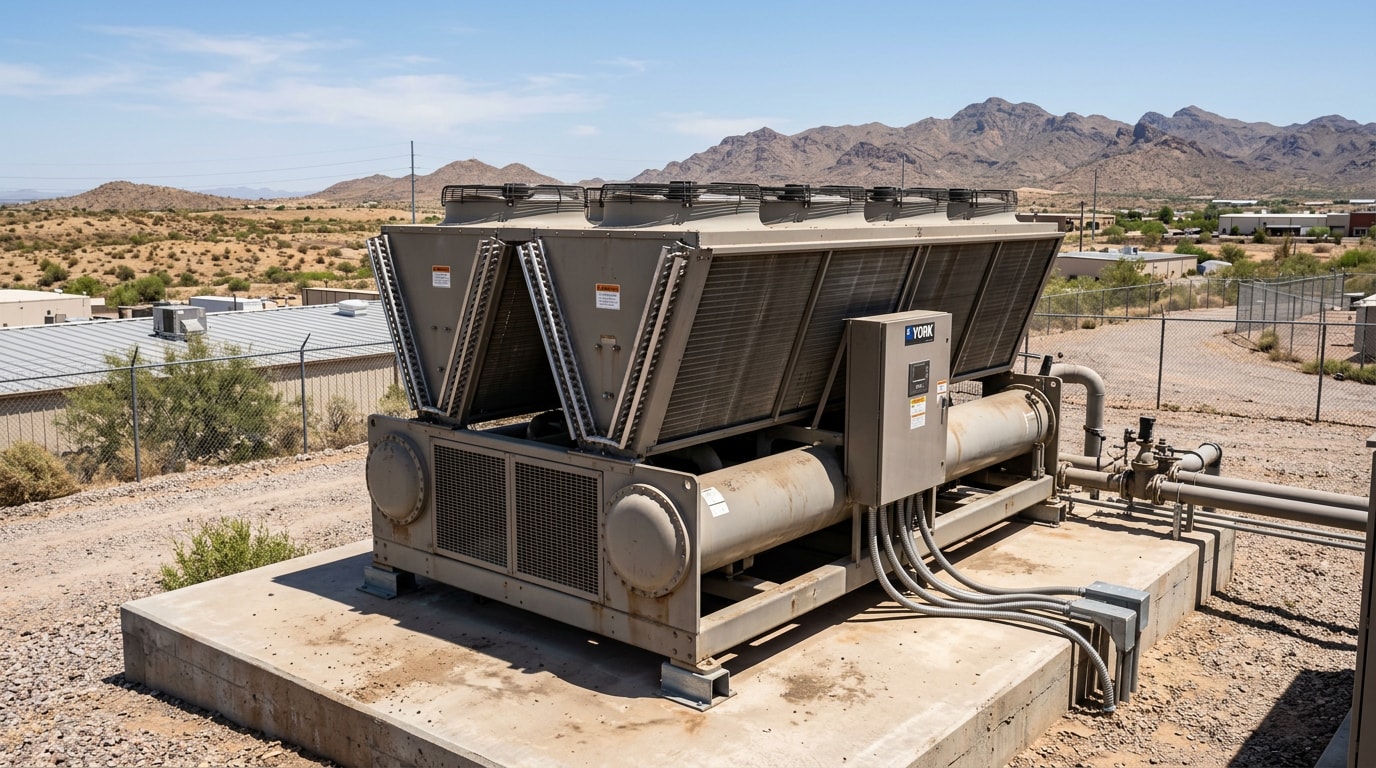
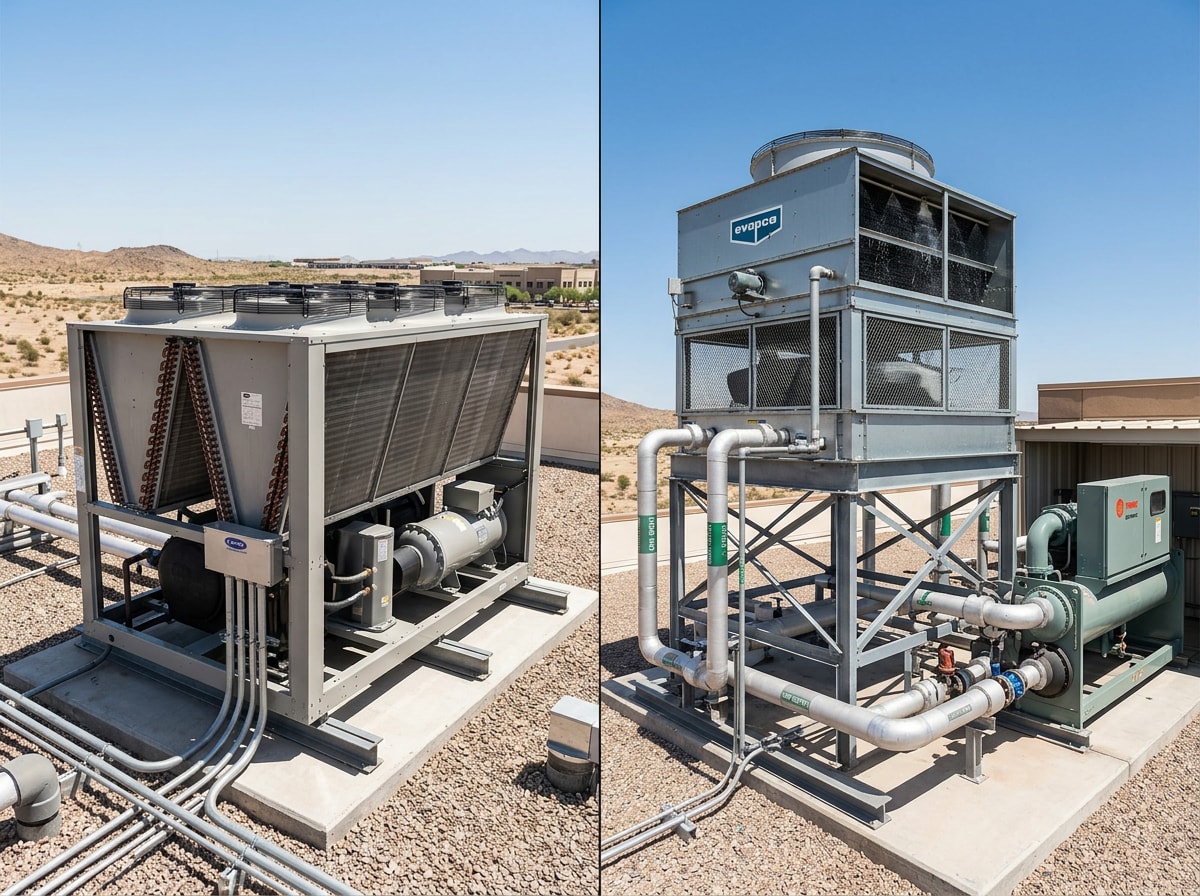
Air-cooled chillers reject heat directly to outdoor air using condenser coils and fans, making them the more common choice across desert HVAC installations. They work well for buildings roughly 20 to 500 tons and skip the water infrastructure water-cooled systems require.
Performance drops somewhat as outdoor temperatures rise, which matters during Queen Valley's long, hot stretches. Still, for a desert community where groundwater and well capacity are real concerns, the lower water use of air-cooled chillers is a meaningful advantage. Most local installers lean toward air-cooled equipment for this reason.
Water-Cooled Chillers
Water-cooled chillers reject heat to a cooling tower rather than directly to outdoor air, which generally makes them more efficient per ton, especially in extreme heat, since tower water stays cooler than ambient air. They're a natural fit for a chilled water system serving a large campus or high-load facility.
The catch is water. Water-cooled systems need a steady supply for the cooling tower plus ongoing water treatment to prevent scale and biological growth. In rural Queen Valley, where many properties rely on wells rather than municipal water, that dependency can make water-cooled chillers less practical than they'd be in a denser metro area.
Proper Chiller Sizing for Queen Valley, AZ
Getting chiller sizing right matters more in a desert climate than almost anywhere else. An undersized unit can't keep up once ambient temperatures spike past 110°F for weeks at a stretch. Oversizing wastes money and hurts efficiency through excessive cycling. Getting it right starts with a proper load calculation grounded in local climate data.
Load Calculation Factors
A proper load calculation adds up:
- Envelope loads (walls, roof, windows)
- Solar heat gains
- Internal loads from people and equipment
- Ventilation loads from fresh air requirements
- A safety margin
That total converts into tonnage, the standard unit for commercial cooling load. Skipping any one of these factors tends to produce a chiller that's either chronically overworked or inefficiently oversized. Solar gain deserves extra attention in Queen Valley, where unshaded west-facing glass can add significant unplanned heat on summer afternoons. If your building already shows signs of struggling to keep up, our guide on AC not getting cold in San Tan Valley covers the same undersizing symptoms at a smaller, residential scale.
Arizona Desert Climate Considerations
Sizing a chiller for Queen Valley means designing around extreme dry-bulb temperatures rather than the humidity-driven loads common in other parts of the country. ASHRAE's published climate design data lists a 1% design dry-bulb condition around 109°F for the Phoenix metro area, a benchmark engineers use instead of relying on national averages. Queen Valley's cooling season effectively runs most of the year rather than a few peak months.
That extended desert cooling load changes the sizing math. A chiller sized using national average design temperatures may underperform here, since actual peak conditions often run hotter than generic estimates assume. Pulling current ASHRAE climate design-temperature data for the Phoenix metro region gives a more accurate baseline than national defaults, and it's worth confirming with whichever contractor handles your load calculation.
Queen Valley, AZ-Specific Installation Considerations
Beyond sizing, local environmental factors change how a chiller should be installed and protected once it's in the ground. Arizona's combination of extreme heat, dust, and hard well water creates conditions that generic installation guidance doesn't cover.
Extreme Heat Performance
Air-cooled chillers lose some of their rated capacity as outdoor temperatures climb, a phenomenon known as capacity derating. When ambient temperatures regularly push past 115°F, as they do during Queen Valley's peak summer stretches, a chiller rated under standard conditions may deliver noticeably less cooling than its nameplate suggests.
The fix is specifying equipment with a high-ambient rating designed to maintain output at elevated outdoor temperatures. It typically costs more upfront, but it closes the gap between a chiller's rated capacity and what it actually delivers on the hottest days of the year, exactly the days when cooling matters most.
Corrosion Protection
Chiller corrosion protection in Queen Valley looks different than it does in coastal markets. The real threats here are:
- Hard, mineral-heavy well water that scales condenser loops over time
- Blowing desert dust and fine particulate that fouls coils and restricts airflow
- UV exposure that gradually degrades cabinet plastics and gaskets
Addressing these means specifying coil coatings suited to dust fouling, scheduling more frequent coil cleaning than a humid-climate building would need, and using water treatment where hard water feeds any part of the system. This requires a contractor who's planned for Arizona-specific conditions rather than applying generic maintenance intervals. Our HVAC installation team specs equipment with this derating and corrosion exposure built into the quote from day one, not added after a callback.
Commercial Chiller Installation Cost Breakdown
Commercial chiller installation cost varies widely based on type, size, and site conditions, but a relative comparison gives a useful starting point for 2026 planning.
| Factor | Air-Cooled | Water-Cooled |
|---|---|---|
| Relative equipment cost per ton | Lower | Higher |
| Added infrastructure | Minimal | Cooling tower, piping, water treatment |
| Typical install complexity | Moderate | Higher |
| High-ambient-rated upgrade | Common add-on in desert climates | Less relevant (tower buffers heat) |
Installation costs stack on top of equipment price: electrical work to supply the unit, chilled water or refrigerant piping, controls integration, and permitting all add to the total. Local permitting timelines and electrical service upgrades can shift the final number meaningfully from one site to the next.
Efficiency ratings tie directly into pricing tiers. Higher-efficiency units cost more initially but lower operating costs over the equipment's life. The Department of Energy's Federal Energy Management Program guidance on purchasing energy-efficient electric chillers is a useful reference for comparing efficiency tiers before you compare quotes, since it separates genuine lifecycle value from a simply cheaper sticker price.
Chiller Maintenance Requirements
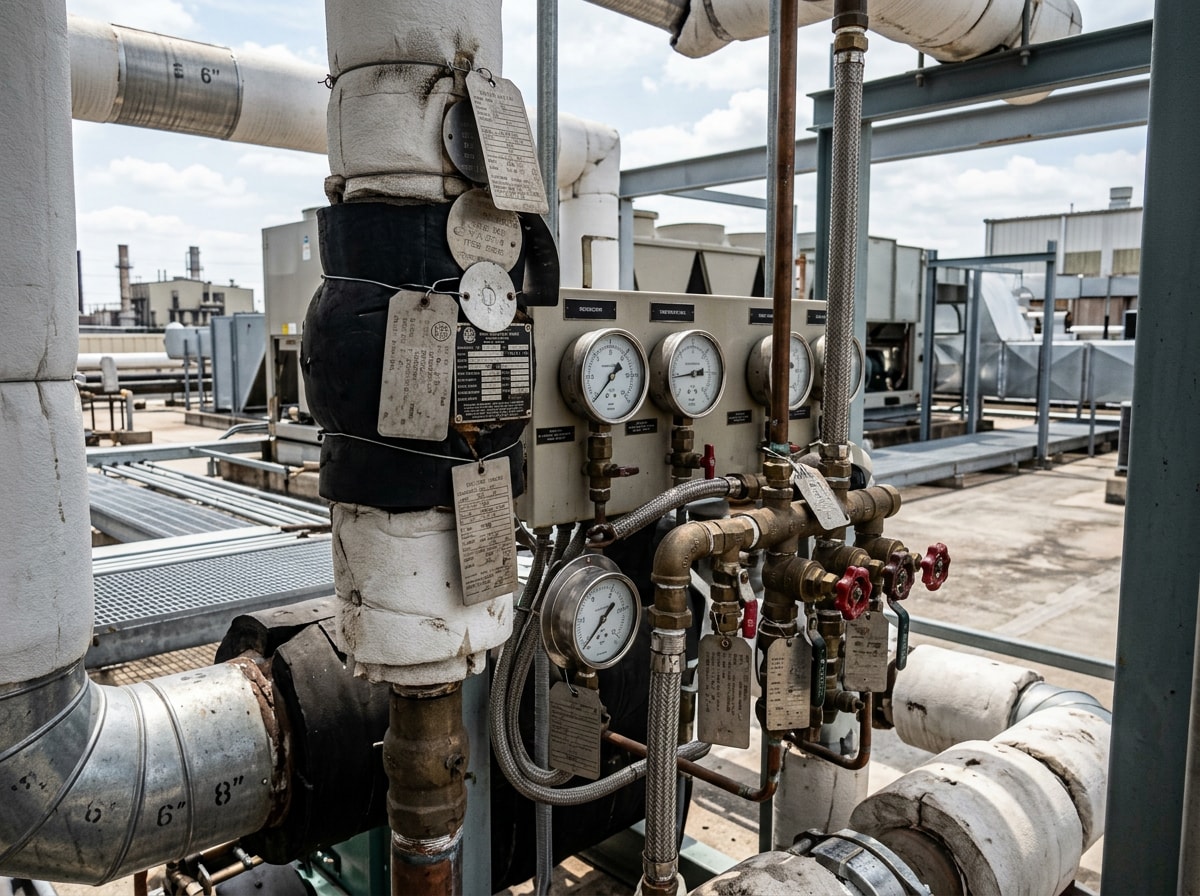
Arizona's near year-round cooling demand puts more wear on a chiller than the seasonal duty cycle common in milder climates. That makes a disciplined maintenance schedule less optional than it might seem elsewhere. Skipping routine service tends to show up fast here, usually during the hottest week of the year.
Daily/Weekly Operator Tasks
A basic chiller maintenance checklist includes:
- Daily or weekly temperature and pressure log checks
- Visual inspection of refrigerant lines and electrical connections
- General monitoring for unusual noise or vibration
These quick daily entries catch small problems, a slowly rising head pressure, for instance, before they become expensive failures. Consistent logging also builds a performance history that's valuable when diagnosing an issue later. A property with scheduled HVAC maintenance in place typically catches these early warning signs through routine inspection rather than waiting for a breakdown.
Monthly Service Requirements
Monthly chiller service should include:
- Coil cleaning to clear accumulated dust
- A refrigerant check for proper charge levels
- A condenser inspection to confirm heat rejection is performing as expected
In a dusty desert environment, coil cleaning intervals often need to run more frequently than manufacturer defaults assume. Refrigerant leak checks and recordkeeping aren't just good practice, they're required under EPA Clean Air Act Section 608 refrigerant management regulations for most commercial equipment. A qualified technician should document these inspections as part of routine service visits. If a system is already showing symptoms, our HVAC repair crew can diagnose whether it's a maintenance gap or a failing component before costs escalate.
Why Chiller Energy Efficiency Matters for Your Facility
Cooling accounts for a substantial share of total energy use in commercial buildings, and that share climbs even higher in a hot climate like Queen Valley's. Chiller energy efficiency directly affects a building's operating budget, often more than any other single mechanical system.
Space cooling makes up roughly 15% of electricity use in commercial buildings nationally, according to ENERGY STAR data on light commercial HVAC equipment, second only to lighting. For a Queen Valley property running cooling nearly year-round, well-maintained, properly sized equipment compounds those savings quickly. Pairing the right equipment with consistent maintenance from our HVAC contractor team tends to deliver the strongest long-term return. You can see examples of completed commercial and residential projects in our project gallery.
Ready to get a number specific to your building? Get a Free Estimate and we'll walk the site before quoting anything.
FAQ
What Is a Chiller in HVAC?
A chiller is an HVAC system that cools water or another fluid through a refrigeration cycle, then circulates that chilled fluid to cool air throughout a building. Unlike packaged units that cool air directly, a chiller's output is liquid, which then passes through air handlers to deliver comfort or process cooling.
Is a Chiller the Same as an Air Conditioner?
Not exactly. A standard air conditioner cools air directly for comfort, while a chiller cools water for distribution throughout a building, and chillers are often used for process cooling as well as comfort cooling. The distinction mostly comes down to scale and what's being cooled: air directly, or a liquid loop.
How Much Does Commercial Chiller Installation Cost?
Commercial chiller price varies by type and size, but most projects fall into a range determined largely by tonnage and whether the system is air-cooled or water-cooled. Installation adds electrical, piping, and permitting costs on top of equipment price. For an accurate number specific to your building, request a quote from a contractor familiar with Queen Valley conditions.
How Long Do Commercial Chillers Last?
Most well-maintained commercial chillers run 15 to 20 years before major component replacement becomes more cost-effective than repair. In Queen Valley's near year-round cooling demand, equipment that skips routine coil cleaning and refrigerant checks tends to fall toward the shorter end of that range.
Can a Chiller Work for a Large Residential Property in Queen Valley?
Yes, in some cases. Large residential compounds, multi-structure properties, or homes with guest buildings and pools sometimes outgrow standard split systems the same way commercial buildings do. A proper load calculation determines whether a chiller or a larger multi-zone system makes more sense; our mini split installation team can also evaluate zoned alternatives for smaller residential loads.
Learn more about how we approach local cooling challenges in our related guide on AC warranty coverage for Gold Canyon homeowners, or visit our homepage to see the full range of services we offer across the Queen Valley, AZ area.